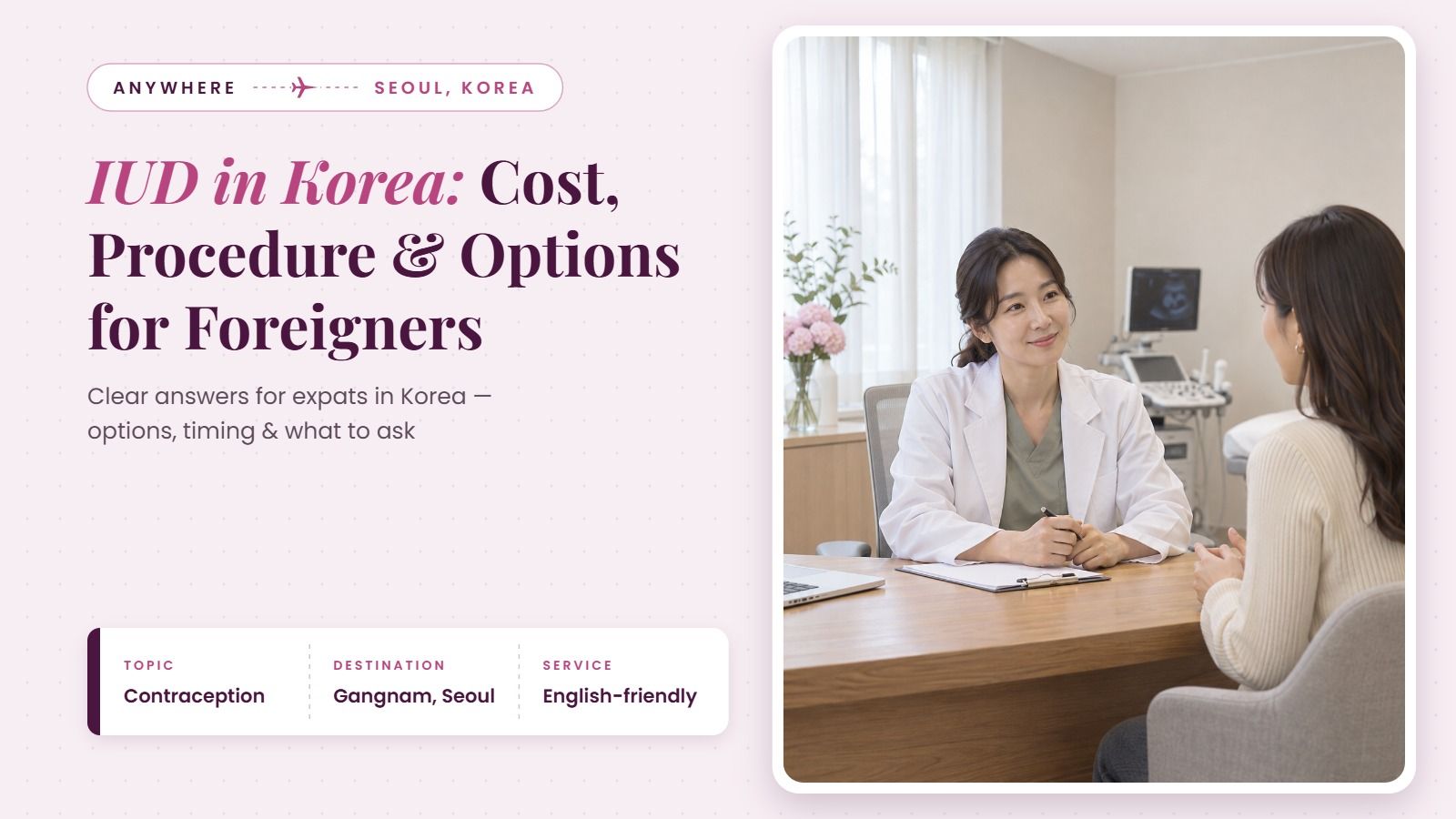
Hormonal and copper IUDs, approximate prices and what the procedure involves
Both hormonal IUDs (such as Mirena) and copper IUDs are available at Korean OB-GYN clinics. Insertion is a short outpatient procedure, usually after an exam and ultrasound, and the device lasts several years. Costs vary by type and are generally paid out of pocket, so ask for a quote first.
An intrauterine device (IUD) is one of the most effective and convenient forms of contraception, and it's widely available in Korea. If you're a foreigner considering an IUD, this guide covers your options, what the procedure involves and what it typically costs.
Types of IUD Available in Korea
- Hormonal IUDs release a small amount of levonorgestrel into the uterus. Depending on the device, they last from about three to eight years and often make periods lighter.
- Copper IUDs are hormone-free and can last many years. Some women notice heavier or more painful periods, especially in the first months.
Availability of specific brands can change, so ask your clinic which devices they currently offer.
Who Is a Good Candidate?
Most women — including those who have never been pregnant — can use an IUD. Your doctor will check for active infections, pregnancy, uterine abnormalities and unexplained bleeding before insertion.
Before the Procedure
- A consultation to discuss your options and medical history
- A pelvic exam and usually an ultrasound to check the uterus
- Sometimes STI testing, particularly if you have a new partner
- A pregnancy test if there is any chance of pregnancy
The Insertion
Insertion usually takes about 5–10 minutes. A speculum is placed, the cervix is cleaned and the IUD is inserted through the cervix into the uterus. Most women feel cramping for a short time. Your doctor may suggest taking a pain reliever beforehand.
Approximate Costs
IUDs used for contraception are generally not covered by National Health Insurance. As a rough guide, a copper IUD often costs from around ₩100,000–250,000 and a hormonal IUD from around ₩300,000–600,000, including insertion. Prices vary by device and clinic, so request a full estimate that includes consultation, ultrasound and follow-up.
Aftercare and Follow-Up
- Mild cramping and spotting for a few days are common.
- A follow-up visit — often after 4–6 weeks — checks that the IUD is in the correct position.
- Learn how to check for the IUD strings, or ask your doctor to check them.
When to Seek Care
Contact a doctor if you have severe pelvic pain, fever, unusual discharge, very heavy bleeding, or if you can't feel the strings or think the IUD has moved.
Removal
An IUD can be removed at any time — for example, if you want to become pregnant. Removal is usually quick and fertility returns promptly.
Frequently Asked Questions
Does IUD insertion hurt?
How long does an IUD last?
Can I have my IUD removed in Korea?
Related Guides
Book an English-Speaking OB-GYN Visit in Gangnam
Sinsoe Women's Clinic is a female-led OB-GYN clinic at 537 Nonhyeon-ro, Gangnam-gu, Seoul, a short walk from Eonju Station (Line 9, Exit 7) and Yeoksam Station (Line 2, Exit 6). All physicians are female, board-certified OB-GYNs, and consultations are available in English. Message us on WhatsApp (+82-10-9517-5719) to book.
Hours: Mon & Fri 10:00–20:00 · Tue–Thu 10:00–19:00 · Sat 10:00–16:00 · Closed Sundays
This article is for general information only and is not a substitute for medical advice. Prices and procedures can change — please confirm details directly with the clinic.