Typical price ranges for consultations, ultrasounds, Pap smears, STD tests and more — with and without insurance
The cost of an OB-GYN visit in Korea depends mainly on whether you are enrolled in NHIS and which tests you have. A basic consultation is relatively affordable, while ultrasound, lab tests, vaccines and procedures add to the bill and are often not covered for routine checks. Ask for an estimate before testing.
One of the pleasant surprises for many expats in Korea is how affordable outpatient care can be. Still, costs vary depending on your insurance status and which tests you need. Here's what foreign patients can generally expect when visiting an OB-GYN in Korea.
Insured vs. Uninsured Patients
With National Health Insurance (NHIS): Most foreign residents staying six months or longer are enrolled in NHIS. For covered services at a clinic, you typically pay around 30% of the cost, so a basic consultation is often only a small amount.
Without NHIS (tourists, short-term visitors): You pay the full, non-insured price. This is still often lower than private care in countries like the US, but it's worth asking for an estimate before testing.
Typical Price Ranges (Approximate)
The figures below are general market ranges for Seoul clinics and are for guidance only. Actual prices depend on the clinic, your insurance status and what the doctor recommends.
- Basic consultation: roughly ₩10,000–30,000 with NHIS; higher without insurance
- Pelvic/transvaginal ultrasound: often around ₩50,000–150,000 when not covered
- Pap smear (cervical cytology): roughly ₩30,000–70,000 if not covered by a national screening program
- HPV test: roughly ₩50,000–100,000
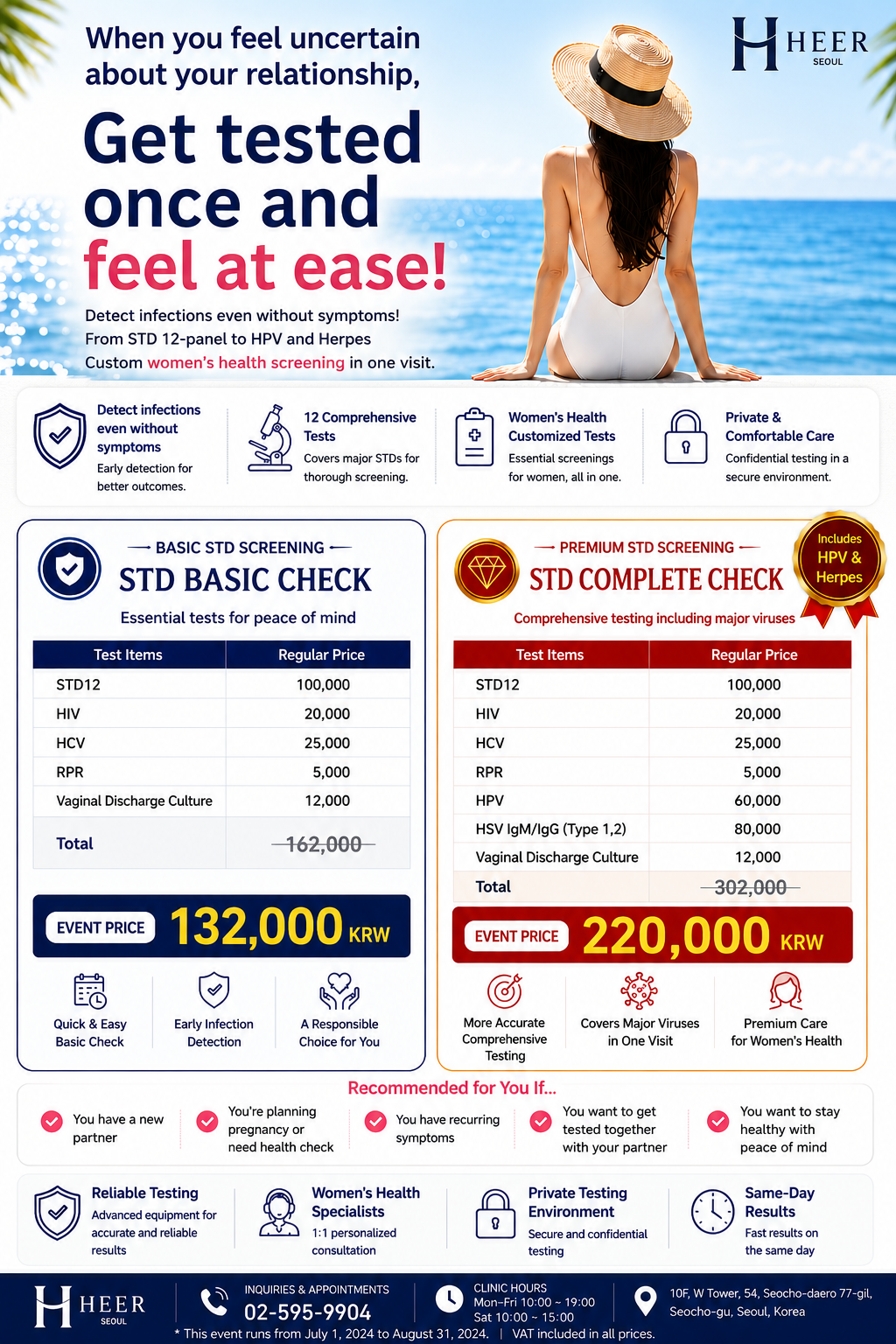
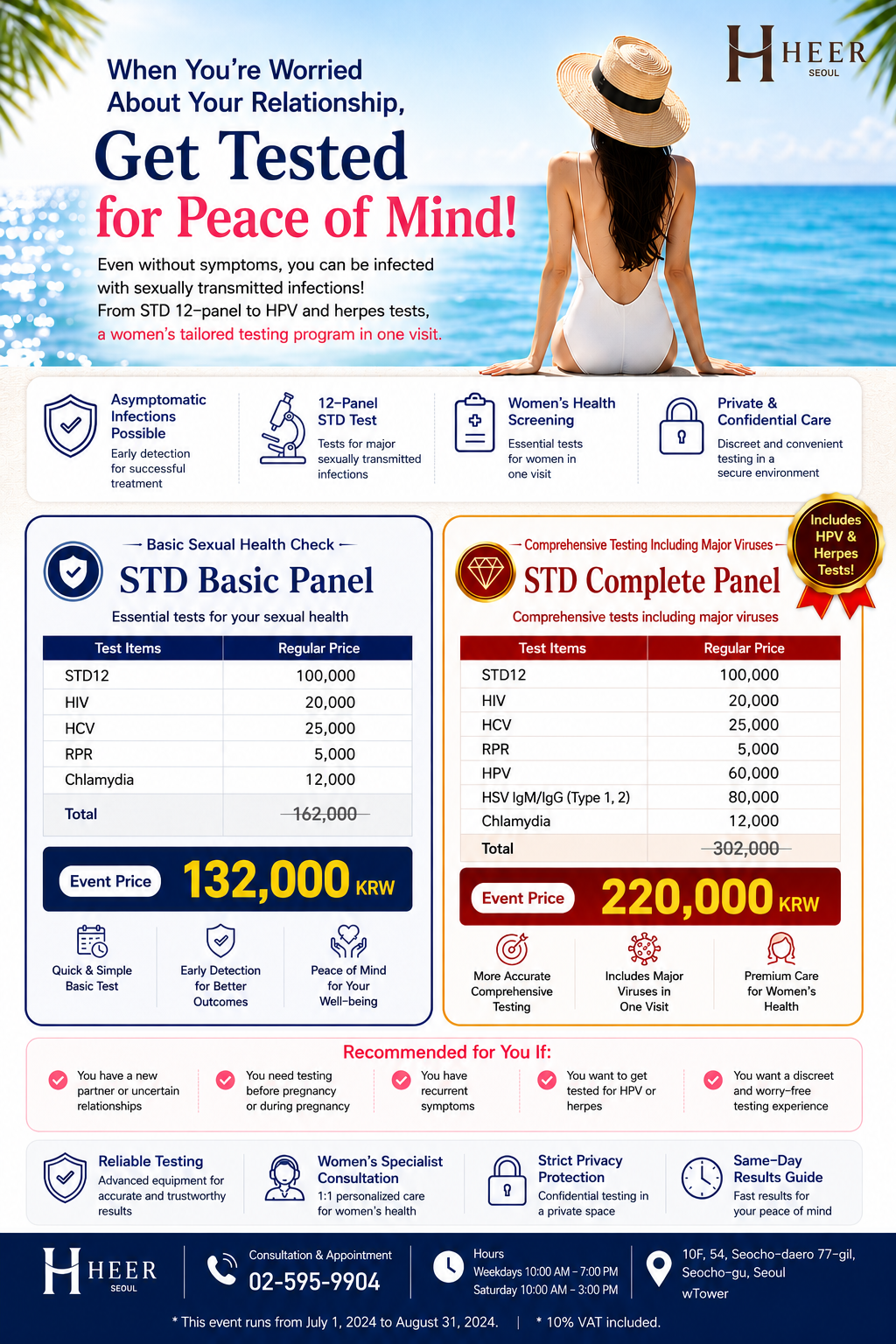
- STD panel (multiplex PCR): roughly ₩100,000–200,000 depending on how many infections are tested
- HPV vaccine (Gardasil 9), per dose: commonly around ₩200,000–250,000
- Comprehensive women's checkup package: from around ₩150,000 to several hundred thousand won, depending on what's included
What NHIS Usually Covers — and Doesn't
NHIS generally covers medically necessary consultations and tests when you have symptoms — for example, abnormal bleeding, pelvic pain or infection. Items that are often not covered include elective screening packages, many vaccines, cosmetic gynecology and some advanced tests. Korea also runs a national cervical cancer screening program for eligible insured women; ask the clinic if you qualify.
Using Travel or International Insurance
Most international insurers reimburse rather than pay directly. Pay at the clinic, then submit:
- An itemized receipt
- A payment receipt
- A medical certificate or diagnosis note if your insurer requires it
Ask for English versions where available. Certificates may carry a small additional fee.
How to Avoid Surprise Bills
- Tell the front desk your insurance status at registration.
- Ask the doctor which tests are essential today and which can wait.
- Request a cost estimate for ultrasounds, lab panels and procedures.
- Keep every receipt for insurance and tax purposes.
In short: an OB-GYN visit in Korea is usually affordable, and clear communication with the clinic is the best way to know exactly what you'll pay.
Frequently Asked Questions
Is an OB-GYN visit cheaper with Korean health insurance?
Which OB-GYN services are usually not covered by NHIS?
Can I claim my visit on travel insurance?
Related Guides
Book an English-Speaking OB-GYN Visit in Gangnam
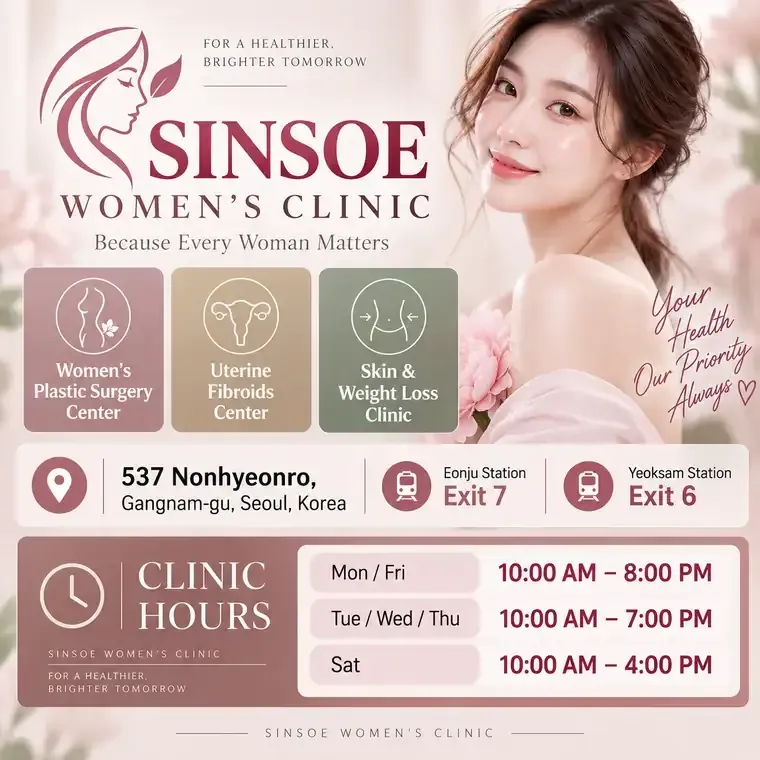
Sinsoe Women's Clinic is a female-led OB-GYN clinic at 537 Nonhyeon-ro, Gangnam-gu, Seoul, a short walk from Eonju Station (Line 9, Exit 7) and Yeoksam Station (Line 2, Exit 6). All physicians are female, board-certified OB-GYNs, and consultations are available in English. Message us on WhatsApp (+82-10-9517-5719) to book.
Hours: Mon & Fri 10:00–20:00 · Tue–Thu 10:00–19:00 · Sat 10:00–16:00 · Closed Sundays
This article is for general information only and is not a substitute for medical advice. Prices and procedures can change — please confirm details directly with the clinic.