Yeast Infection Treatment in Korea: Symptoms, Medicine & When to See a Doctor

October 5, 2026
Yeast Infection Treatment in Korea: Symptoms, Medicine & When to See a Doctor β€” women's clinic guide

Recognizing a yeast infection and getting the right treatment

Quick answer

A vaginal yeast infection usually causes itching, burning and thick white discharge. In Korea, some antifungal products are available at pharmacies, but a quick swab at an OB-GYN confirms the diagnosis, because BV and STIs can look similar. Treatment is a vaginal tablet, cream or oral fluconazole.

Yeast infections (vaginal candidiasis) are extremely common — most women will have at least one in their lifetime. They're uncomfortable but usually easy to treat. Here's how to recognize a yeast infection and get the right treatment in Korea.

Common Symptoms

  • Intense itching and irritation of the vulva and vagina
  • Thick, white, cottage-cheese-like discharge, usually without a strong smell
  • Redness and swelling
  • Burning during urination or sex

What Triggers Yeast Infections?

  • Antibiotics
  • Hormonal changes, including pregnancy and hormonal contraception
  • High blood sugar or diabetes
  • Tight, non-breathable clothing and staying in damp clothes
  • A weakened immune system

Pharmacy or Doctor?

Some antifungal treatments are available at Korean pharmacies. However, it's best to see a doctor if:

  • It's your first yeast infection
  • You're not sure it's yeast — BV and STIs can cause similar symptoms
  • You're pregnant
  • Symptoms don't improve after treatment
  • You have four or more infections a year

How It's Diagnosed

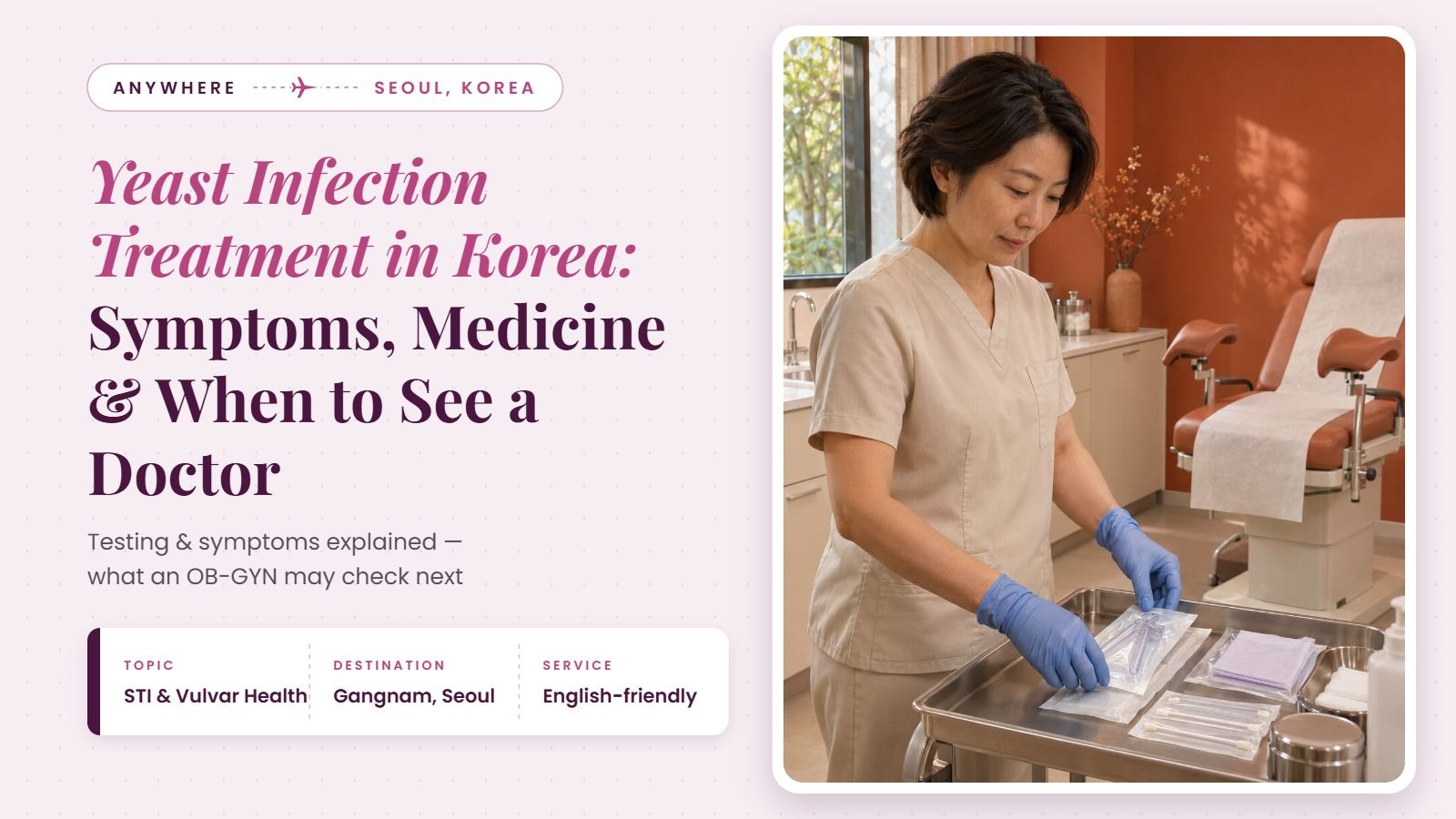
An OB-GYN examines the area and may take a swab to confirm yeast and rule out other infections. This takes only a few minutes.

Treatment Options

  • Vaginal antifungal suppositories or creams
  • Oral antifungal tablets(not usually used in pregnancy)
  • Longer or maintenance treatment for recurrent infections

Symptoms usually improve within a few days.

Prevention Tips

  • Wear breathable cotton underwear
  • Change out of wet swimsuits and workout clothes promptly
  • Avoid douching and scented products
  • Manage blood sugar if you have diabetes

Get the Right Diagnosis

An English-speaking OB-GYN can confirm the cause of your symptoms and prescribe the most effective treatment, so you get relief faster.

Frequently Asked Questions

Can I buy yeast infection medicine at a Korean pharmacy?
Some antifungal vaginal products are sold over the counter, while oral fluconazole usually needs a prescription.
How long does a yeast infection take to clear?
Symptoms usually improve within a few days of treatment; see a doctor if they do not.
What if I get yeast infections often?
Four or more a year is considered recurrent and should be evaluated by a doctor.

Related Guides

Book an English-Speaking OB-GYN Visit in Gangnam

Sinsoe Women's Clinic is a female-led OB-GYN clinic at 537 Nonhyeon-ro, Gangnam-gu, Seoul, a short walk from Eonju Station (Line 9, Exit 7) and Yeoksam Station (Line 2, Exit 6). All physicians are female, board-certified OB-GYNs, and consultations are available in English. Message us on WhatsApp (+82-10-9517-5719) to book.

Hours: Mon & Fri 10:00–20:00 · Tue–Thu 10:00–19:00 · Sat 10:00–16:00 · Closed Sundays

This article is for general information only and is not a substitute for medical advice. Prices and procedures can change — please confirm details directly with the clinic.
Patient reading a Korean pelvic ultrasound report with a gynecologist in Seoul
November 21, 2026
Got a pelvic ultrasound report in Korean? Learn common terms for the uterus, endometrium, ovaries, cysts and fibroids, and what to ask your OB-GYN in Seoul.
Gynecologist explaining cervical biopsy results with a uterus model in Seoul
November 21, 2026
Moving to Korea after a cervical biopsy? Learn how to transfer pathology reports, slides and colposcopy records to a gynecologist in Korea for smooth follow-up.
Gynecologist in Seoul reviewing a patient's overseas medical records on a tablet
November 21, 2026
Can your gynecologist in Seoul talk to your doctor back home? Learn how doctor-to-doctor communication, consent, medical letters and records sharing usually work.
Patient sharing medical records with a gynecologist for a second opinion in Gangnam, Seoul
November 21, 2026
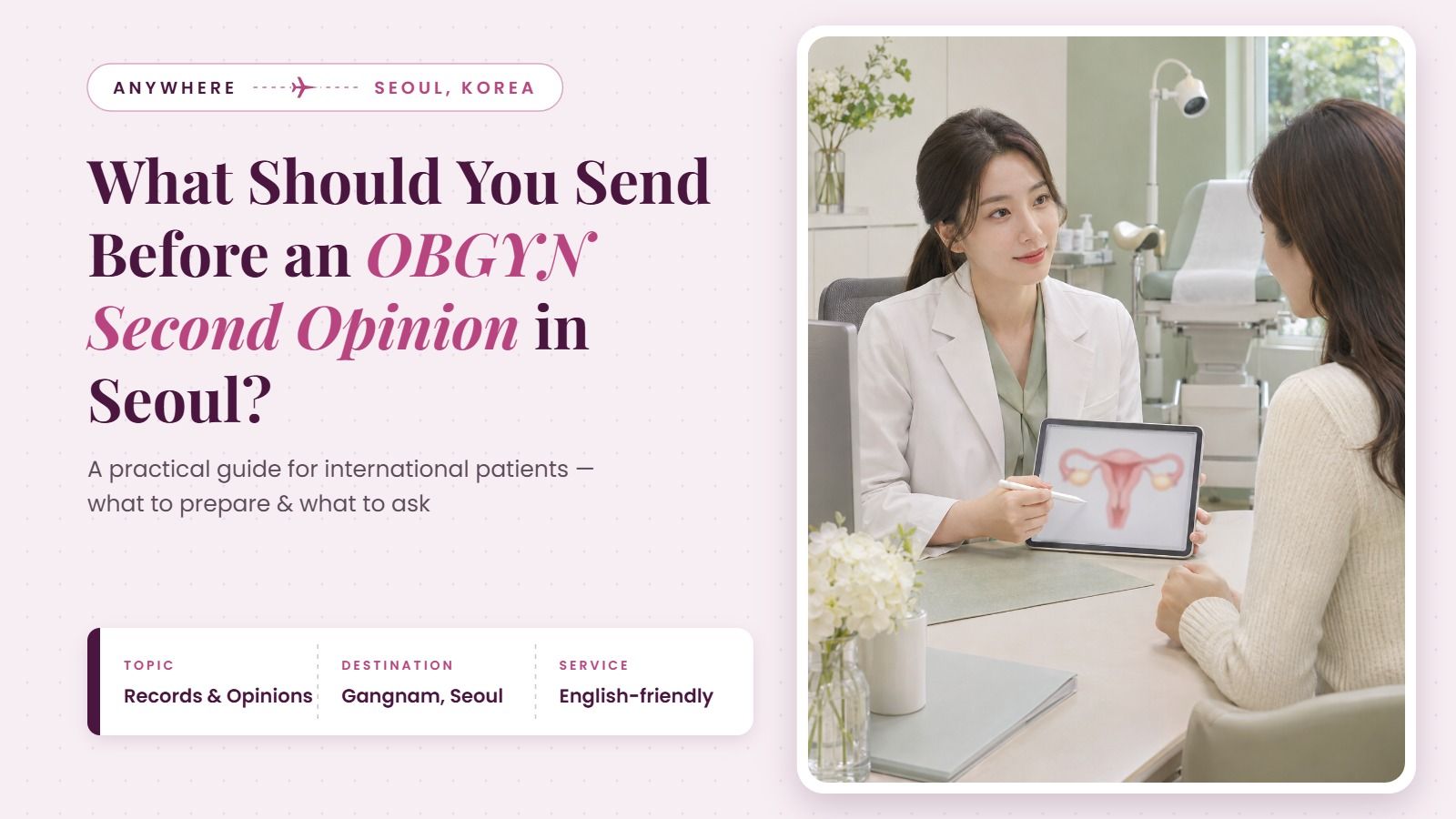
Planning an OB-GYN second opinion in Seoul? Learn which reports, images, lab results and questions to send first so the review is faster and more useful.
Foreign patient and OB-GYN reviewing ultrasound images at a women's clinic in Gangnam, Seoul
November 21, 2026
Can a Seoul OB-GYN review ultrasound images from another country? Yes. Learn which files to bring, when a repeat scan is needed, costs and tips for foreigners.
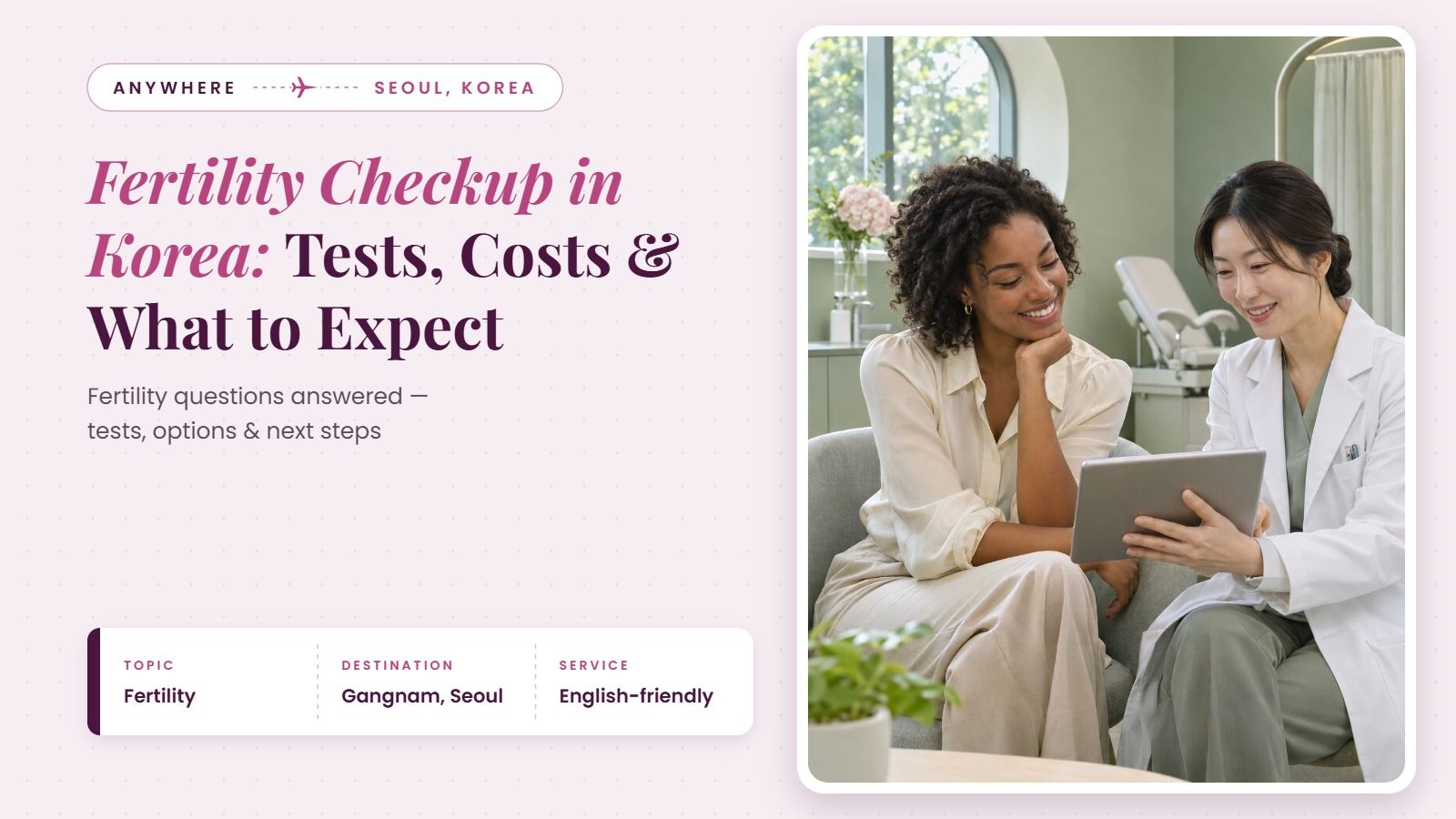
Fertility Checkup in Korea: Tests, Costs & What to Expect β€” women's clinic guide, Gangnam Seoul
October 5, 2026
What a fertility checkup in Korea includes: ultrasound, AMH and hormone tests, tubal checks and semen analysis, plus costs and next steps, explained in English.
Lower Abdominal Pain in Women: When to Visit an OB-GYN β€” women's clinic guide, Gangnam Seoul
October 5, 2026
Lower abdominal pain in women: gynecologic, urinary and digestive causes, clues pointing to a gynecologic cause, when to see an OB-GYN and emergency red flags.
Painful Ovulation: Is It Normal or Should You See a Doctor β€” women's clinic guide, Gangnam Seoul
October 5, 2026
Painful ovulation (mittelschmerz): typical features, how to manage it, when mid-cycle pain may be something else and urgent warning signs to watch for.
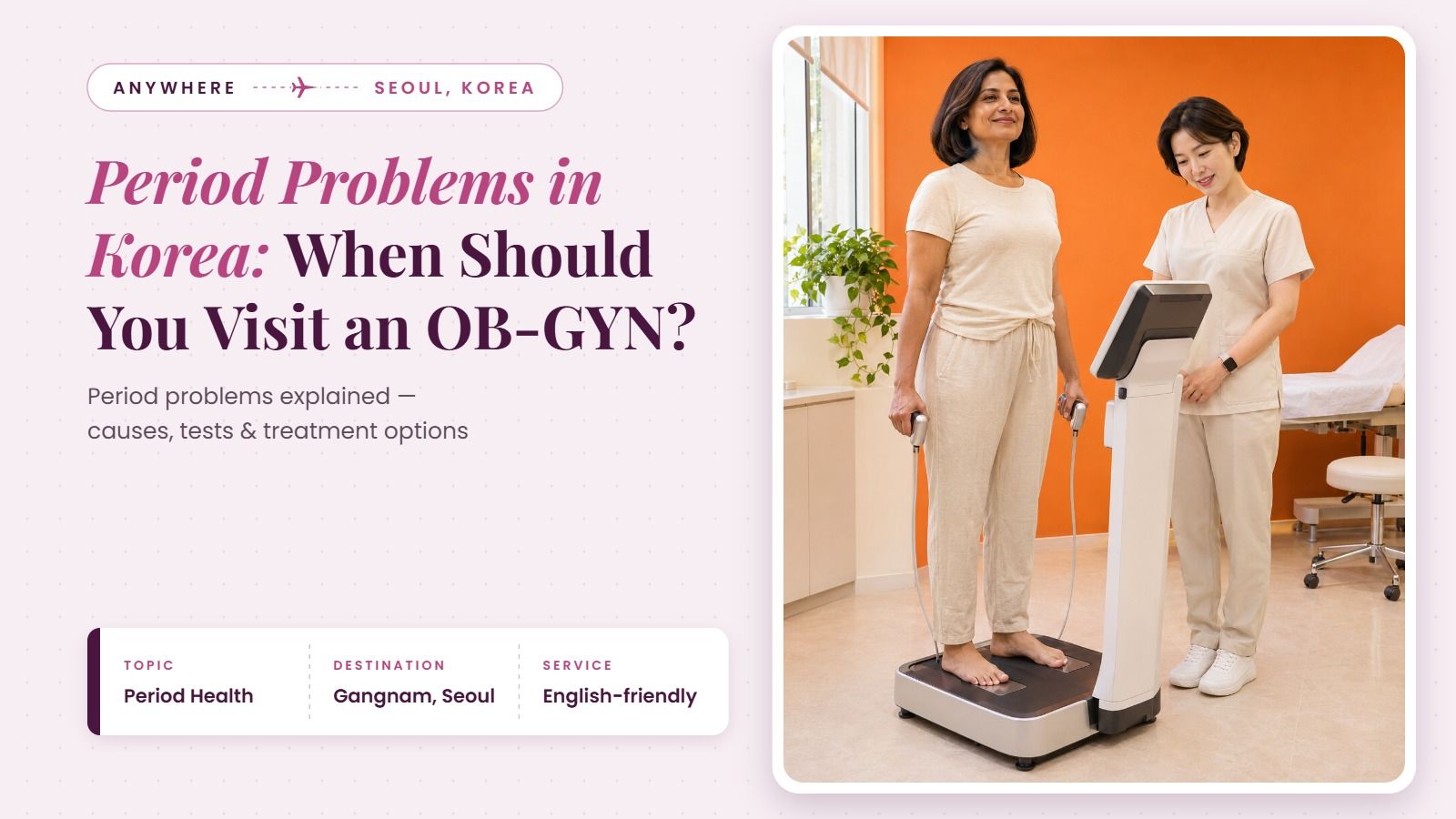
Period Problems in Korea: When Should You Visit an OB-GYN β€” women's clinic guide, Gangnam Seoul
October 5, 2026
Period problems in Korea: irregular, heavy, painful or missed periods, bleeding between periods and severe PMS — when to see an OB-GYN and what to expect.
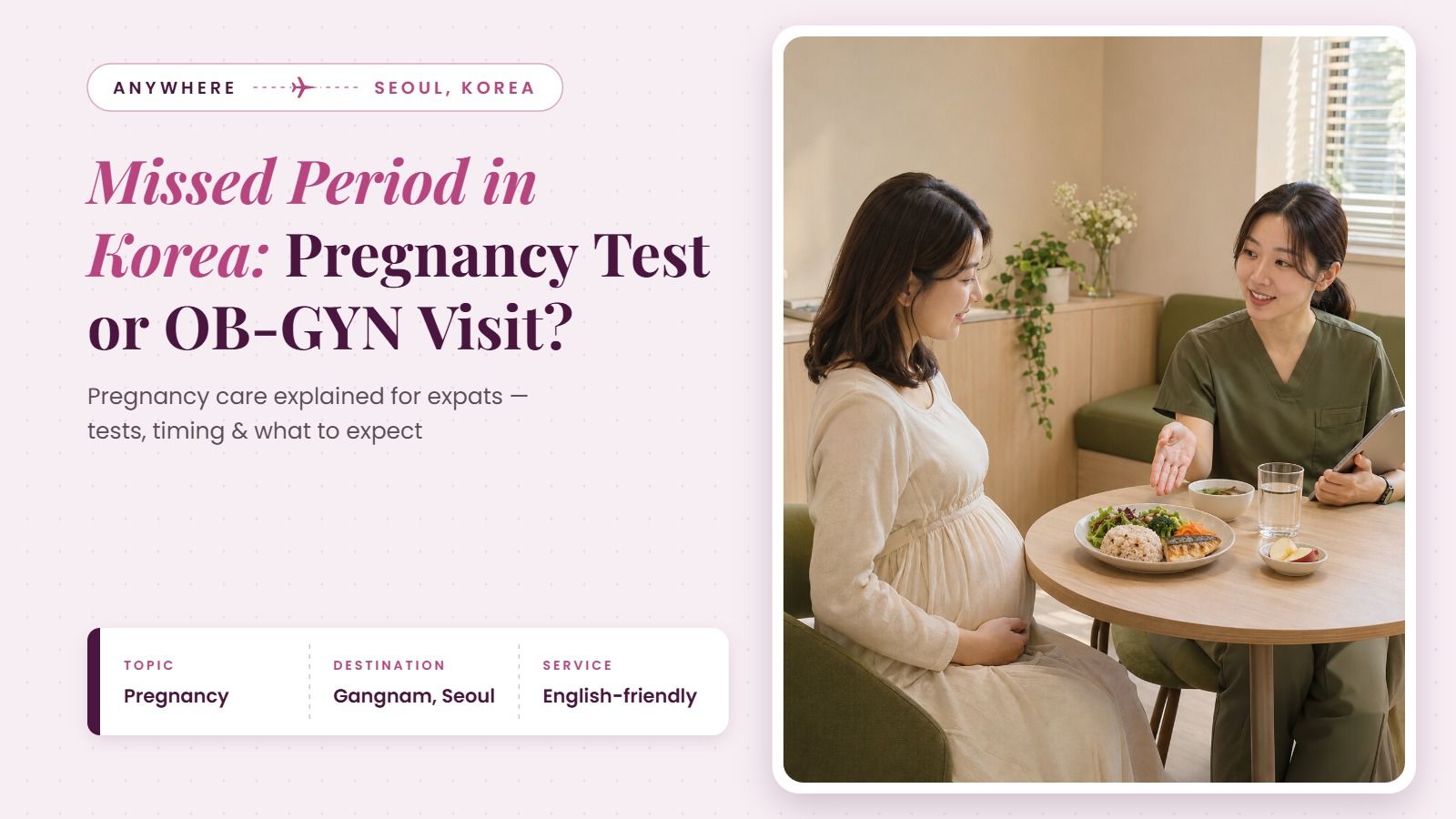
Missed Period in Korea: Pregnancy Test or OB-GYN Visit β€” women's clinic guide, Gangnam Seoul
October 5, 2026
Missed your period in Korea? When to take a pregnancy test, what to do if it is positive or negative, when to see an OB-GYN and emergency signs to watch for.