A practical, time-sensitive guide for foreign women in Seoul
To get the morning-after pill in Seoul you need a prescription from a doctor, usually an OB-GYN, which you then fill at a pharmacy next to the clinic. The visit is short and private. Take the pill as soon as possible, because effectiveness drops with each day after unprotected sex.
Needing the morning-after pill in a foreign city can feel stressful, especially when the rules differ from home. In Seoul, emergency contraception is available only with a prescription — but with the right information, you can usually get it the same day. Here's what to know.
Key Facts at a Glance
- A doctor's prescription is required in Korea.
- The sooner you take it, the more effective it is.
- Any OB-GYN clinic can prescribe it; many accept walk-ins.
- You'll pick up the medication at a pharmacy after your visit.
Where to Go in Seoul
OB-GYN clinics are the best first stop: visits are quick, private and the doctor can also discuss ongoing contraception. In areas such as Gangnam, many clinics see international patients and offer consultations in English.
Hospital emergency departments are an option at night, on Sundays or on public holidays when clinics are closed, though waits and costs may be higher.
What Happens at the Clinic
- Register with your passport or Alien Registration Card (ARC).
- Tell the doctor when the unprotected sex or contraceptive failure happened.
- Share the first day of your last period and any medications you take.
- Receive a prescription and take it to a nearby pharmacy.
The whole process often takes less than an hour.
Approximate Cost
The consultation and medication are usually paid out of pocket. Total costs commonly fall in the range of a few tens of thousands of won, depending on the type of pill and the clinic. Ask for an itemized receipt if you plan to claim through travel insurance.
Making Your Visit Faster
- Message the clinic first to confirm opening hours and English availability.
- Go as early in the day as possible, especially on Saturdays.
- Have the dates ready: when the incident occurred and your last period.
After Taking the Pill
Mild nausea, spotting or a change in your period timing are common. Take a pregnancy test if your period is more than a week late. Severe abdominal pain is not expected and should be checked promptly.
Think About Ongoing Contraception
Your doctor can help you choose a regular method — pills, an IUD or an implant — so you don't need emergency contraception again. A copper IUD can even serve as both emergency and long-term contraception if inserted within five days.
Frequently Asked Questions
How fast can I get the morning-after pill in Seoul?
Will my period change after the morning-after pill?
Is the morning-after pill the same as an abortion pill?
Related Guides
Book an English-Speaking OB-GYN Visit in Gangnam
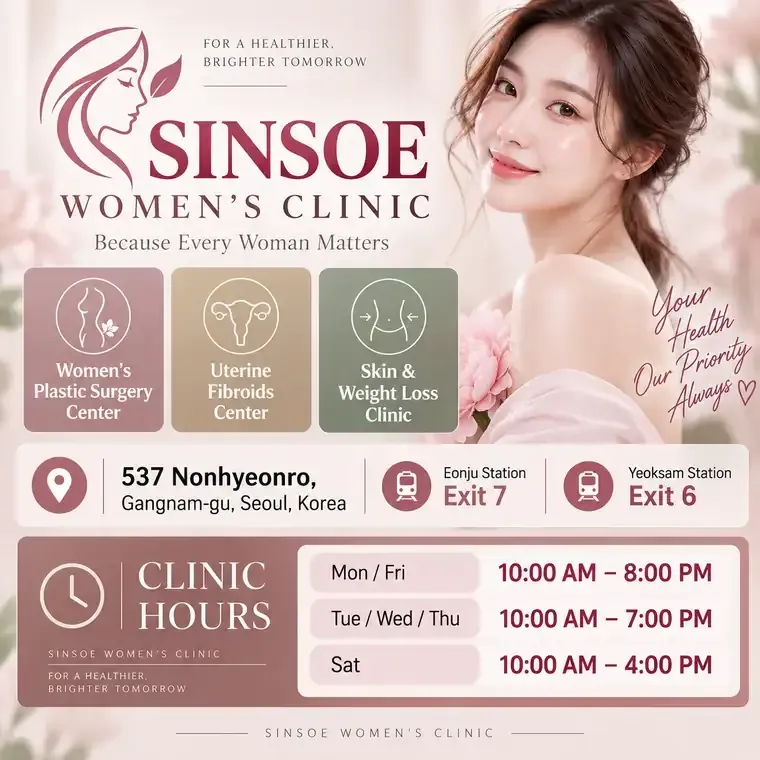
Sinsoe Women's Clinic is a female-led OB-GYN clinic at 537 Nonhyeon-ro, Gangnam-gu, Seoul, a short walk from Eonju Station (Line 9, Exit 7) and Yeoksam Station (Line 2, Exit 6). All physicians are female, board-certified OB-GYNs, and consultations are available in English. Message us on WhatsApp (+82-10-9517-5719) to book.
Hours: Mon & Fri 10:00–20:00 · Tue–Thu 10:00–19:00 · Sat 10:00–16:00 · Closed Sundays
This article is for general information only and is not a substitute for medical advice. Prices and procedures can change — please confirm details directly with the clinic.