Visit schedule, key tests, costs and support available during pregnancy
Prenatal care in Korea typically includes monthly visits until about 28 weeks, every two weeks until 36 weeks and weekly afterwards, with ultrasound at most visits. Key tests include early blood work, first- and second-trimester screening, a glucose test and Group B strep testing. Insured residents can use a pregnancy voucher.
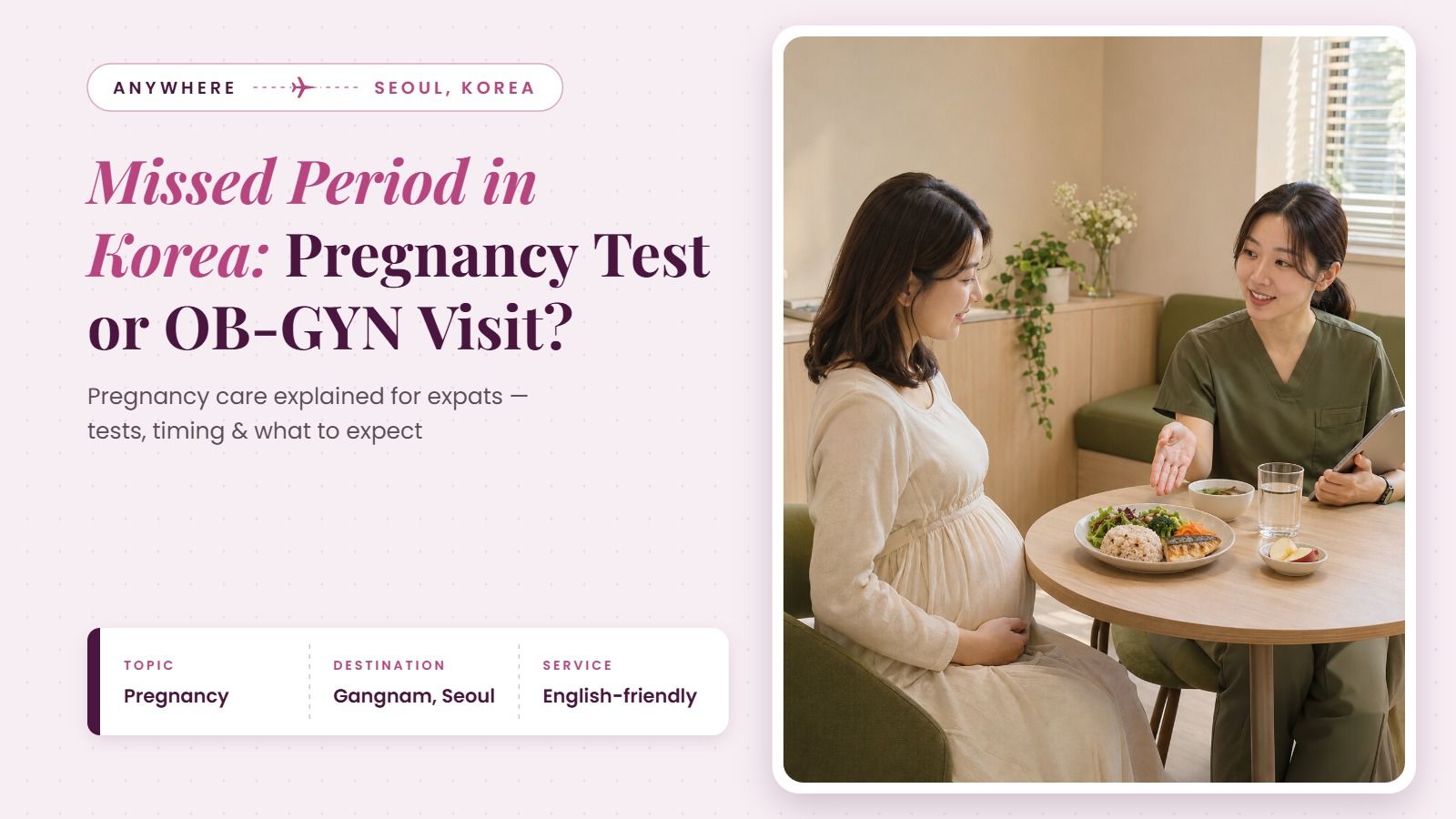
Being pregnant in a foreign country brings extra questions: How do appointments work? What tests are standard? What will it cost? Korea has excellent prenatal care, and many OB-GYN clinics in Seoul support foreign mothers in English. This guide gives you an overview.
Typical Prenatal Visit Schedule
- Up to 28 weeks: roughly every 4 weeks
- 28–36 weeks: every 2 weeks
- 36 weeks to delivery: every week
Your doctor may adjust this schedule depending on your health and pregnancy.
Key Tests and Scans
- First trimester: dating ultrasound, blood tests (blood type, anemia, infections such as hepatitis B, syphilis and HIV, rubella immunity, thyroid), urine tests
- Screening for chromosomal conditions: nuchal translucency scan and blood screening tests, or non-invasive prenatal testing (NIPT) if you choose
- Second trimester: a detailed anatomy ultrasound, usually around 20–24 weeks
- Gestational diabetes screening: usually around 24–28 weeks
- Third trimester: growth scans, blood tests and Group B strep testing in some cases
Ultrasounds are very common at Korean prenatal visits, so you'll likely see your baby often.
Costs and Support
If you're enrolled in National Health Insurance, many prenatal services are covered, and eligible mothers can receive a government pregnancy and childbirth medical expense voucher (often around ₩1 million for a single pregnancy, with more for twins) that can be used toward prenatal care. Check your eligibility with NHIS. Some screening tests, such as NIPT, may be paid out of pocket.
Choosing Where to Deliver
Many women receive prenatal care at a local OB-GYN clinic and deliver at a partner hospital or birthing center. If your pregnancy is high-risk, your doctor may refer you to a university hospital. Ask early about where you will deliver.
Healthy Pregnancy Tips
- Take folic acid and any supplements your doctor recommends
- Avoid alcohol and smoking
- Check medications with your doctor
- Stay active with doctor-approved exercise
When to Call Your Doctor
Contact your clinic or seek emergency care for vaginal bleeding, severe abdominal pain, leaking fluid, severe headaches or vision changes, or reduced baby movements later in pregnancy.
Frequently Asked Questions
How often are prenatal visits in Korea?
Do foreigners get pregnancy support in Korea?
Can I have prenatal care in English?
Related Guides
Book an English-Speaking OB-GYN Visit in Gangnam
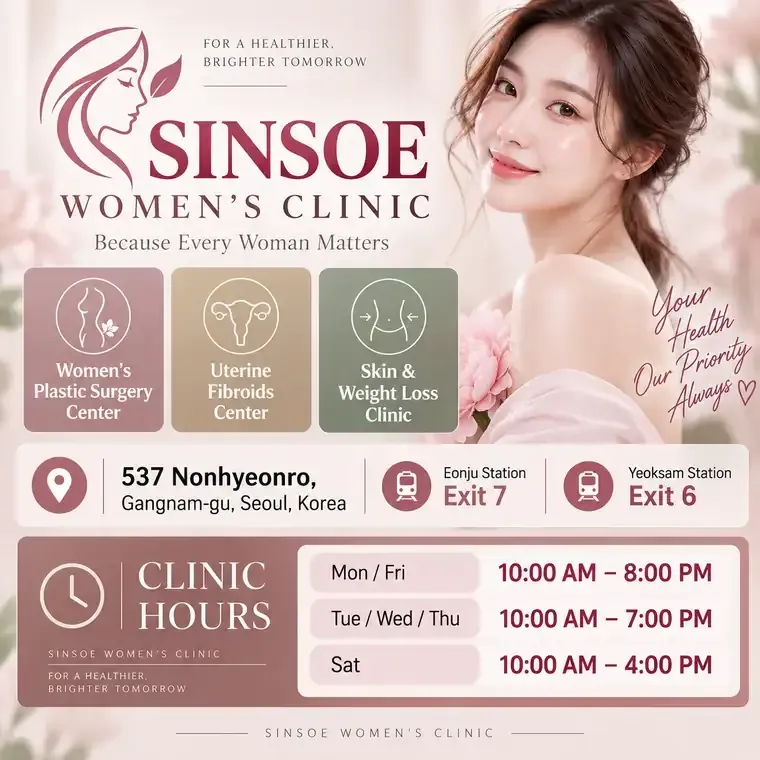
Sinsoe Women's Clinic is a female-led OB-GYN clinic at 537 Nonhyeon-ro, Gangnam-gu, Seoul, a short walk from Eonju Station (Line 9, Exit 7) and Yeoksam Station (Line 2, Exit 6). All physicians are female, board-certified OB-GYNs, and consultations are available in English. Message us on WhatsApp (+82-10-9517-5719) to book.
Hours: Mon & Fri 10:00–20:00 · Tue–Thu 10:00–19:00 · Sat 10:00–16:00 · Closed Sundays
This article is for general information only and is not a substitute for medical advice. Prices and procedures can change — please confirm details directly with the clinic.