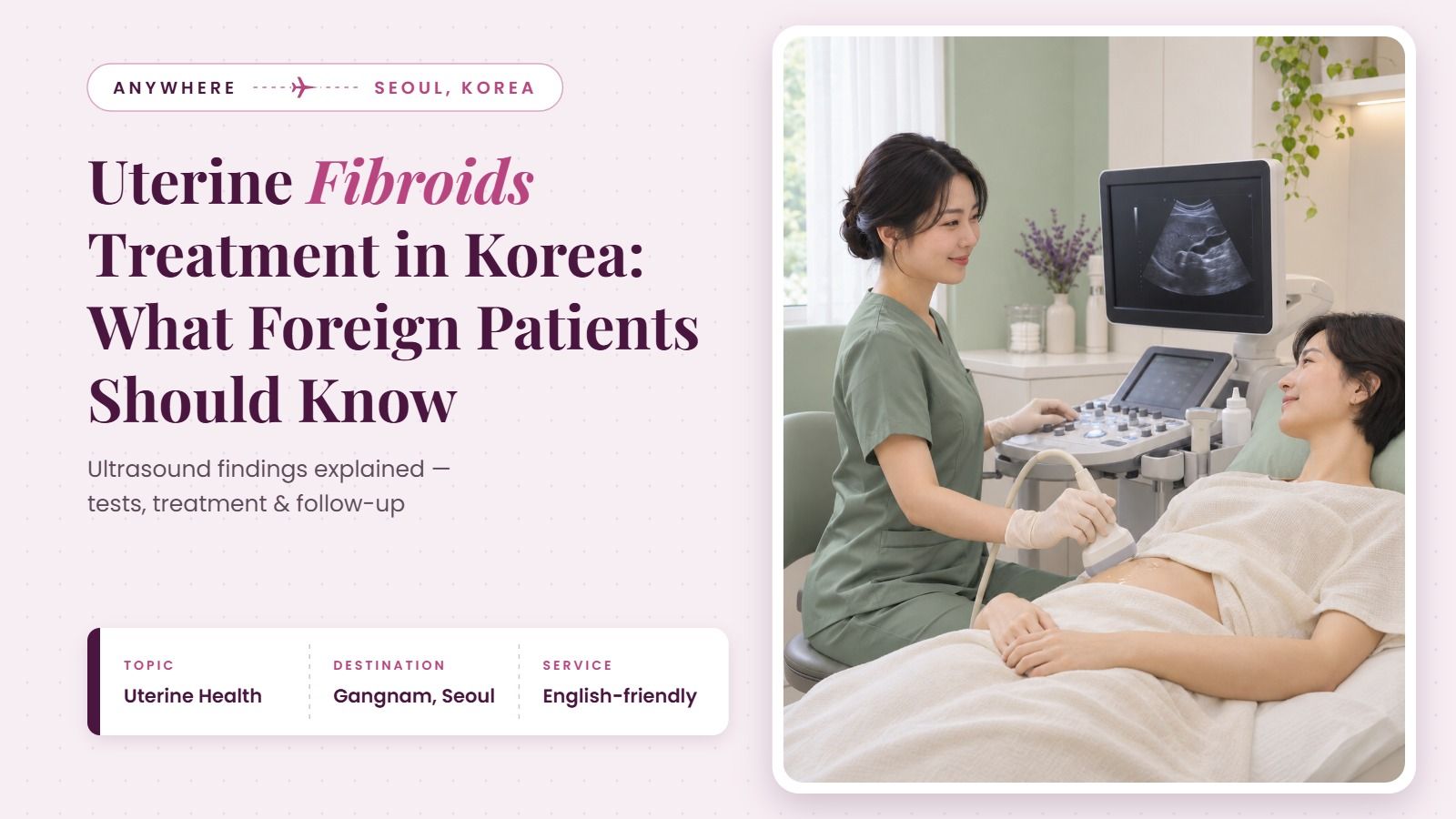
Uterine Fibroids Treatment in Korea: What Foreign Patients Should Know

October 5, 2026
Uterine Fibroids Treatment in Korea: What Foreign Patients Should Know β€” women's clinic guide, Gangn

Symptoms, diagnosis and treatment options from medication to surgery

Quick answer

Uterine fibroids are common, non-cancerous growths of the uterine muscle. Many cause no symptoms and only need monitoring with ultrasound. If they cause heavy periods, pain or pressure, treatment options in Korea include medication, a hormonal IUD, non-surgical HIFU in suitable cases, and surgery such as myomectomy.

Uterine fibroids are non-cancerous growths of the uterus. They're very common — many women have them without knowing — but for some, fibroids cause heavy bleeding, pain or pressure. Here's an overview of diagnosis and treatment options in Korea.

Common Symptoms

  • Heavy or prolonged periods
  • Pelvic pressure or a feeling of fullness
  • Frequent urination or constipation
  • Pelvic or lower back pain
  • Anemia due to blood loss
  • Fertility or pregnancy complications in some cases

Types of Fibroids

  • Submucosal: bulge into the uterine cavity; often cause heavy bleeding.
  • Intramural: grow within the uterine wall.
  • Subserosal: grow on the outer surface of the uterus and may cause pressure.

Diagnosis

Fibroids are usually diagnosed with a pelvic ultrasound, which shows their size, number and location. MRI may be recommended before some treatments. Blood tests can check for anemia.

Treatment Options

Not every fibroid needs treatment. Options depend on your symptoms, the fibroids' size and location, and whether you plan to become pregnant.

  • Monitoring: for small fibroids without symptoms.
  • Medications: to control bleeding and pain, or hormonal treatments to shrink fibroids temporarily.
  • Hormonal IUD: can reduce heavy bleeding.
  • HIFU (high-intensity focused ultrasound): a non-invasive option for selected fibroids.
  • Uterine artery embolization: blocks the blood supply to fibroids.
  • Myomectomy: surgical removal of fibroids while preserving the uterus.
  • Hysterectomy: removal of the uterus, for women who don't plan future pregnancy.

Questions to Ask Your Doctor

  • How many fibroids do I have, and where are they?
  • Do they need treatment now?
  • Which options preserve fertility?
  • What is the recovery time for each option?

Getting a Clear Plan

Treatment decisions are personal. An English-speaking OB-GYN can review your ultrasound with you and explain each option, including approximate costs and insurance coverage.

Frequently Asked Questions

Are uterine fibroids cancer?
Fibroids are almost always benign; cancerous changes are very rare.
Do all fibroids need treatment?
No. Small fibroids without symptoms are usually monitored with regular ultrasound.
Can fibroids affect pregnancy?
Depending on size and location, some fibroids can affect fertility or pregnancy, so discuss them with your OB-GYN if you plan to conceive.

Related Guides

Book an English-Speaking OB-GYN Visit in Gangnam

Sinsoe Women's Clinic is a female-led OB-GYN clinic at 537 Nonhyeon-ro, Gangnam-gu, Seoul, a short walk from Eonju Station (Line 9, Exit 7) and Yeoksam Station (Line 2, Exit 6). All physicians are female, board-certified OB-GYNs, and consultations are available in English. Message us on WhatsApp (+82-10-9517-5719) to book.

Hours: Mon & Fri 10:00–20:00 · Tue–Thu 10:00–19:00 · Sat 10:00–16:00 · Closed Sundays

This article is for general information only and is not a substitute for medical advice. Prices and procedures can change — please confirm details directly with the clinic.
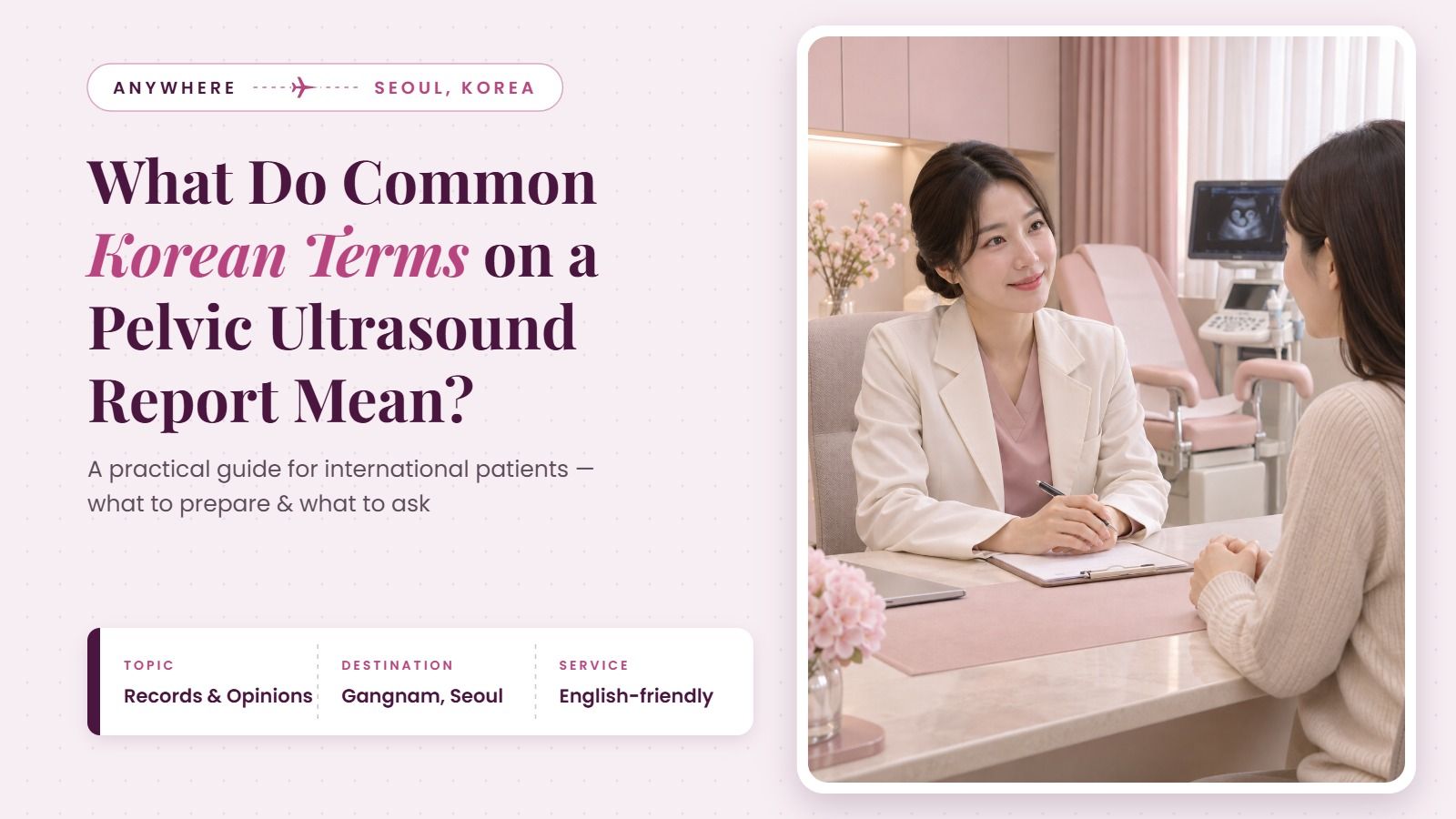
Patient reading a Korean pelvic ultrasound report with a gynecologist in Seoul
November 21, 2026
Got a pelvic ultrasound report in Korean? Learn common terms for the uterus, endometrium, ovaries, cysts and fibroids, and what to ask your OB-GYN in Seoul.
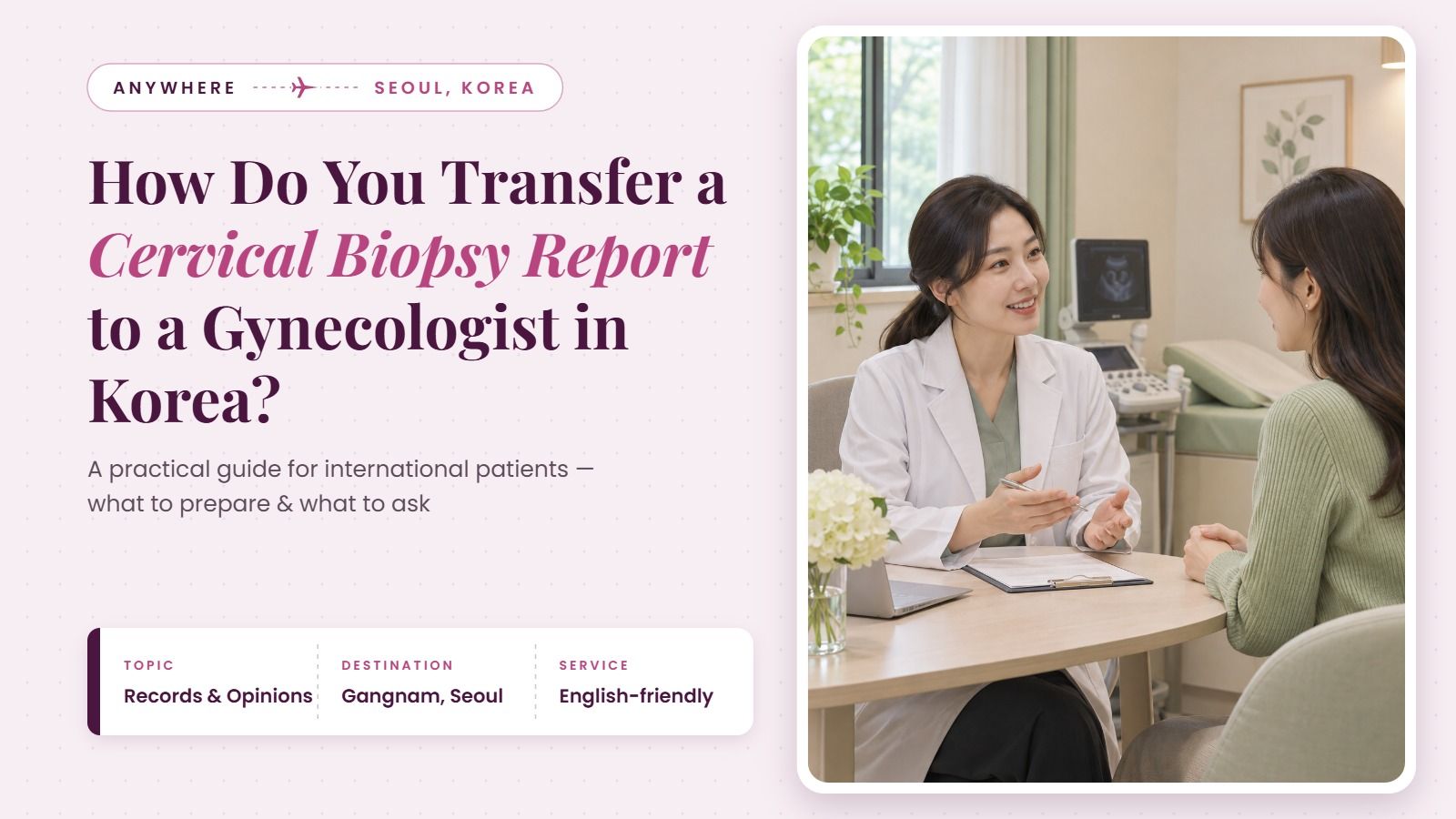
Gynecologist explaining cervical biopsy results with a uterus model in Seoul
November 21, 2026
Moving to Korea after a cervical biopsy? Learn how to transfer pathology reports, slides and colposcopy records to a gynecologist in Korea for smooth follow-up.
Gynecologist in Seoul reviewing a patient's overseas medical records on a tablet
November 21, 2026
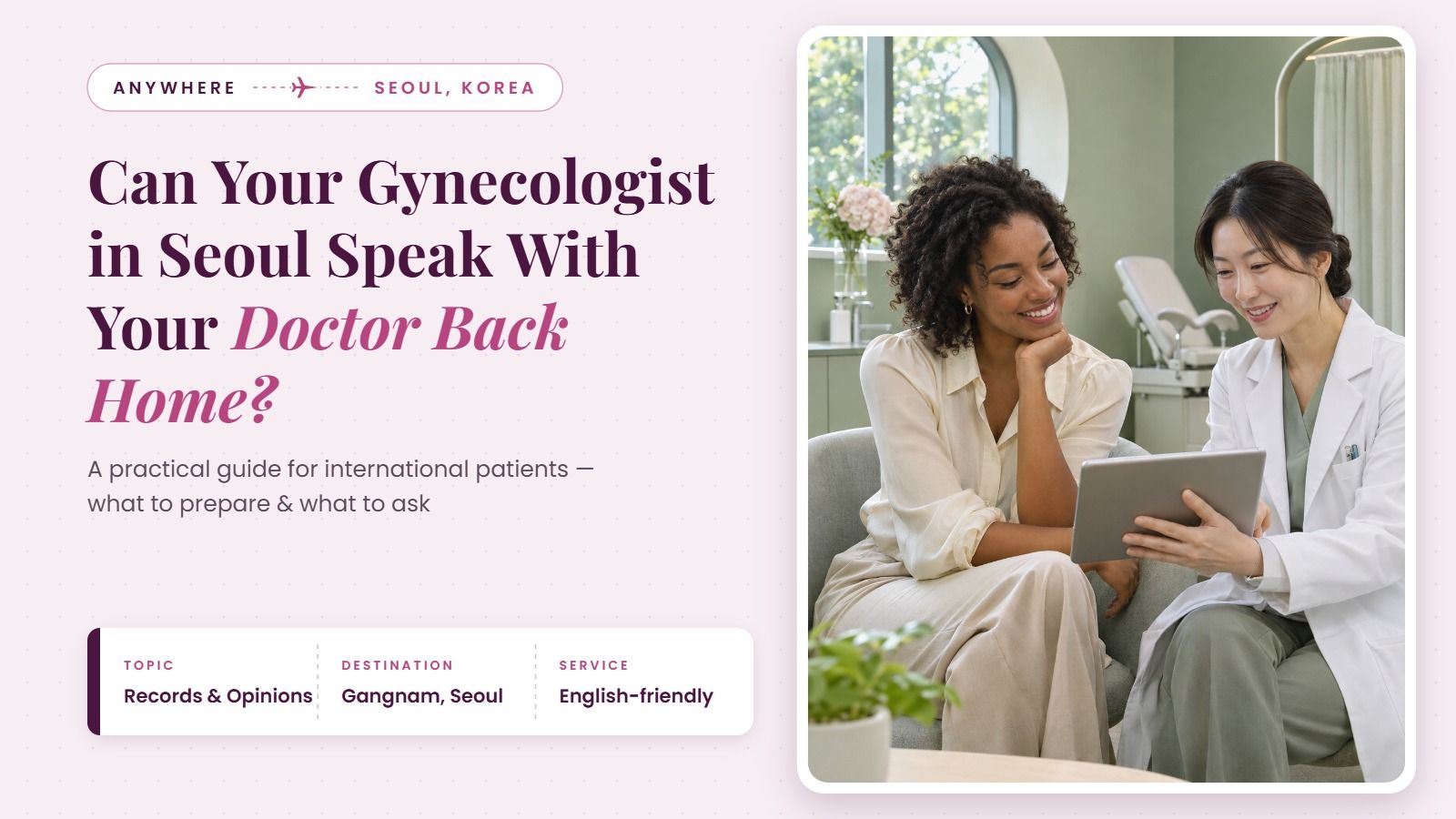
Can your gynecologist in Seoul talk to your doctor back home? Learn how doctor-to-doctor communication, consent, medical letters and records sharing usually work.
Patient sharing medical records with a gynecologist for a second opinion in Gangnam, Seoul
November 21, 2026
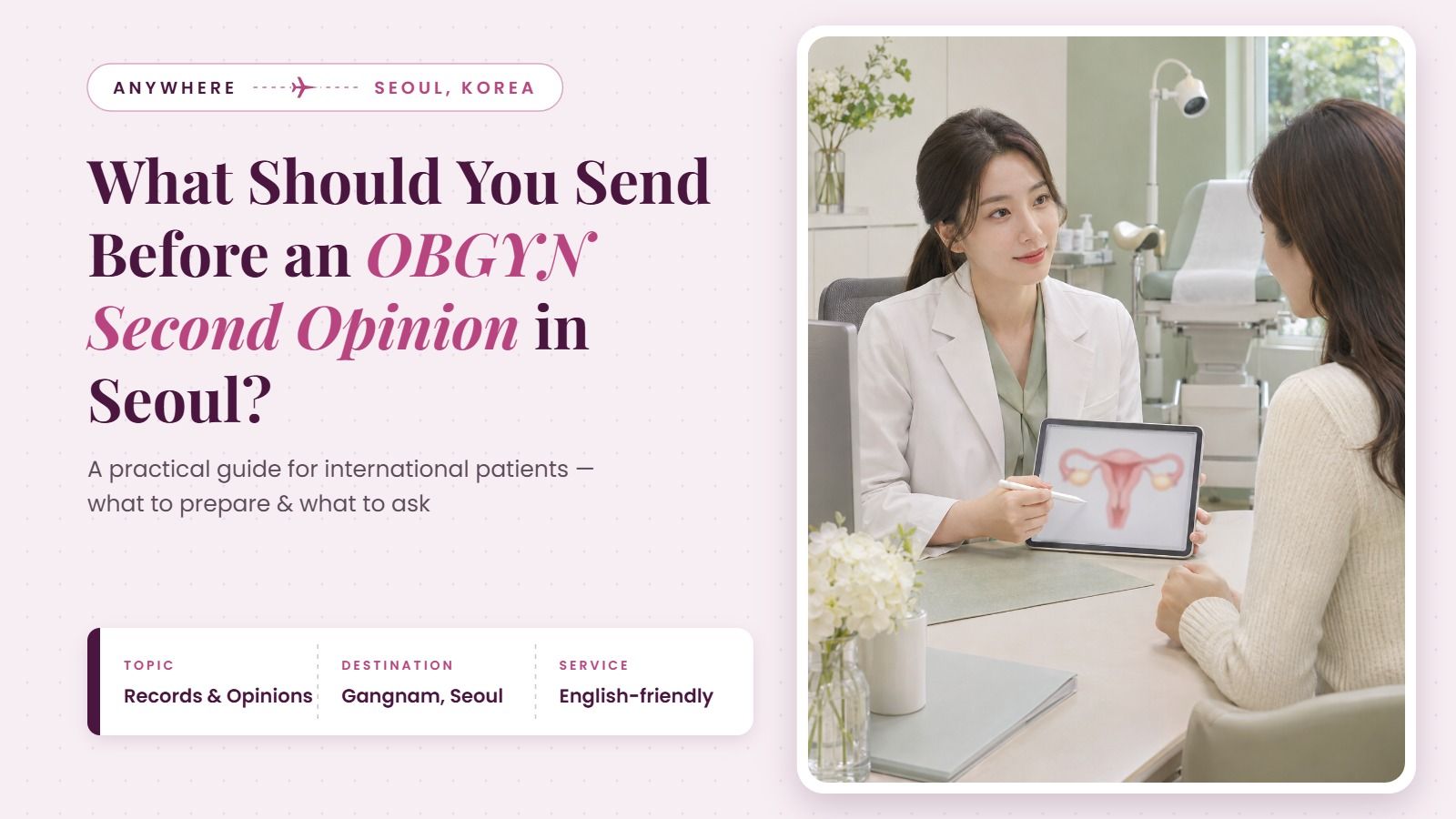
Planning an OB-GYN second opinion in Seoul? Learn which reports, images, lab results and questions to send first so the review is faster and more useful.
Foreign patient and OB-GYN reviewing ultrasound images at a women's clinic in Gangnam, Seoul
November 21, 2026
Can a Seoul OB-GYN review ultrasound images from another country? Yes. Learn which files to bring, when a repeat scan is needed, costs and tips for foreigners.
Fertility Checkup in Korea: Tests, Costs & What to Expect β€” women's clinic guide, Gangnam Seoul
October 5, 2026
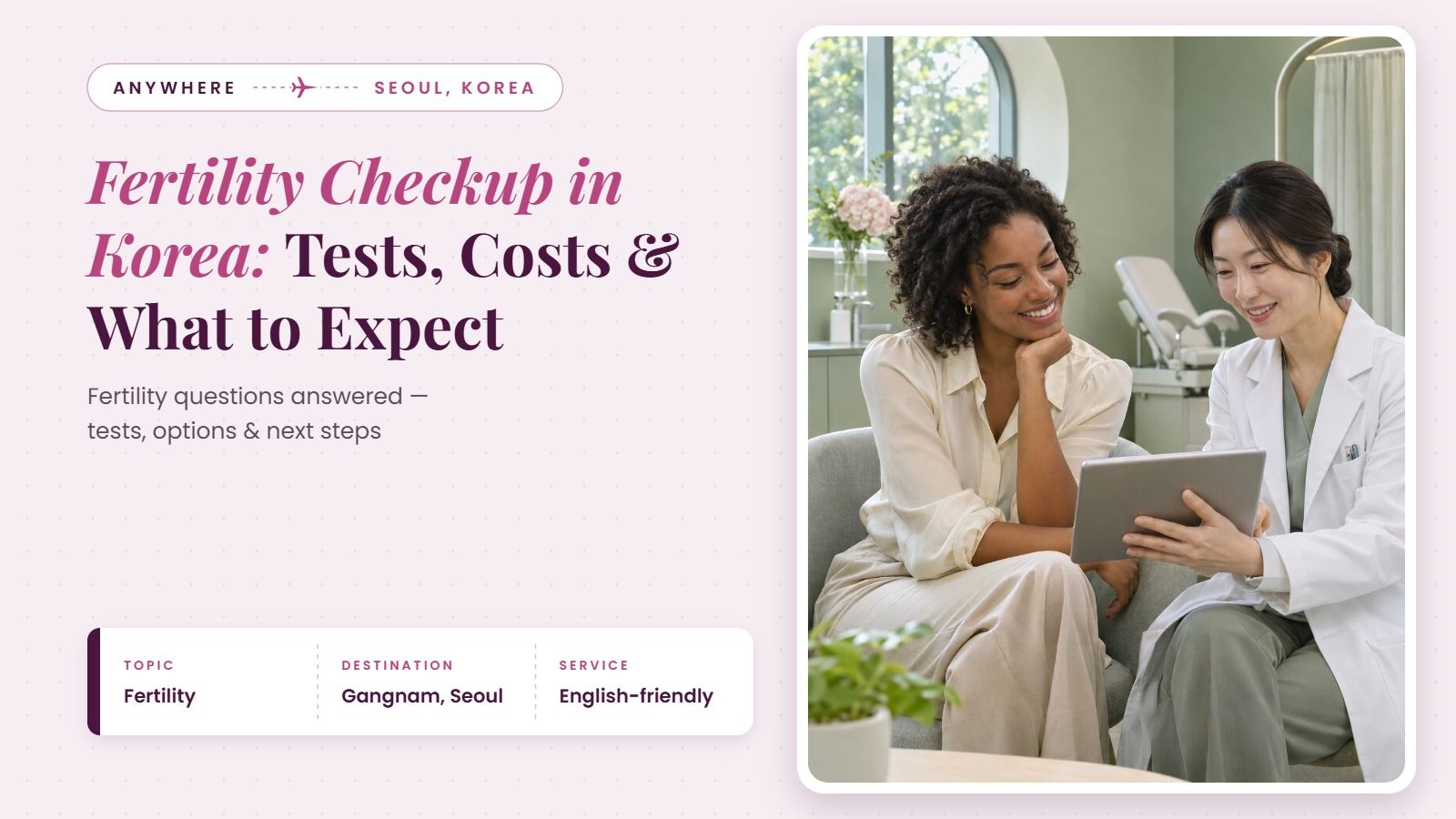
What a fertility checkup in Korea includes: ultrasound, AMH and hormone tests, tubal checks and semen analysis, plus costs and next steps, explained in English.
Lower Abdominal Pain in Women: When to Visit an OB-GYN β€” women's clinic guide, Gangnam Seoul
October 5, 2026
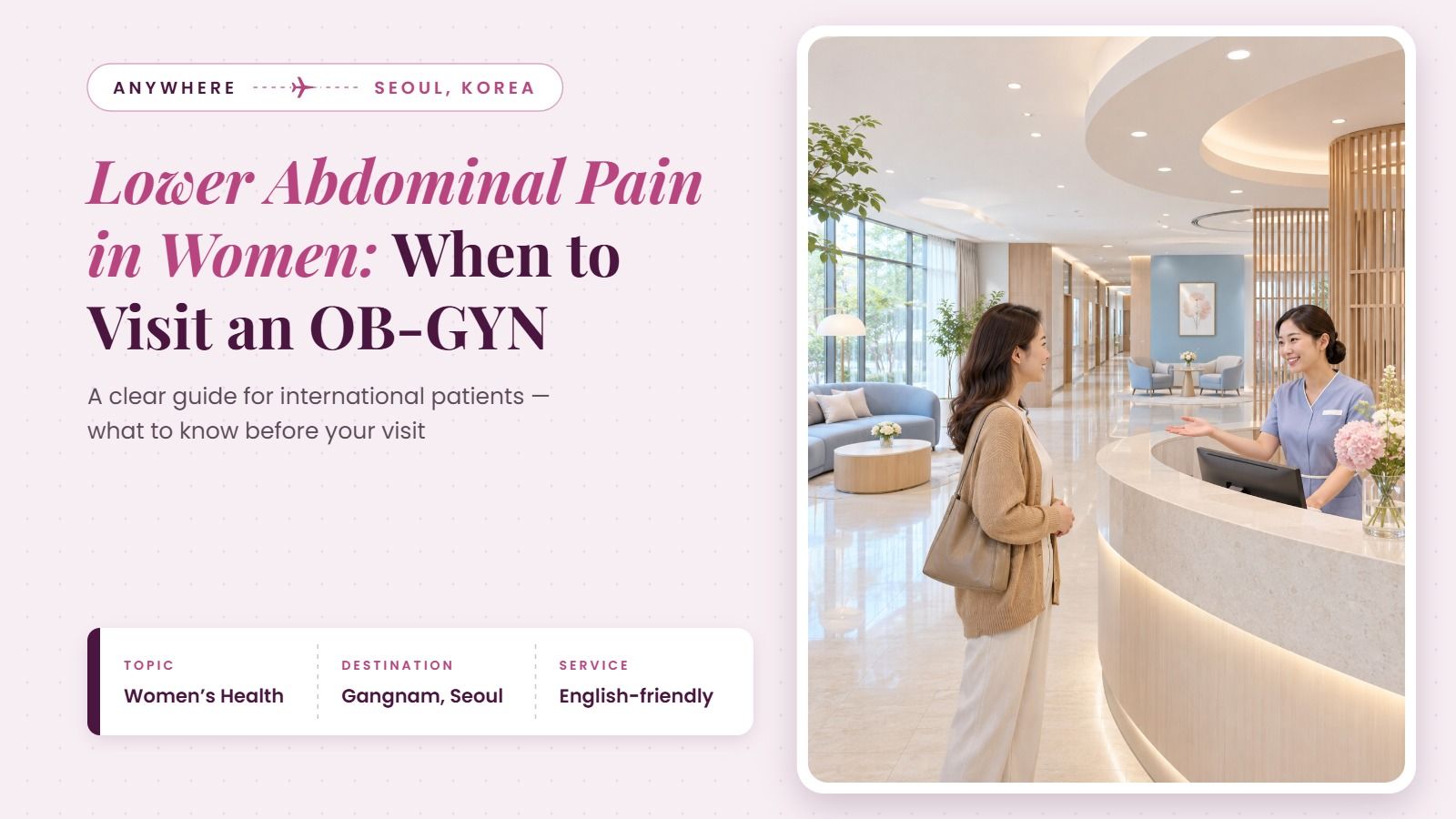
Lower abdominal pain in women: gynecologic, urinary and digestive causes, clues pointing to a gynecologic cause, when to see an OB-GYN and emergency red flags.
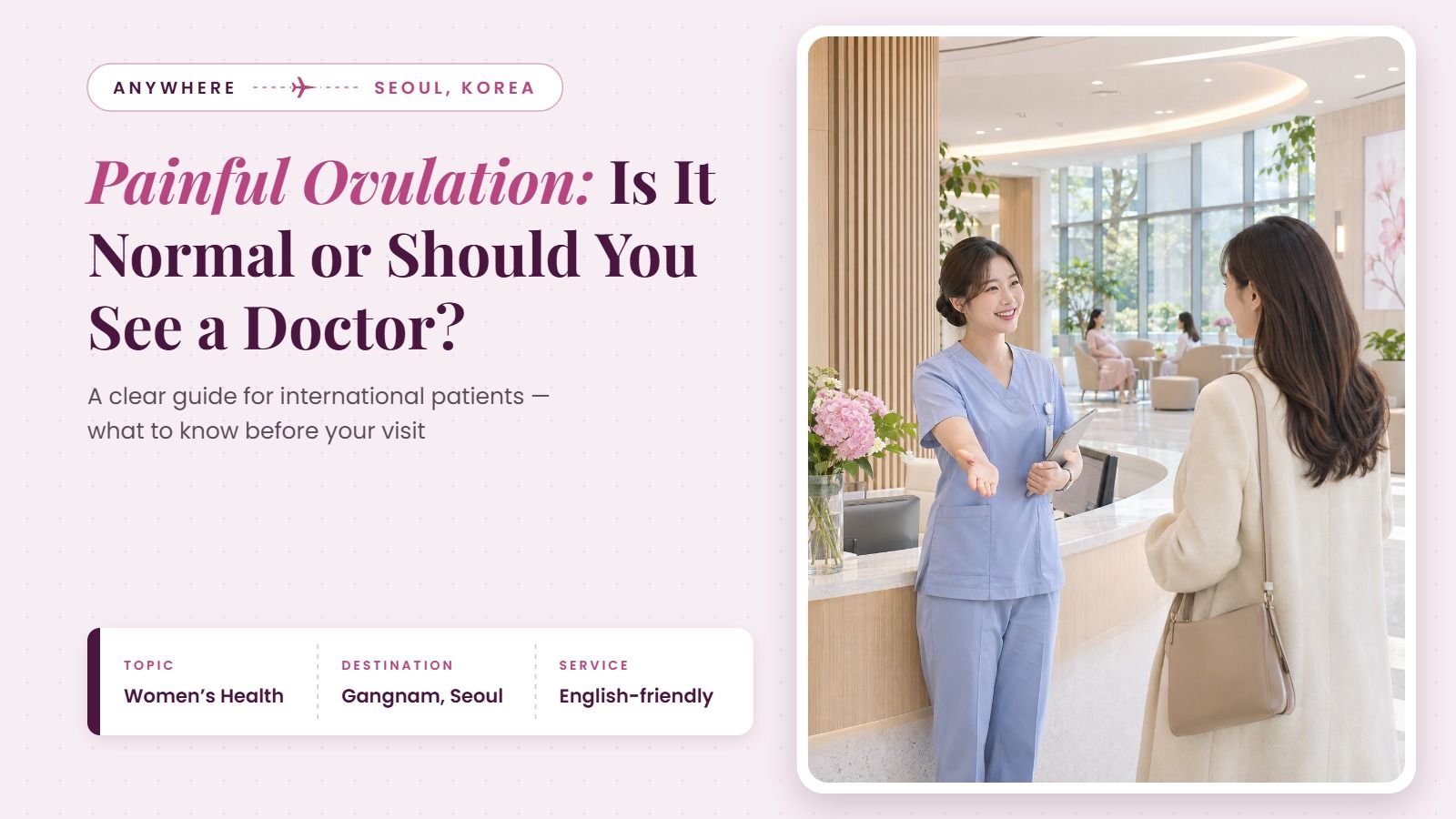
Painful Ovulation: Is It Normal or Should You See a Doctor β€” women's clinic guide, Gangnam Seoul
October 5, 2026
Painful ovulation (mittelschmerz): typical features, how to manage it, when mid-cycle pain may be something else and urgent warning signs to watch for.
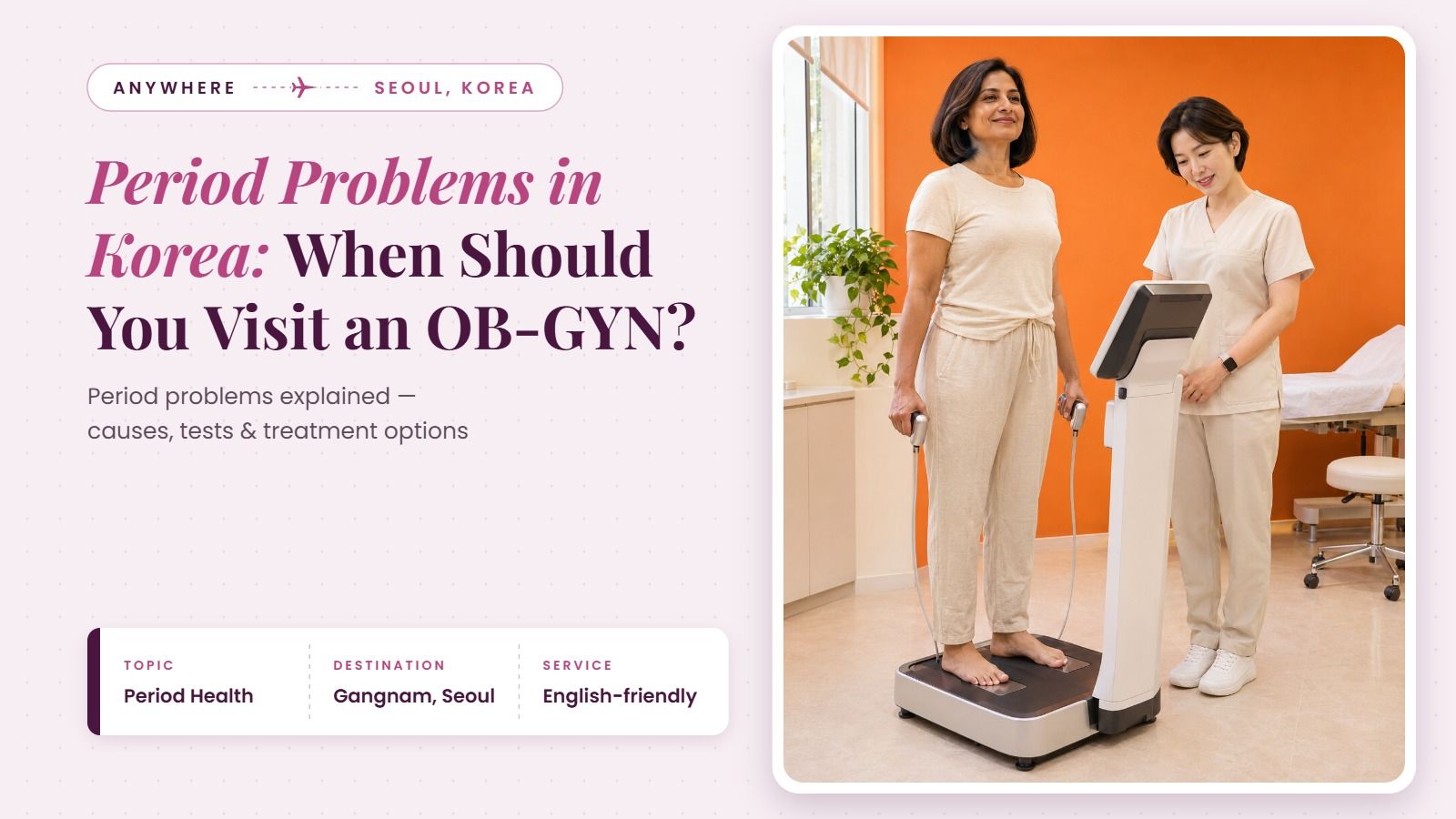
Period Problems in Korea: When Should You Visit an OB-GYN β€” women's clinic guide, Gangnam Seoul
October 5, 2026
Period problems in Korea: irregular, heavy, painful or missed periods, bleeding between periods and severe PMS — when to see an OB-GYN and what to expect.
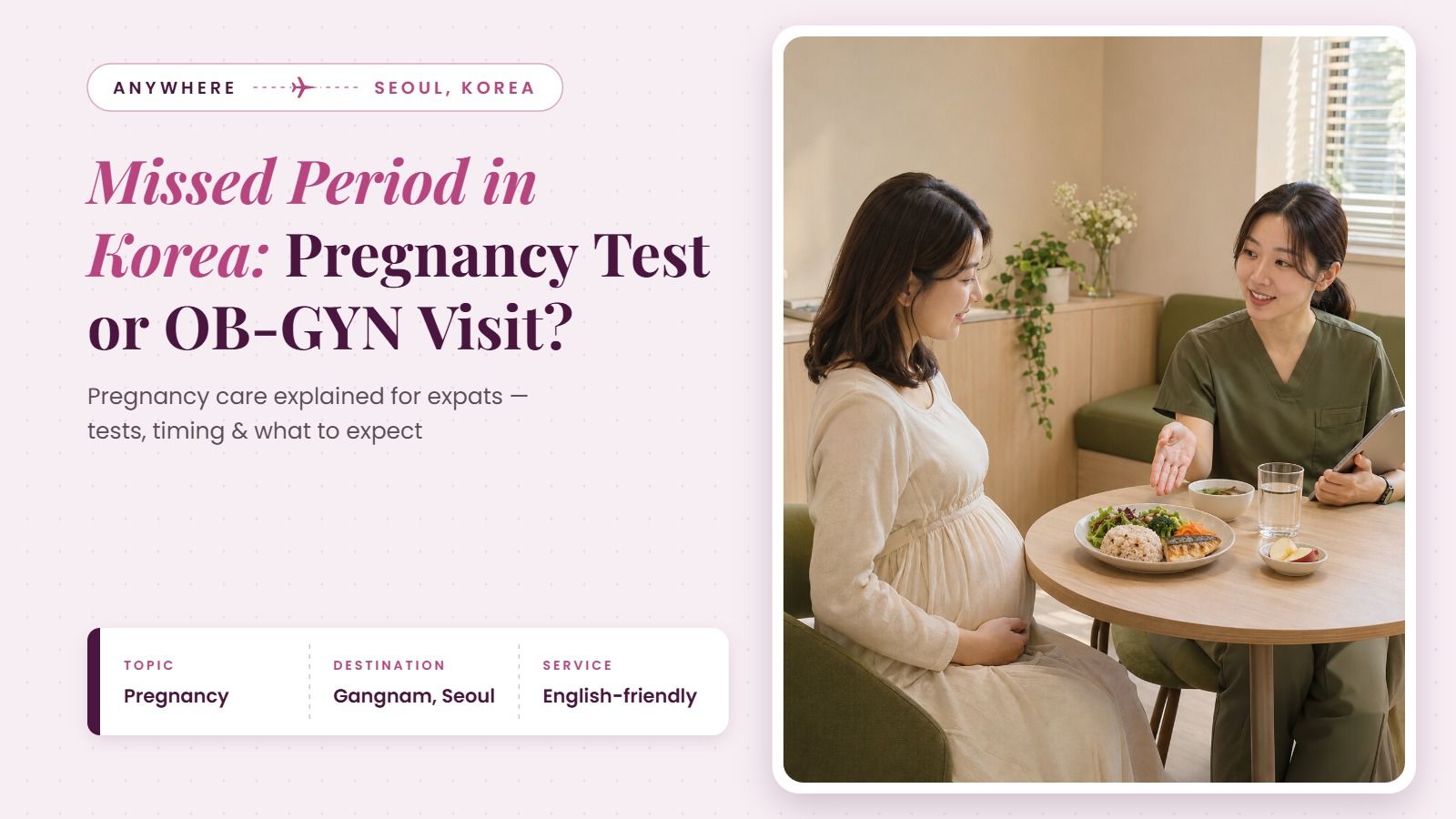
Missed Period in Korea: Pregnancy Test or OB-GYN Visit β€” women's clinic guide, Gangnam Seoul
October 5, 2026
Missed your period in Korea? When to take a pregnancy test, what to do if it is positive or negative, when to see an OB-GYN and emergency signs to watch for.