Does Korean Health Insurance Cover OB-GYN Visits for Foreigners?
What NHIS covers, what it doesn't and how to claim private insurance
Quick answer: Foreigners enrolled in Korea’s National Health Insurance Service (NHIS) — generally those staying six months or more, or employed — are covered for medically necessary OB-GYN care with a co-payment. Routine screening ultrasound, many contraception methods, HPV vaccines and cosmetic procedures are usually not covered. Short-term visitors pay out of pocket.
Health insurance is one of the biggest questions foreign women have about OB-GYN care in Korea. The good news: if you're enrolled in Korea's National Health Insurance Service (NHIS), many gynecological visits and tests are partly covered. Here's how it works.

Who Is Covered?
- Foreign employees enrolled through their workplace
- Most foreign residents who have stayed in Korea for six months or longer, who are generally required to enroll
- Eligible dependents of insured residents
Short-term visitors and tourists are not usually covered by NHIS and pay out of pocket or use travel insurance.
What NHIS Usually Covers
- Consultations for symptoms or medical conditions
- Many tests and ultrasounds ordered for medical reasons
- Treatment of infections and gynecologic conditions
- Many prenatal services, plus the pregnancy medical expense voucher for eligible mothers
- National screening programs, such as cervical cancer screening for eligible women
What Is Often Not Covered
- Contraception, including IUDs and implants used for birth control
- Many vaccines, such as the HPV vaccine for adults
- Elective checkup packages
- Cosmetic gynecology procedures
- Some advanced or optional tests
How Much Will You Pay?
For covered clinic services, patients typically pay a share of the cost — often around 30% at clinics. Non-covered items are paid in full. Ask the clinic for an estimate before tests.
Using Private or Travel Insurance
Most foreign insurers reimburse after you pay. Ask the clinic for:
- An itemized bill
- A payment receipt
- A medical certificate or diagnosis note if required
Tips
- Bring your ARC so the clinic can check your NHIS status
- Keep all receipts
- Ask which items are covered before agreeing to tests
Frequently Asked Questions
Who must join NHIS in Korea?
Most foreign residents staying six months or longer, and employees at workplaces with health insurance, are enrolled in NHIS.
Is pregnancy care covered for foreigners with NHIS?
Yes. Insured foreigners receive coverage for pregnancy care and can apply for the pregnancy and childbirth voucher.
What if I only have travel insurance?
Pay at the clinic and claim later with an itemized receipt and medical certificate.
Related Guides
- OB-GYN Visit Cost in Korea: What Foreign Patients Should Expect
- How Much Does a Gynecological Ultrasound Cost in Korea?
- Prenatal Care in Korea: A Guide for Foreign Mothers
- Can Foreigners Get a Women's Health Checkup in Korea?
- Complete Guide to Women's Healthcare in Korea for Foreigners
Book an English-Speaking OB-GYN Visit in Gangnam
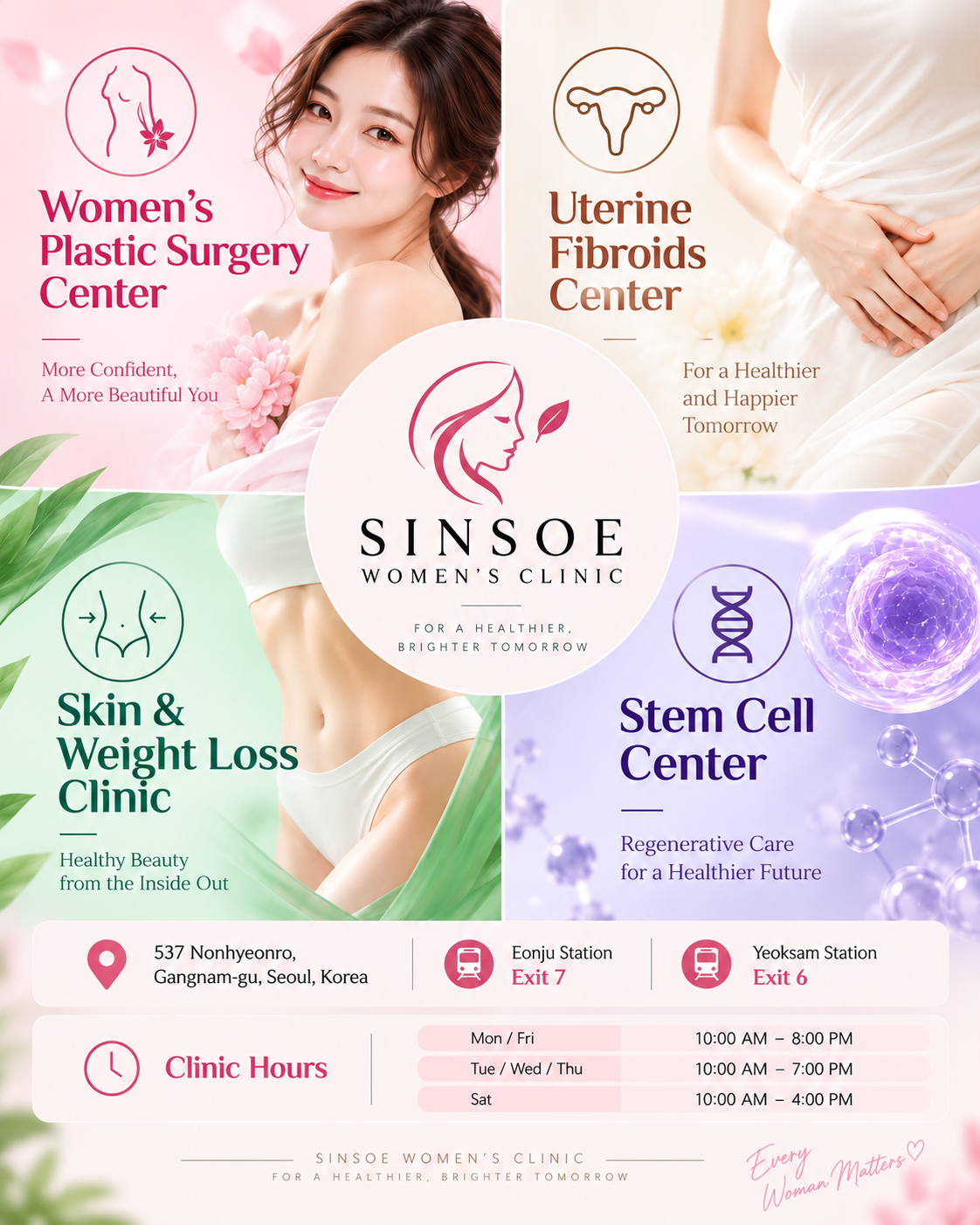
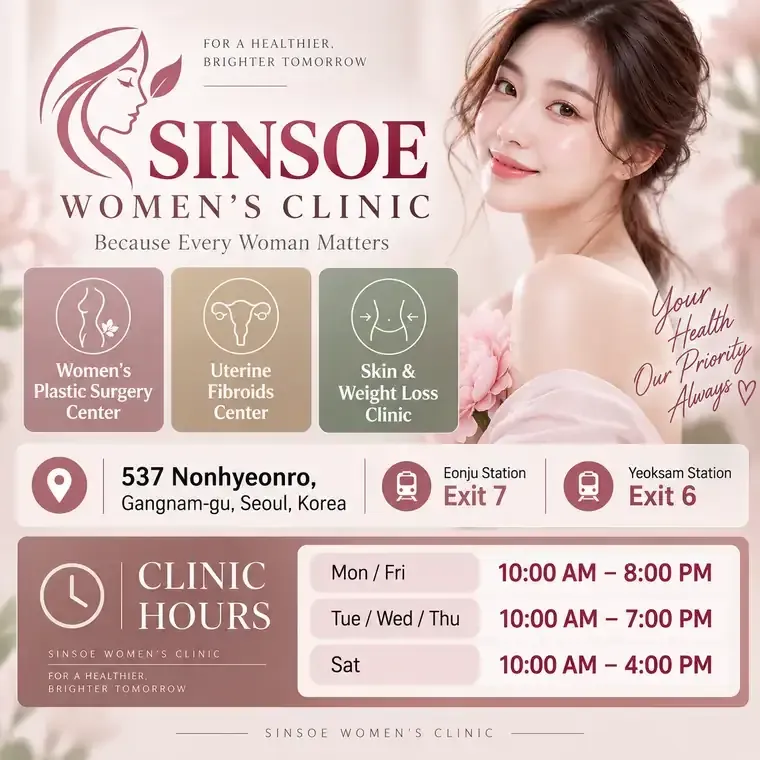
Sinsoe Women's Clinic is a female-led OB-GYN clinic at 537 Nonhyeon-ro, Gangnam-gu, Seoul, a short walk from Eonju Station (Line 9, Exit 7) and Yeoksam Station (Line 2, Exit 6). All physicians are female, board-certified OB-GYNs, and consultations are available in English. Message us on WhatsApp (+82-10-9517-5719) to book.
Hours: Mon & Fri 10:00–20:00 · Tue–Thu 10:00–19:00 · Sat 10:00–16:00 · Closed Sundays
This article is for general information only and is not a substitute for medical advice. Prices and procedures can change — please confirm details directly with the clinic.