Birth Control in Korea: A Complete Guide for Foreign Women
Pills, IUDs, implants and emergency options — how contraception works in Korea and how to access it in English
Quick answer: In Korea, most birth control pills are sold at pharmacies without a prescription, while IUDs, the contraceptive implant and some pills require an OB-GYN visit. Condoms are widely available, and the morning-after pill needs a prescription. An English-speaking OB-GYN can help you choose and continue your method from home.
Moving to Korea — or staying for a few months — doesn't mean putting your contraception on hold. Korea has a wide range of birth control options, from pills you can buy at a pharmacy to long-acting methods like IUDs and implants. This guide explains each option, how to access it as a foreigner and what to expect when you visit an OB-GYN in English.

Your Main Birth Control Options in Korea
- Combined oral contraceptive pills — taken daily; several brands are sold at pharmacies without a prescription.
- Prescription pills — some newer formulations (for example, drospirenone-based pills) require a doctor's prescription.
- Hormonal IUD — a small device placed in the uterus that releases progestin and lasts several years.
- Copper IUD — hormone-free and long-lasting.
- Contraceptive implant — a small rod placed under the skin of the upper arm that lasts up to three years.
- Condoms — widely available in convenience stores and pharmacies, and the only method that also protects against STIs.
- Emergency contraception — available in Korea with a prescription.
Do You Need a Prescription?
It depends on the method. Many standard combined pills can be bought over the counter at a Korean pharmacy. Prescription-only pills, the morning-after pill, IUDs and implants all require a visit to a doctor. An OB-GYN visit is also a good idea if you have health conditions such as migraines with aura, high blood pressure, a history of blood clots, or if you smoke and are over 35, because these can affect which method is safe for you.
Choosing the Right Method
The best method is the one that fits your health, lifestyle and plans. Questions worth discussing with your doctor include:
- How long do you want protection — months or years?
- Would you prefer a hormone-free option?
- How do you feel about taking a pill every day?
- Do you have heavy or painful periods that a hormonal method might improve?
- Are you planning a pregnancy in the near future?
Approximate Costs
Prices vary by clinic and product, and most contraception is not covered by National Health Insurance. As a rough guide, a month of over-the-counter pills often costs around ₩10,000–25,000, while IUDs and implants typically cost several hundred thousand won including insertion. Ask the clinic for a full estimate before any procedure.
Bringing Contraception From Home
If you use a pill from your home country, bring the packaging or a photo of the ingredients list. A Korean doctor or pharmacist can usually match the active ingredients to a local brand so you can switch without a gap in protection.
Tips for Foreign Women
- Book with a clinic where the doctor consults in English, so you can discuss side effects and options clearly.
- Keep a note of your last period and any medications you take.
- Remember that only condoms protect against STIs — consider regular STI screening if you have a new partner.
Frequently Asked Questions
Can I buy birth control pills in Korea without a prescription?
Many combined pills are available over the counter at Korean pharmacies, but newer or progestin-only pills and the morning-after pill need a doctor’s prescription.
Which long-acting contraception is available in Korea?
Hormonal and copper IUDs and the contraceptive implant (Nexplanon) are available at OB-GYN clinics.
Can I continue the birth control I used at home?
Often yes, or a close equivalent. Bring the packaging or the name of the active ingredients so the doctor or pharmacist can match it.
Related Guides
- How to Get Birth Control Pills in Korea
- IUD in Korea: Cost, Procedure & Options for Foreigners
- Birth Control Implant in Korea: A Guide to Nexplanon/Implanon
- Emergency Contraception in Korea: How to Get the Morning-After Pill
- Complete Guide to Women's Healthcare in Korea for Foreigners
Book an English-Speaking OB-GYN Visit in Gangnam
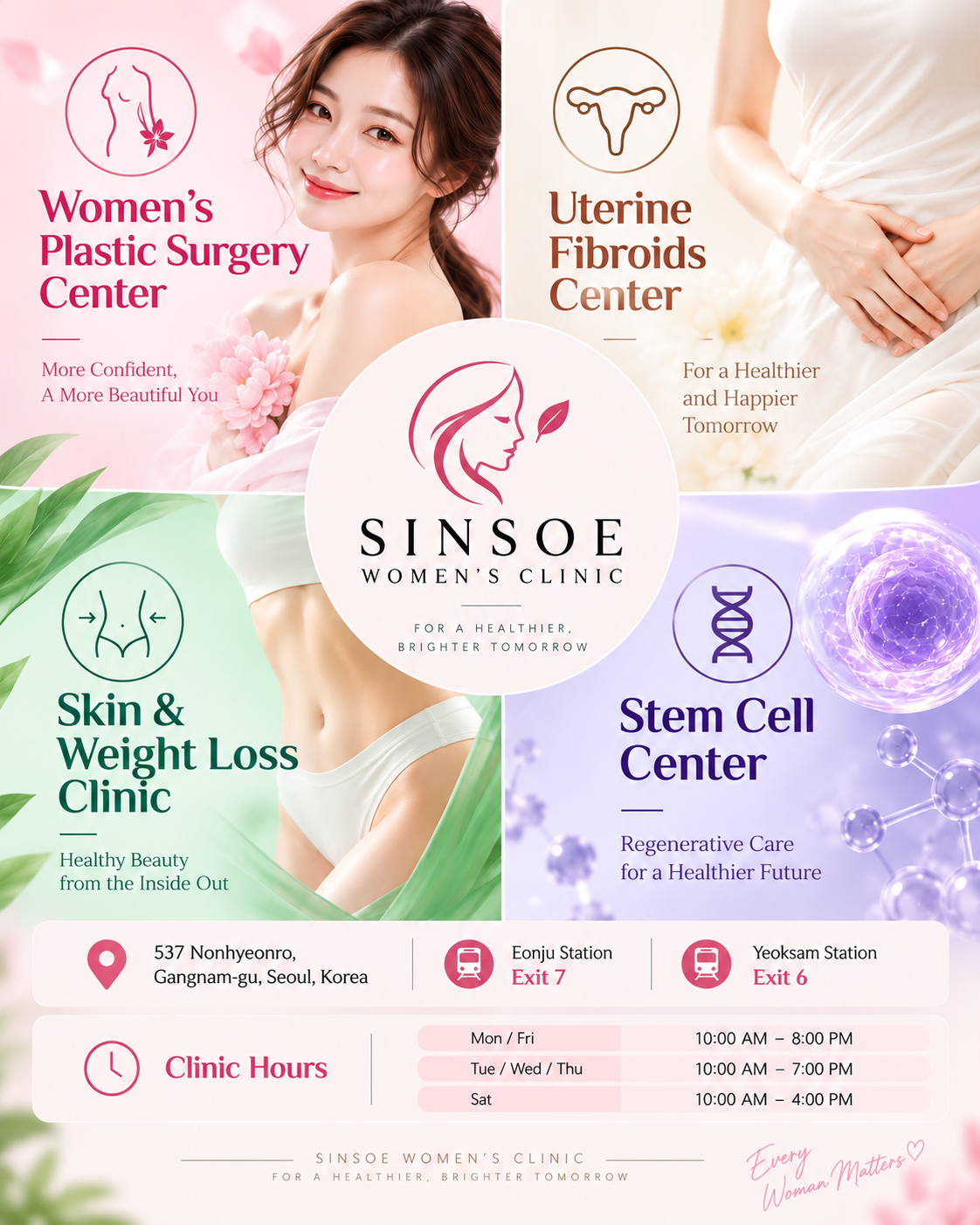
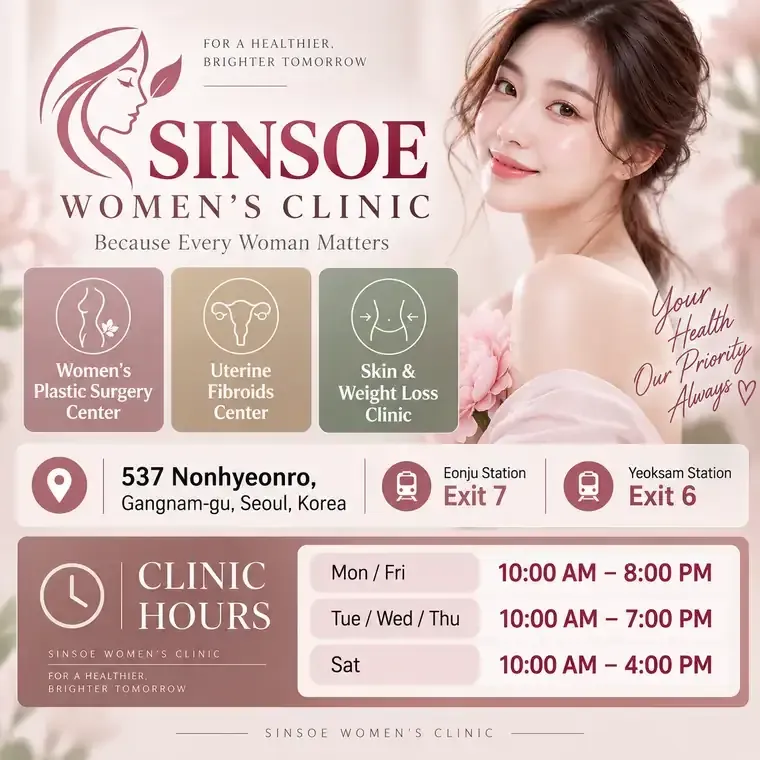
Sinsoe Women's Clinic is a female-led OB-GYN clinic at 537 Nonhyeon-ro, Gangnam-gu, Seoul, a short walk from Eonju Station (Line 9, Exit 7) and Yeoksam Station (Line 2, Exit 6). All physicians are female, board-certified OB-GYNs, and consultations are available in English. Message us on WhatsApp (+82-10-9517-5719) to book.
Hours: Mon & Fri 10:00–20:00 · Tue–Thu 10:00–19:00 · Sat 10:00–16:00 · Closed Sundays
This article is for general information only and is not a substitute for medical advice. Prices and procedures can change — please confirm details directly with the clinic.