HPV Test in Korea: Cost, Procedure & Results Explained
What an HPV test checks, how it's done and how to read your results
Quick answer: An HPV test in Korea checks a cervical sample for high-risk HPV types that can cause cervical cancer. It is taken the same way as a Pap smear, takes a few minutes and results usually come back within about a week. A positive result is common and usually means follow-up, not cancer.
The HPV test is one of the most important tools for preventing cervical cancer. It checks for high-risk types of human papillomavirus — the virus responsible for almost all cervical cancers. Here's how HPV testing works in Korea, what it costs and how to understand your results.
What Is HPV?
HPV is a very common virus spread through intimate skin-to-skin contact. Most sexually active people will have HPV at some point, and in most cases the immune system clears it within one to two years. Persistent infection with high-risk types, however, can cause cell changes in the cervix that may develop into cancer over time.
What the HPV Test Checks
The test looks for the genetic material of high-risk HPV types, such as types 16 and 18. Many clinics in Korea offer HPV genotyping, which identifies the specific types present.
How the Test Is Done
- You lie on the exam chair, often behind a privacy curtain.
- A speculum is inserted to view the cervix.
- A small brush collects cells from the cervix — this takes only a few seconds.
The HPV test is often done at the same time as a Pap smear using the same sample.
Preparing for the Test
- Schedule it when you're not on your period.
- Avoid sex, douching and vaginal medications for 24–48 hours beforehand.
Approximate Cost
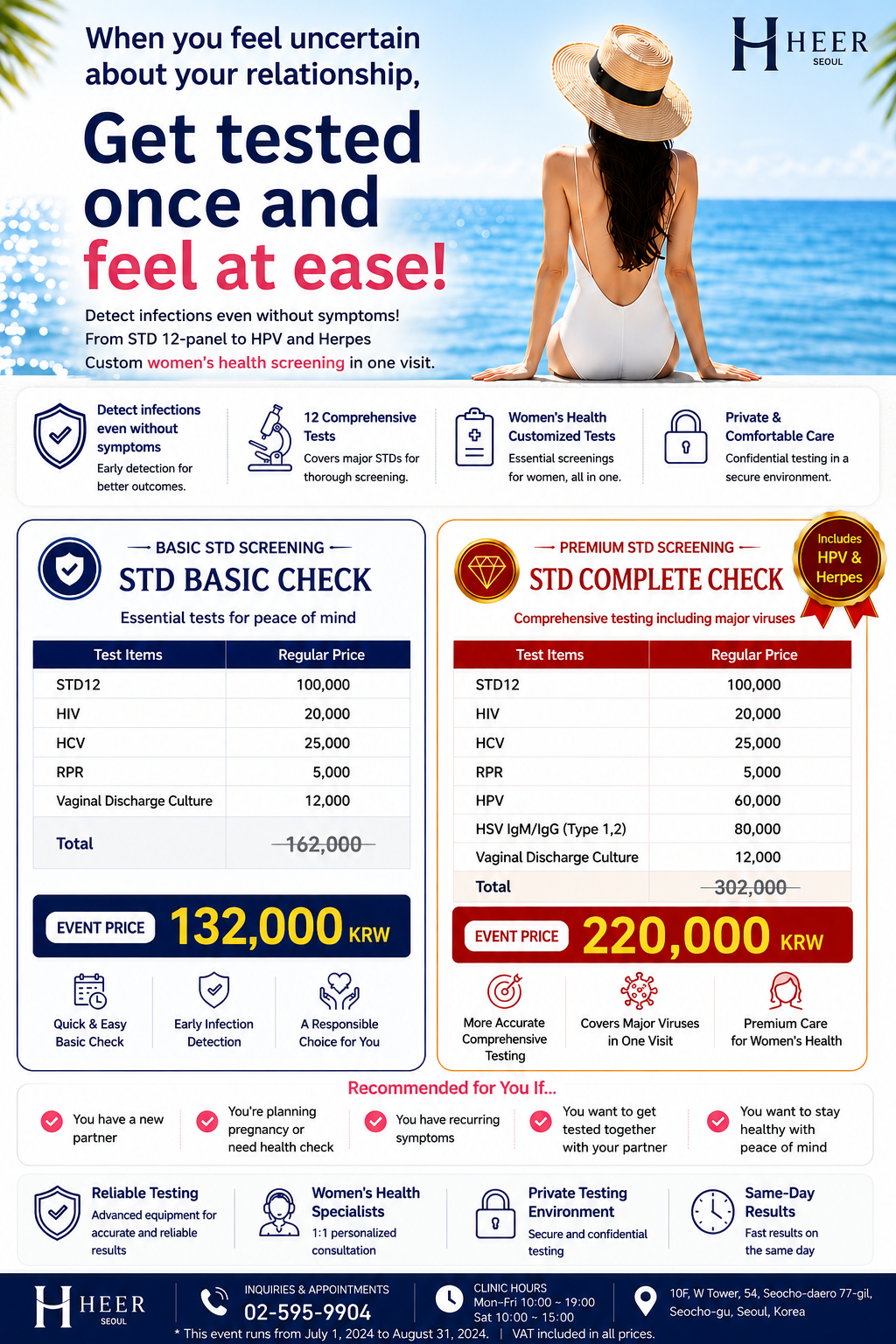
When done for screening rather than symptoms, the HPV test is usually paid out of pocket. As a rough guide, costs often range from around ₩50,000 to over ₩100,000 depending on whether genotyping is included. Ask the clinic for a quote.
Understanding Your Results
- Negative: no high-risk HPV detected. Your doctor will advise when to repeat screening.
- Positive: high-risk HPV is present. This does not mean you have cancer. Your doctor will look at your Pap smear result and HPV type to decide on next steps, such as repeat testing or colposcopy.
Results usually take about one week.
Can HPV Be Treated?
There is no medicine that eliminates HPV itself, but cell changes caused by HPV can be monitored and treated very effectively. Not smoking supports your immune system's ability to clear the virus.
Prevention
The HPV vaccine protects against the most common high-risk types. Regular screening remains important even after vaccination.
Frequently Asked Questions
Does a positive HPV test mean I have cancer?
No. Most HPV infections clear on their own within one to two years; a positive result means your doctor will recommend follow-up, such as repeat testing or colposcopy.
Can the HPV test be done with a Pap smear?
Yes. Co-testing uses the same sample to check both cell changes and the virus.
Can men be tested for HPV in Korea?
There is no routine screening test for men, though some clinics offer testing in specific situations.
Related Guides
- Pap Smear vs HPV Test: What's the Difference?
- Pap Smear in Korea: A Guide for Foreign Women
- HPV Vaccine in Korea: Cost, Schedule & Where to Get It
- Abnormal Pap Smear in Korea: What Happens Next?
- Complete Guide to Women's Healthcare in Korea for Foreigners
Book an English-Speaking OB-GYN Visit in Gangnam
Sinsoe Women's Clinic is a female-led OB-GYN clinic at 537 Nonhyeon-ro, Gangnam-gu, Seoul, a short walk from Eonju Station (Line 9, Exit 7) and Yeoksam Station (Line 2, Exit 6). All physicians are female, board-certified OB-GYNs, and consultations are available in English. Message us on WhatsApp (+82-10-9517-5719) to book.
Hours: Mon & Fri 10:00–20:00 · Tue–Thu 10:00–19:00 · Sat 10:00–16:00 · Closed Sundays
This article is for general information only and is not a substitute for medical advice. Prices and procedures can change — please confirm details directly with the clinic.