Ovarian Cysts: Symptoms, Ultrasound & Treatment in Korea
Most cysts are harmless — here's how doctors decide what to do
Quick answer: Most ovarian cysts are functional cysts that form during the menstrual cycle and disappear on their own within a few cycles. A transvaginal ultrasound shows the size and type. Cysts that persist, grow or look complex may need follow-up, medication or surgery, and sudden severe pain needs emergency care.
Ovarian cysts are fluid-filled sacs on or in an ovary. They're very common, and most are harmless and disappear on their own. Still, some cysts need monitoring or treatment. Here's what you should know about symptoms, ultrasound and treatment in Korea.

Types of Ovarian Cysts
- Functional cysts: follicular and corpus luteum cysts form during the normal menstrual cycle and usually resolve within a few cycles.
- Endometriomas: cysts related to endometriosis.
- Dermoid cysts: benign growths that can contain various tissues.
- Cystadenomas: benign cysts that develop on the ovary surface.
- Polycystic ovaries: many small follicles, often seen in PCOS.
Symptoms
Many cysts cause no symptoms and are found during a routine ultrasound. When symptoms occur, they may include:
- Pelvic pain or pressure, often on one side
- Bloating
- Pain during sex
- Changes in your period
How Ultrasound Helps
A transvaginal or abdominal ultrasound shows the size and appearance of a cyst — whether it's simple and fluid-filled or more complex. This helps your doctor decide whether to watch it, test further or treat it.
Treatment Options
- Watchful waiting: a repeat ultrasound in a few weeks to months for simple cysts.
- Hormonal contraception: may help prevent new functional cysts.
- Blood tests: such as tumor markers in selected cases.
- Surgery: usually laparoscopic, for large, persistent, painful or complex cysts.
Emergency Warning Signs
Seek urgent care if you have sudden, severe pelvic pain, especially with nausea, vomiting, fever or dizziness. These can be signs of a ruptured cyst or ovarian torsion, which need immediate treatment. In Korea, call 119 or go to an emergency department.
Follow-Up Matters
Keep a copy of your ultrasound report and attend follow-up scans. An English-speaking OB-GYN can explain your results and next steps clearly.
Frequently Asked Questions
Are ovarian cysts common?
Yes, especially functional cysts in women of reproductive age, and most are harmless.
When does an ovarian cyst need surgery?
Surgery may be considered for large, persistent, painful or complex cysts, or if there is a risk of torsion.
What are emergency signs with an ovarian cyst?
Sudden severe pelvic pain, vomiting, fever or fainting can mean rupture or torsion and need urgent care.
Related Guides
- Pelvic Ultrasound in Seoul: A Guide for Foreign Women
- Pelvic Pain in Women: Common Causes & When to Seek Care
- Endometriosis in Korea: Symptoms, Diagnosis & Treatment
- Painful Ovulation: Is It Normal or Should You See a Doctor?
- Complete Guide to Women's Healthcare in Korea for Foreigners
Book an English-Speaking OB-GYN Visit in Gangnam
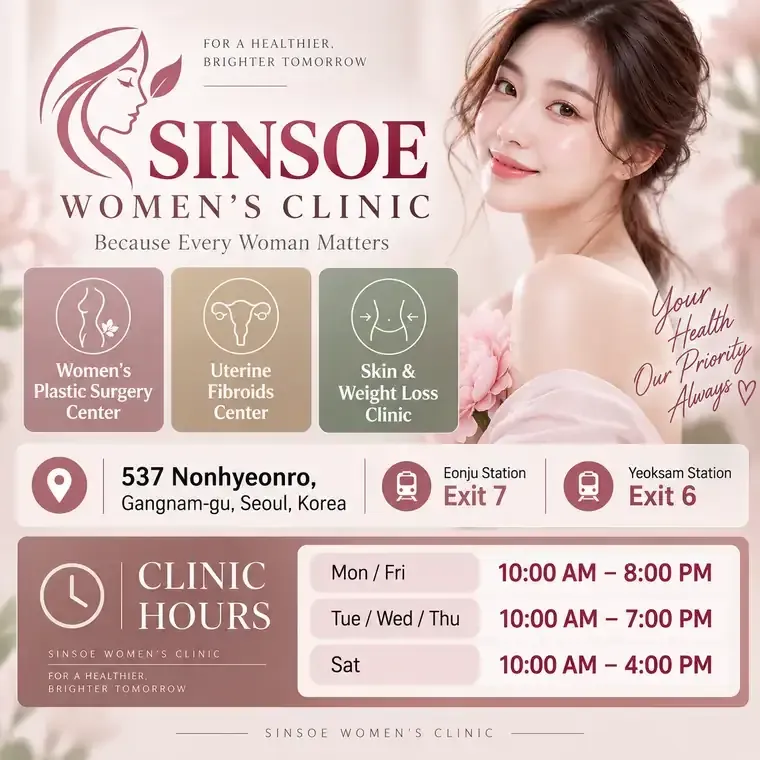
Sinsoe Women's Clinic is a female-led OB-GYN clinic at 537 Nonhyeon-ro, Gangnam-gu, Seoul, a short walk from Eonju Station (Line 9, Exit 7) and Yeoksam Station (Line 2, Exit 6). All physicians are female, board-certified OB-GYNs, and consultations are available in English. Message us on WhatsApp (+82-10-9517-5719) to book.
Hours: Mon & Fri 10:00–20:00 · Tue–Thu 10:00–19:00 · Sat 10:00–16:00 · Closed Sundays
This article is for general information only and is not a substitute for medical advice. Prices and procedures can change — please confirm details directly with the clinic.