Trying to Get Pregnant in Korea: When Should You See an OB-GYN?
How long to try before getting checked — and when to go sooner
Quick answer: See an OB-GYN if you have been trying to get pregnant for 12 months without success (under 35), 6 months (35–39), or sooner if you are 40 or older, have irregular periods, known PCOS or endometriosis, or a partner with known fertility issues. Initial tests are simple and can be started in English.
Trying to conceive can be exciting — and sometimes stressful, especially in a new country. Many couples conceive within a year, but knowing when to seek help can save time and worry. Here's a guide for women in Korea.

How Long Should You Try?
- Under 35: see a doctor after 12 months of regular unprotected sex without pregnancy.
- 35–39: see a doctor after 6 months.
- 40 and older: consider an evaluation right away.
When to Go Sooner
- Irregular or absent periods
- Very painful periods or known endometriosis
- Diagnosed PCOS, fibroids or thyroid problems
- Previous pelvic infection or abdominal surgery
- Two or more miscarriages
- Known fertility concerns in your partner
Tips to Improve Your Chances
- Track ovulation using cycle apps or ovulation test kits
- Have sex every 1–2 days during your fertile window
- Take folic acid
- Maintain a healthy weight and avoid smoking
- Limit alcohol and caffeine
What Tests to Expect
- Pelvic ultrasound
- Hormone and thyroid blood tests
- AMH test
- Tubal assessment
- Semen analysis for your partner
Treatment Options
Depending on the cause, options range from treating an underlying condition and ovulation induction to IUI or IVF at a specialist fertility center.
Emotional Support
Fertility challenges can feel isolating, especially far from home. Don't hesitate to ask your doctor about support and to take things one step at a time.
Start the Conversation in English
An English-speaking OB-GYN can begin the evaluation and help you understand each result clearly.
Frequently Asked Questions
How long does it usually take to get pregnant?
About 80–85% of couples conceive within a year of regular unprotected sex.
What are the first fertility tests?
Hormone blood tests including AMH, a pelvic ultrasound, a tubal check and a semen analysis for your partner.
Can an OB-GYN refer me to IVF in Korea?
Yes. If needed, the doctor can refer you to a specialist fertility center.
Related Guides
- Fertility Checkup in Korea: Tests, Costs & What to Expect
- AMH Test in Korea: Cost, Results & What Your Ovarian Reserve Means
- Pre-Pregnancy Checkup in Seoul: Tests to Consider Before Trying to Conceive
- PCOS Treatment in Korea: Symptoms, Diagnosis & Options
- Complete Guide to Women's Healthcare in Korea for Foreigners
Book an English-Speaking OB-GYN Visit in Gangnam
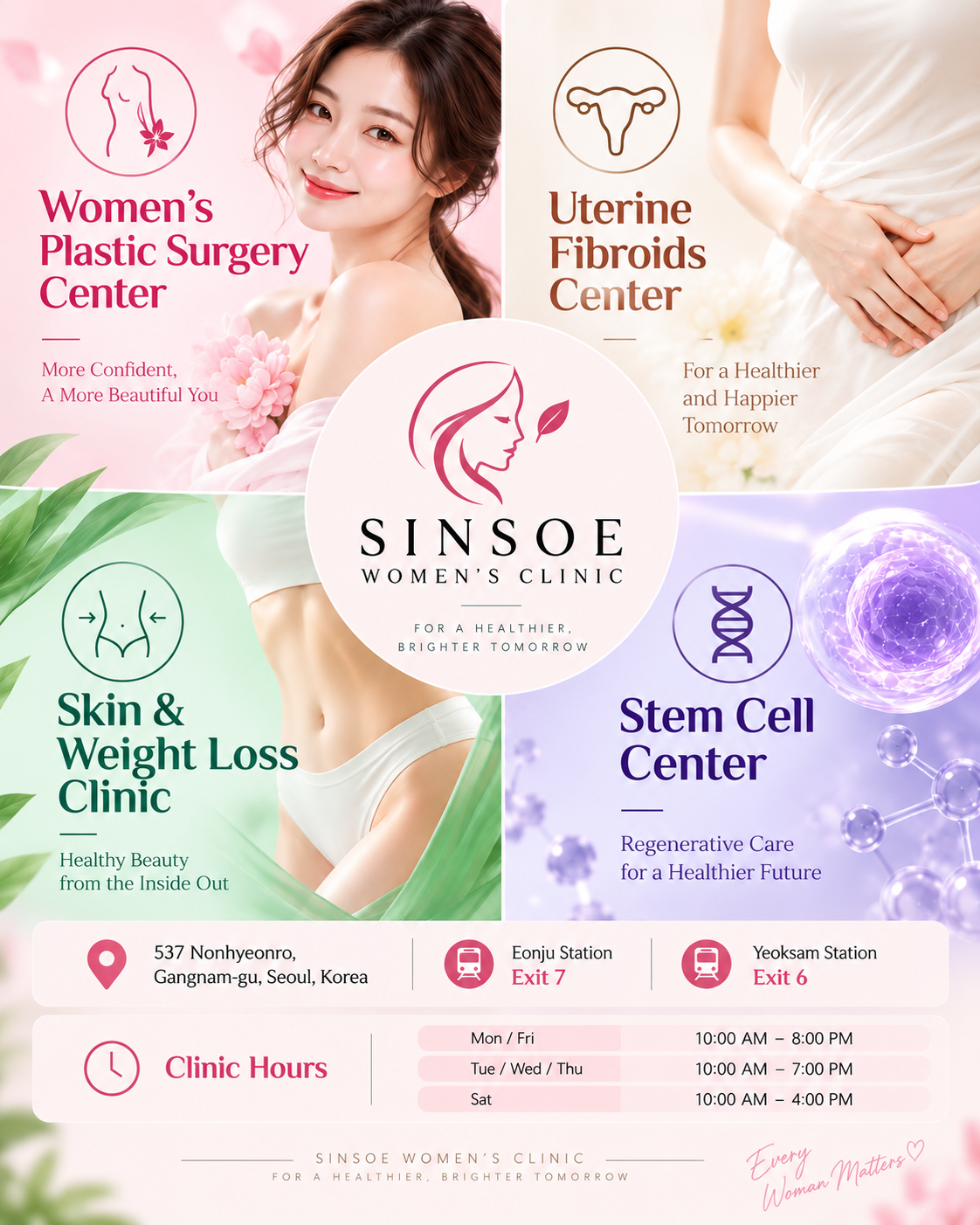
Sinsoe Women's Clinic is a female-led OB-GYN clinic at 537 Nonhyeon-ro, Gangnam-gu, Seoul, a short walk from Eonju Station (Line 9, Exit 7) and Yeoksam Station (Line 2, Exit 6). All physicians are female, board-certified OB-GYNs, and consultations are available in English. Message us on WhatsApp (+82-10-9517-5719) to book.
Hours: Mon & Fri 10:00–20:00 · Tue–Thu 10:00–19:00 · Sat 10:00–16:00 · Closed Sundays
This article is for general information only and is not a substitute for medical advice. Prices and procedures can change — please confirm details directly with the clinic.