Walk-In OB-GYN Clinics in Seoul: Can You Visit Without an Appointment?
How walk-ins work in Korea and when booking ahead is smarter
Quick answer: Most private OB-GYN clinics in Seoul accept walk-in patients during opening hours, typically weekdays and Saturday mornings. Walking in works well for simple problems, but booking ahead is better for foreigners who need an English-speaking doctor, procedures such as IUD insertion or specific test timing.
In many countries, you need to book a gynecologist weeks in advance. In Korea, it's usually different: most OB-GYN clinics in Seoul welcome walk-in patients. Here's how walk-ins work and when booking ahead is the smarter choice.
How Walk-Ins Work in Korea
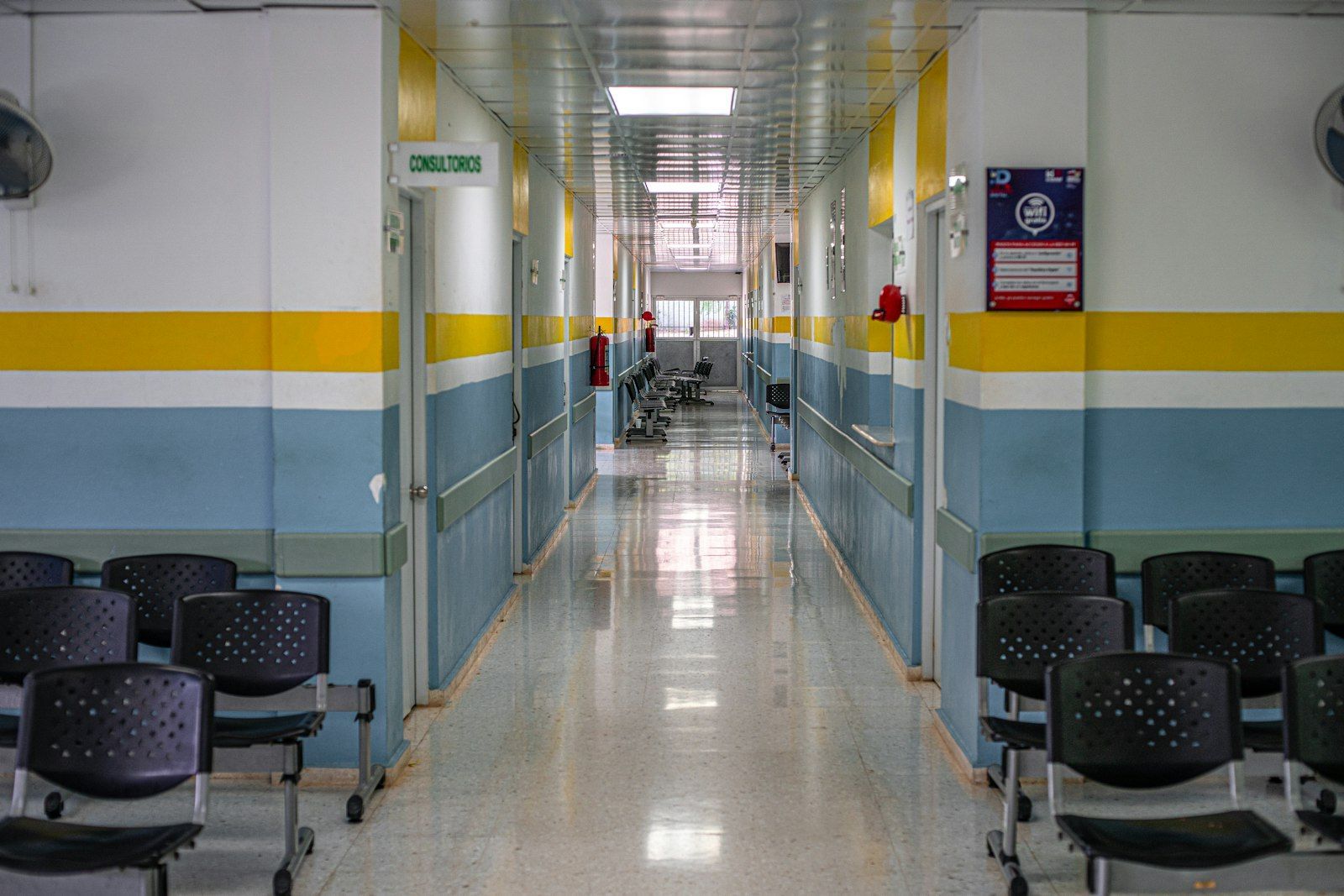
Korea's healthcare system is built around local specialist clinics. You don't need a referral to see an OB-GYN at a clinic — you can simply arrive during opening hours, register at reception and wait to be seen. Waits are often under an hour.
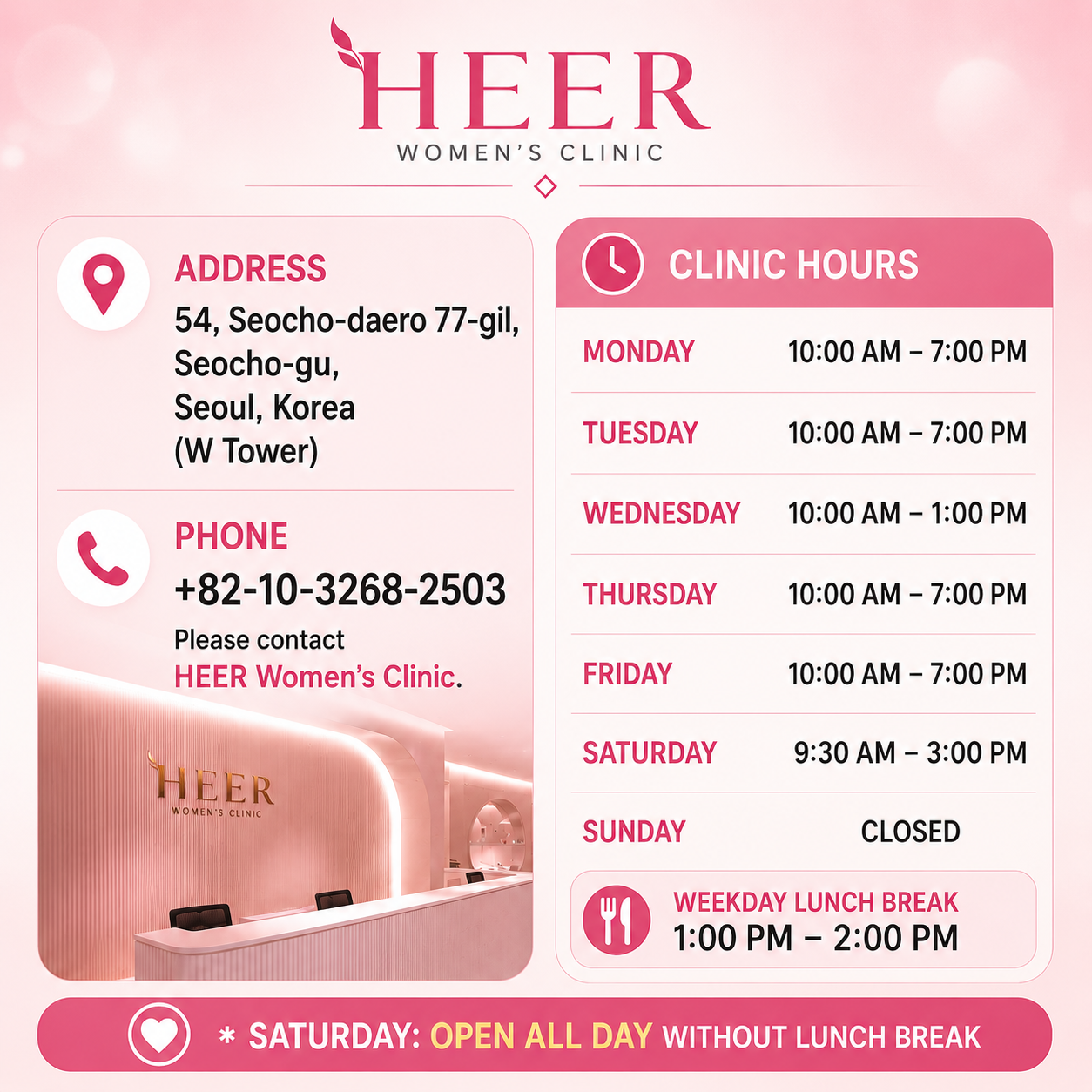
Typical Clinic Hours
- Weekdays: usually morning to early evening, with some clinics open later on certain days
- Saturdays: often open in the morning or until mid-afternoon
- Sundays and public holidays: most clinics are closed
- Lunch break: commonly around 13:00–14:00
When Booking Ahead Is Better
- You need an English-speaking doctor
- You'd prefer a female doctor
- You're having a procedure, such as IUD or implant insertion
- You want a Pap smear timed outside your period
- You want to visit on a busy Saturday or weekday evening
What to Bring
- Passport or Alien Registration Card
- Insurance information if you have NHIS
- Your last period date and medication list
The Visit Process
- Register at reception and fill in a short form
- Wait to be called
- Consultation and examination, often with an on-site ultrasound
- Payment at reception
- Prescription filled at a nearby pharmacy if needed
When to Go to the Hospital Instead
For severe pain, heavy bleeding, fainting or pregnancy-related emergencies, go to an emergency department or call 119 rather than waiting at a clinic.
The Best of Both
Many international-friendly clinics accept walk-ins but also let you book by message. Sending a quick message before you go can secure an English-speaking doctor and reduce your wait.
Frequently Asked Questions
What are typical OB-GYN clinic hours in Seoul?
Many clinics open around 9–10 am on weekdays, some stay open late on certain days and many open on Saturday mornings.
Are clinics open on Sundays?
Most private clinics are closed on Sundays; hospitals and some designated clinics provide holiday care.
What should I bring as a walk-in patient?
Your passport or ARC, insurance information and a note of your symptoms and last period date.
Related Guides
- Do I Need an Appointment to Visit an OB-GYN in Korea?
- Same-Day OB-GYN Appointment in Gangnam: What Foreigners Should Know
- Emergency OB-GYN Care in Seoul: When Should You Seek Immediate Medical Help?
- How to Visit an OB-GYN in Korea as a Foreigner
- Complete Guide to Women's Healthcare in Korea for Foreigners
Book an English-Speaking OB-GYN Visit in Gangnam
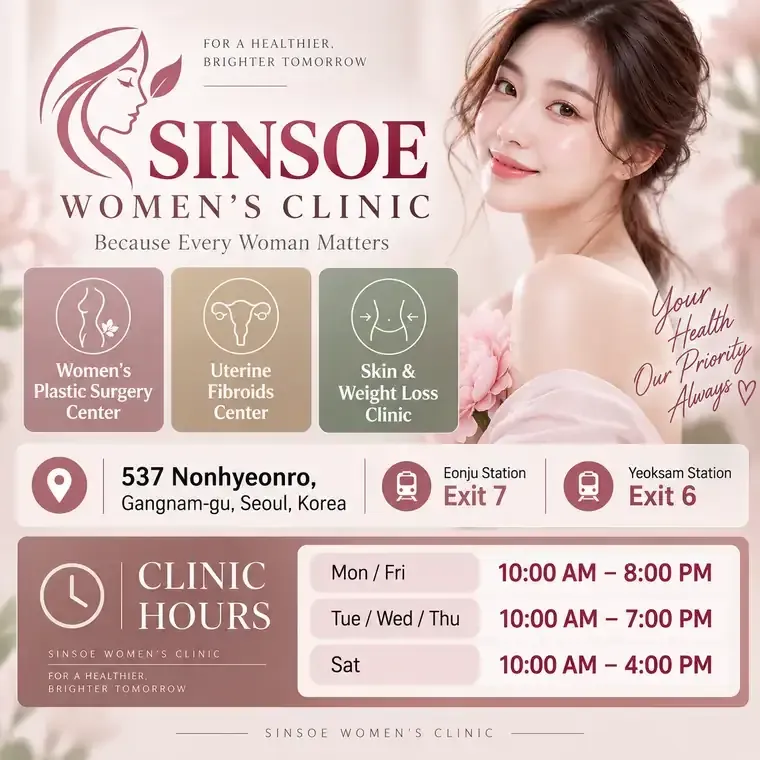
Sinsoe Women's Clinic is a female-led OB-GYN clinic at 537 Nonhyeon-ro, Gangnam-gu, Seoul, a short walk from Eonju Station (Line 9, Exit 7) and Yeoksam Station (Line 2, Exit 6). All physicians are female, board-certified OB-GYNs, and consultations are available in English. Message us on WhatsApp (+82-10-9517-5719) to book.
Hours: Mon & Fri 10:00–20:00 · Tue–Thu 10:00–19:00 · Sat 10:00–16:00 · Closed Sundays
This article is for general information only and is not a substitute for medical advice. Prices and procedures can change — please confirm details directly with the clinic.