Genital Warts Treatment in Korea: What Foreign Patients Should Know
Causes, diagnosis and treatment options for genital warts — handled discreetly
Quick answer: Genital warts are caused by low-risk types of HPV. In Korea an OB-GYN can usually diagnose them with an exam and treat them with options such as cryotherapy, laser or electrocautery, or prescription creams. Warts can come back, so follow-up visits and HPV vaccination may be recommended.
Genital warts are one of the most common sexually transmitted conditions worldwide. They are caused by certain low-risk types of human papillomavirus (HPV) and, while they can be upsetting, they are not dangerous and are very treatable. Here's what foreign patients in Korea should know about diagnosis and treatment.
What Causes Genital Warts?
Most genital warts are caused by HPV types 6 and 11. These are different from the high-risk types linked to cervical cancer. HPV spreads through skin-to-skin contact during sex, and condoms reduce — but don't completely eliminate — the risk.
Common Signs
- Small, flesh-colored or gray bumps in the genital or anal area
- Growths that may be flat, raised or cauliflower-like
- Occasional itching, irritation or mild bleeding
Many people have HPV without visible warts, and warts may appear weeks to months after exposure.
How Diagnosis Works
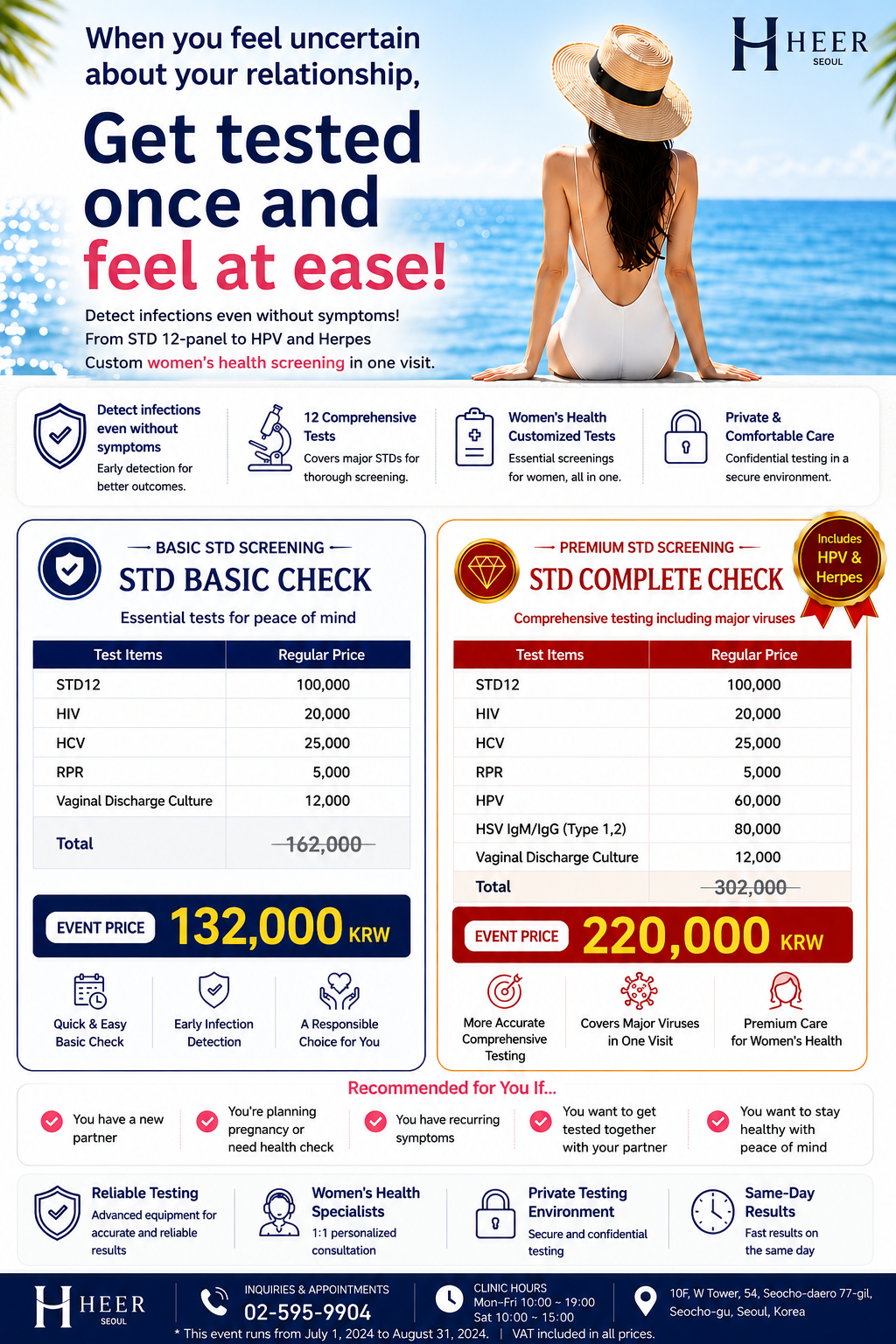
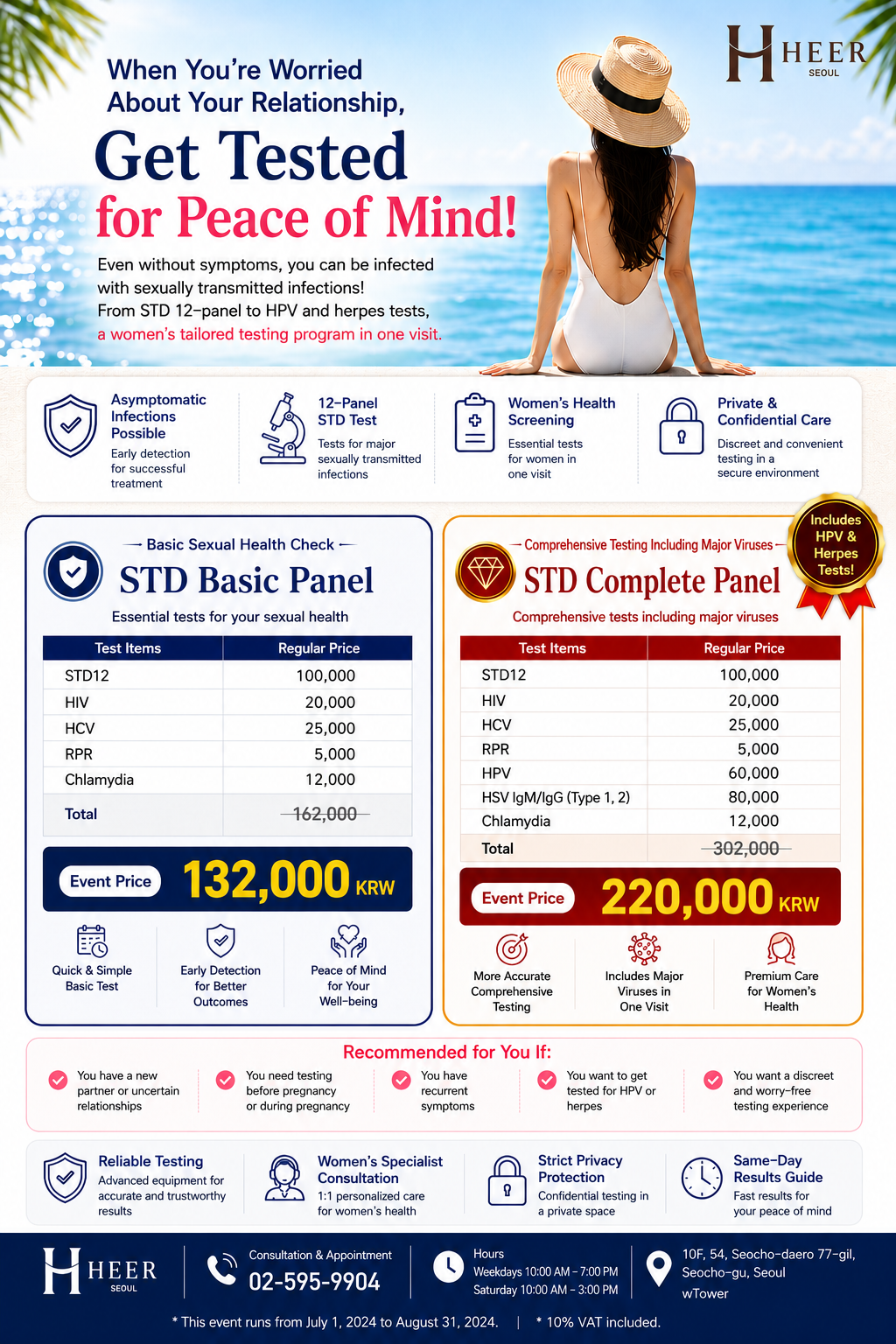
An OB-GYN can usually diagnose genital warts by examining the area. In some cases, the doctor may recommend a Pap smear, HPV test or other STI tests, especially if you have a new partner or haven't been screened recently.
Treatment Options
- Cryotherapy: freezing the warts with liquid nitrogen, often over several sessions.
- Topical treatments: prescription creams applied at home over several weeks.
- Electrocautery or laser: removing warts in the clinic, often for larger or persistent growths.
- Surgical removal: for extensive cases.
Your doctor will recommend an approach based on the size, number and location of the warts.
Will They Come Back?
Treatment removes visible warts, but the virus may remain for a time, so recurrences are common in the first months. Many people's immune systems eventually clear the infection.
Prevention
- The HPV vaccine(such as Gardasil 9) protects against the types that cause most genital warts.
- Condoms reduce the risk of transmission.
- Avoid sexual contact while warts are present or being treated.
Confidential Care
Many patients feel embarrassed about genital warts, but they're a routine part of OB-GYN care. A private clinic with an English-speaking doctor can examine and treat you discreetly, without judgment.
Frequently Asked Questions
Are genital warts dangerous?
The HPV types that cause genital warts are low-risk and do not usually cause cancer, but warts can be uncomfortable and contagious.
Can genital warts be cured?
Visible warts can be removed, but the virus may remain and warts can return; many people clear the infection over time.
Is treatment confidential?
Yes. Medical records are private in Korea, and clinics treat sexual health visits discreetly.
Related Guides
- HPV Vaccine in Korea: Cost, Schedule & Where to Get It
- STI Testing in Seoul: Tests, Costs & Confidential Care
- HPV Test in Korea: Cost, Procedure & Results Explained
- Private & Confidential OB-GYN Care in Korea for Foreign Women
- Complete Guide to Women's Healthcare in Korea for Foreigners
Book an English-Speaking OB-GYN Visit in Gangnam
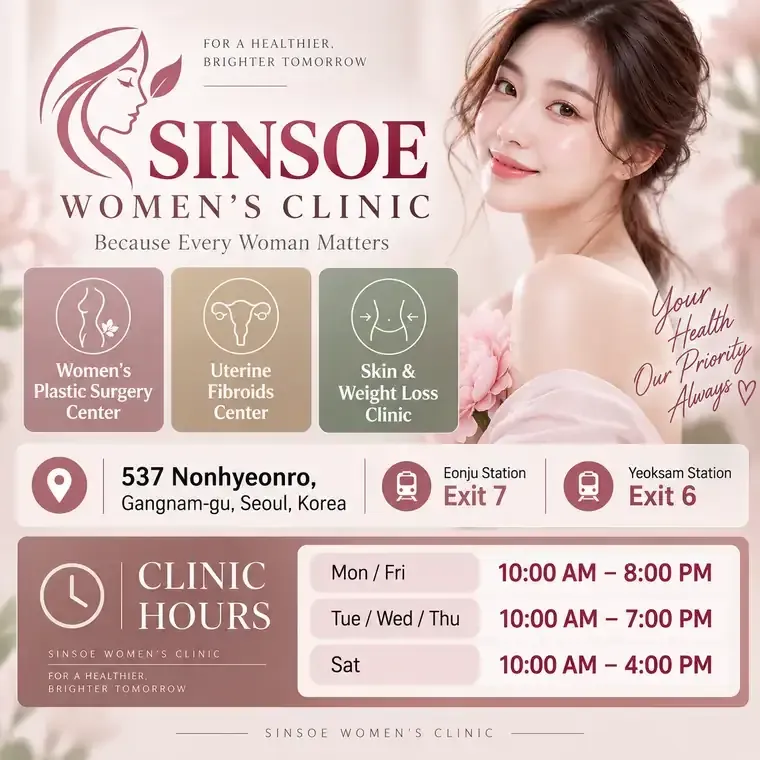
Sinsoe Women's Clinic is a female-led OB-GYN clinic at 537 Nonhyeon-ro, Gangnam-gu, Seoul, a short walk from Eonju Station (Line 9, Exit 7) and Yeoksam Station (Line 2, Exit 6). All physicians are female, board-certified OB-GYNs, and consultations are available in English. Message us on WhatsApp (+82-10-9517-5719) to book.
Hours: Mon & Fri 10:00–20:00 · Tue–Thu 10:00–19:00 · Sat 10:00–16:00 · Closed Sundays
This article is for general information only and is not a substitute for medical advice. Prices and procedures can change — please confirm details directly with the clinic.