Birth Control Pills in Korea: Types, Cost & Prescription Guide
Combined pills, progestin-only pills, approximate prices and when you need to see a doctor
Quick answer: Korea offers combined oral contraceptives and progestin-only pills. Many combined pills are sold over the counter at pharmacies at relatively low monthly cost, while some brands and progestin-only pills need a prescription. An OB-GYN can help if you have side effects, health risks or want to switch from your home brand.
Birth control pills in Korea come in several types, and the right choice depends on your health, cycle and preferences. This guide explains the main kinds of pills available, approximate costs and which ones need a prescription.

Combined Oral Contraceptives
Combined pills contain an estrogen and a progestin. They prevent ovulation and are highly effective when taken consistently. In Korea you'll find:
- Standard-dose combined pills — often available at pharmacies without a prescription.
- Low-dose pills — some women prefer these for fewer estrogen-related side effects.
- Drospirenone-containing pills — sometimes chosen for acne, bloating or premenstrual symptoms; these generally require a prescription.
Progestin-Only Pills
Progestin-only pills are an option for women who cannot take estrogen — for example, during breastfeeding or with certain migraines or clotting risks. Availability of specific brands varies, so speak with an OB-GYN about suitable options in Korea.
Pill Regimens
- 21/7: 21 active pills followed by a 7-day break.
- 24/4 or 28-day packs: fewer or no hormone-free days, which some women find helps with symptoms.
- Extended use: some women skip withdrawal bleeds under medical guidance.
Approximate Costs
Contraceptive pills are generally not covered by National Health Insurance when used for contraception. As a rough guide:
- Over-the-counter combined pills: often around ₩10,000–25,000 per monthly pack
- Prescription pills: the pill itself plus a consultation fee; total cost varies by brand and clinic
Prices change, so check with the pharmacy or clinic.
Common Side Effects
In the first few months, some women notice spotting between periods, breast tenderness, nausea or mood changes. These often settle within three months. If side effects persist, a different formulation may suit you better.
When You Need a Prescription
- You want a prescription-only formulation.
- You're starting the pill for the first time and want medical advice.
- You have migraines, high blood pressure, liver disease or a history of blood clots.
- You're over 35 and smoke.
Switching From Your Home Brand
Bring your current packet or a photo of the ingredient list. A doctor can match the hormone type and dose to a Korean equivalent and explain how to switch without losing protection.
Frequently Asked Questions
How much do birth control pills cost in Korea?
Over-the-counter pills are generally inexpensive per monthly pack, while prescription brands cost more; prices vary by brand and pharmacy.
What are common side effects of the pill?
Spotting, breast tenderness, nausea and mood changes are common in the first months and often settle. Seek care for severe headaches, chest or leg pain.
Is the pill effective straight away?
It depends on when you start. Starting on day 1 of your period usually protects immediately; otherwise use condoms for the first 7 days or as advised.
Related Guides
- How to Get Birth Control Pills in Korea
- Birth Control in Korea: A Complete Guide for Foreign Women
- Hormonal IUD vs Copper IUD: Which Is Right for You?
- Emergency Contraception in Korea: How to Get the Morning-After Pill
- Complete Guide to Women's Healthcare in Korea for Foreigners
Book an English-Speaking OB-GYN Visit in Gangnam
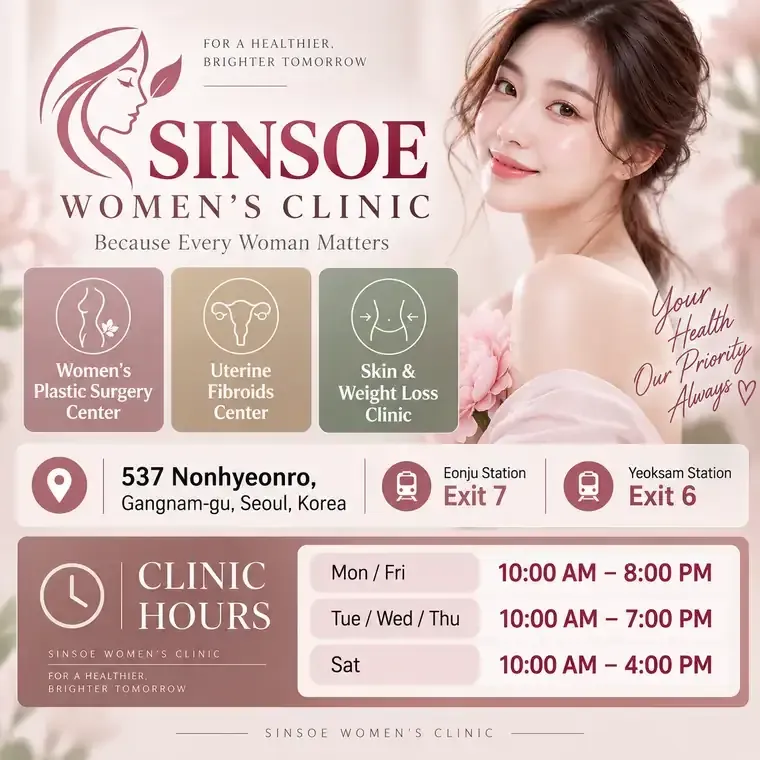
Sinsoe Women's Clinic is a female-led OB-GYN clinic at 537 Nonhyeon-ro, Gangnam-gu, Seoul, a short walk from Eonju Station (Line 9, Exit 7) and Yeoksam Station (Line 2, Exit 6). All physicians are female, board-certified OB-GYNs, and consultations are available in English. Message us on WhatsApp (+82-10-9517-5719) to book.
Hours: Mon & Fri 10:00–20:00 · Tue–Thu 10:00–19:00 · Sat 10:00–16:00 · Closed Sundays
This article is for general information only and is not a substitute for medical advice. Prices and procedures can change — please confirm details directly with the clinic.