IUD Insertion in Gangnam: What to Expect Before and After
Preparation, the procedure itself, pain relief and recovery tips
Quick answer: IUD insertion in Gangnam starts with a consultation, exam and often an ultrasound or STI test. The procedure takes about 5–10 minutes with cramping that usually eases within hours to days. A follow-up check is usually advised after your next period to confirm the IUD is in the right place.
Many women feel nervous before an IUD insertion, especially in a new country. Knowing what will happen — before, during and after — can make the experience much easier. Here's what to expect when you have an IUD inserted at a clinic in Gangnam.

Before Your Appointment
- Consultation: discuss hormonal vs copper options, your medical history and any medications.
- Timing: some doctors prefer insertion during or just after your period, but it can be done at other times if pregnancy is ruled out.
- Pain relief: ask whether you should take an over-the-counter pain reliever about an hour beforehand.
- Eat normally and arrive a little early to complete forms.
Tests Beforehand
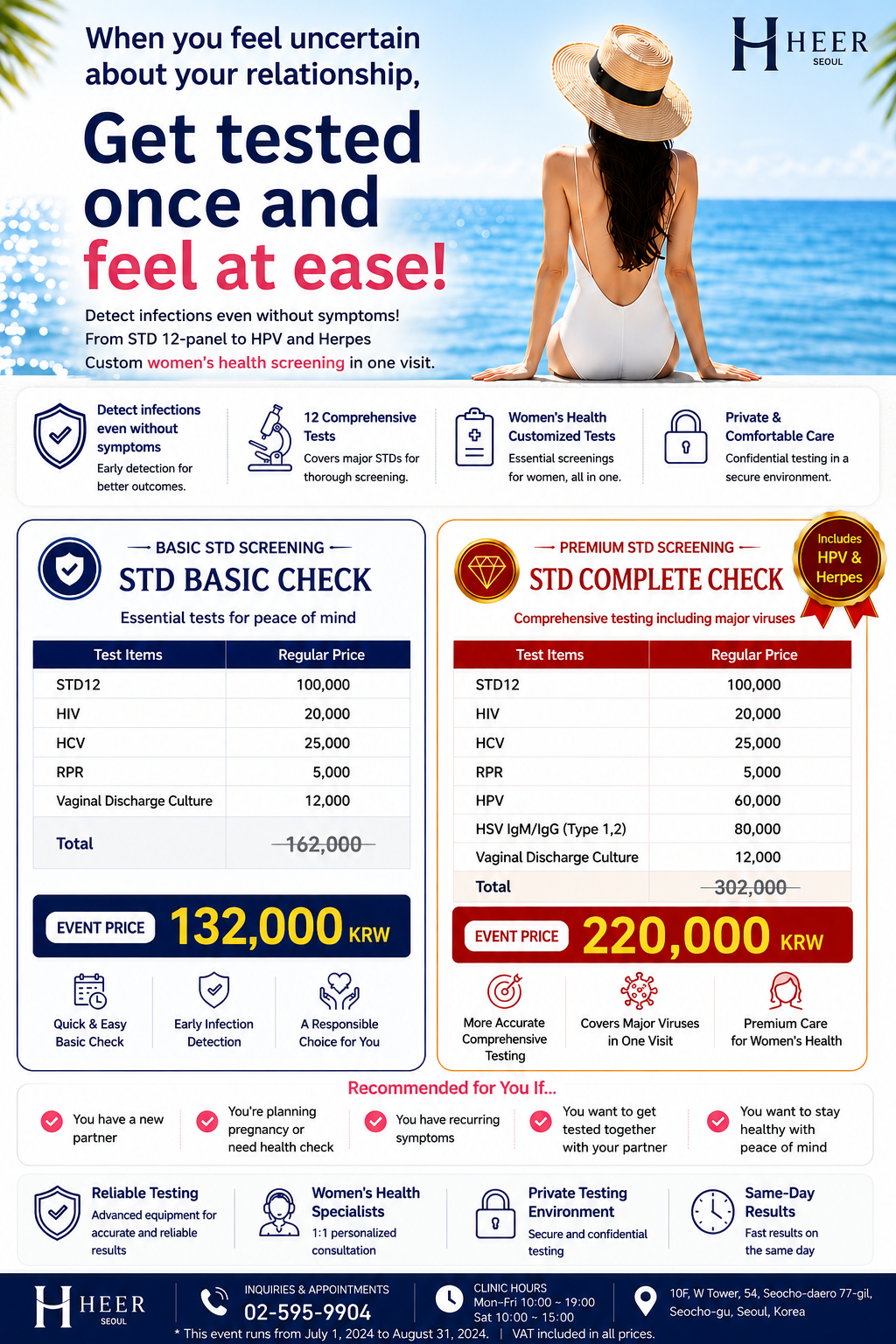
Your doctor may perform a pelvic exam, a transvaginal ultrasound to check the size and position of your uterus, a pregnancy test and, in some cases, STI testing.
During the Procedure
- You'll lie on an exam chair, often with a privacy curtain.
- A speculum is inserted and the cervix is cleaned.
- The doctor measures the uterus and inserts the IUD through the cervix.
- The strings are trimmed so they sit just inside the vagina.
The procedure itself usually takes 5–10 minutes. Cramping is common, but it typically eases quickly. Tell the doctor at any point if you need a pause.
Right After Insertion
Rest for a few minutes before getting up. Some women feel lightheaded briefly. An ultrasound may be done to confirm placement.
The First Few Days
- Cramping and light bleeding or spotting are normal.
- A heating pad and pain relievers can help.
- Ask your doctor how soon you can have sex, use tampons or exercise.
- If you have a copper IUD, it works immediately; a hormonal IUD may need backup contraception for seven days depending on timing.
Follow-Up
A check-up after about 4–6 weeks confirms that the IUD is in place and that you're comfortable with it.
When to Contact the Clinic
- Severe or worsening pelvic pain
- Fever or unusual, foul-smelling discharge
- Very heavy bleeding
- You can feel the hard part of the IUD or can't find the strings
Frequently Asked Questions
When is the best time to insert an IUD?
Often during or just after your period, when it is easier and pregnancy is unlikely, but it can be done at other times if pregnancy is excluded.
Can I go back to work after IUD insertion?
Most women return to normal activities the same day; mild cramps and spotting are common for a few days.
When should I contact the clinic after insertion?
Contact the clinic if you have severe pain, fever, unusual discharge, heavy bleeding or cannot feel the strings.
Related Guides
- IUD in Korea: Cost, Procedure & Options for Foreigners
- Hormonal IUD vs Copper IUD: Which Is Right for You?
- STI Testing in Seoul: Tests, Costs & Confidential Care
- Birth Control in Korea: A Complete Guide for Foreign Women
- Complete Guide to Women's Healthcare in Korea for Foreigners
Book an English-Speaking OB-GYN Visit in Gangnam
Sinsoe Women's Clinic is a female-led OB-GYN clinic at 537 Nonhyeon-ro, Gangnam-gu, Seoul, a short walk from Eonju Station (Line 9, Exit 7) and Yeoksam Station (Line 2, Exit 6). All physicians are female, board-certified OB-GYNs, and consultations are available in English. Message us on WhatsApp (+82-10-9517-5719) to book.
Hours: Mon & Fri 10:00–20:00 · Tue–Thu 10:00–19:00 · Sat 10:00–16:00 · Closed Sundays
This article is for general information only and is not a substitute for medical advice. Prices and procedures can change — please confirm details directly with the clinic.