What to Expect at Your First OB-GYN Visit in Korea
From check-in to exam room: a calm, clear walkthrough for first-timers
Quick answer: At your first OB-GYN visit in Korea you will register with your ID, fill in a short health questionnaire, talk with the doctor about your concerns and, if needed, have a pelvic exam, transvaginal ultrasound, Pap smear or lab tests. Korean exam rooms often use a special exam chair and a curtain for privacy.
Whether it's your first-ever gynecology appointment or simply your first one in Korea, it's normal to feel a little nervous. Knowing what will happen makes the experience much easier. Here's a step-by-step look at a typical first OB-GYN visit in Korea.
Before You Arrive
- Note the first day of your last period.
- List your symptoms, medications, allergies and any past surgeries.
- Bring your passport or ARC.
- Wear comfortable, two-piece clothing (a skirt or trousers with a top) — it makes changing easier.
- If you're having a Pap smear, try to schedule it when you're not on your period and avoid intercourse, douching or vaginal products for 1–2 days before.
Check-In
At reception you'll fill out a short questionnaire: personal details, reason for visit, menstrual history, pregnancy history and contraception. This information is confidential and helps the doctor give you the right care.
Talking With the Doctor
Your consultation usually starts in a private office. The doctor will ask about your concerns and history. Be as open as you can — OB-GYNs hear about periods, discharge, sex and pain every day. This is also the moment to ask questions or say if you'd prefer not to have a particular exam today.
The Exam Room: What's Different in Korea
Many first-time visitors are surprised by the Korean gynecology exam chair. It's a motorized chair that reclines and positions you for the exam, often with a privacy curtain across your waist so you don't see the doctor during the exam. You'll be given a skirt or gown and asked to undress from the waist down in a private changing area.
Common First-Visit Exams and Tests
- Pelvic exam: a quick, gentle check of the vagina and cervix with a speculum.
- Transvaginal ultrasound: very common in Korea, used to check the uterus and ovaries for fibroids, cysts and other changes. If you've never been sexually active, an abdominal or alternative approach can be used — just tell the doctor.
- Pap smear / HPV test: screens for cervical cell changes.
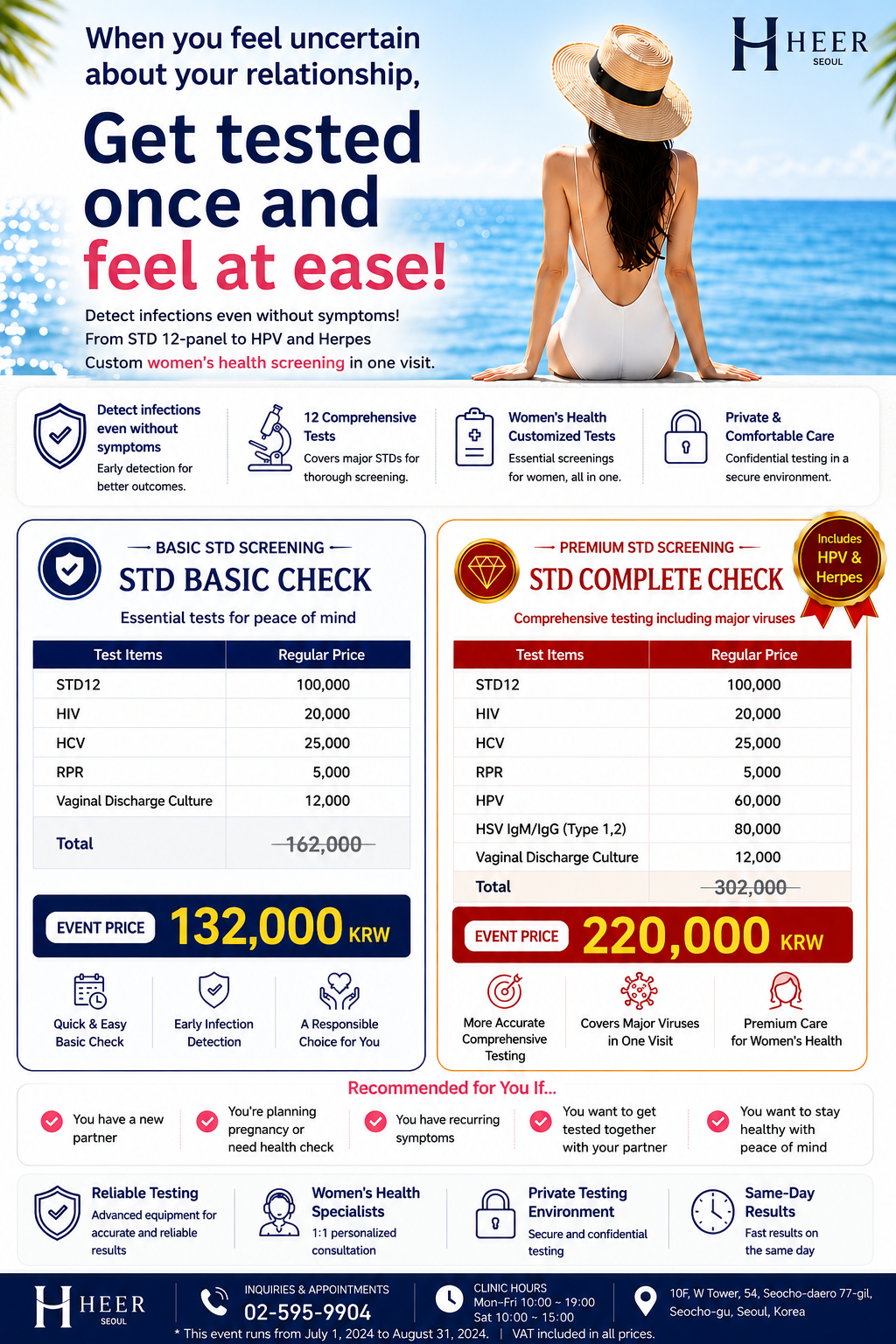
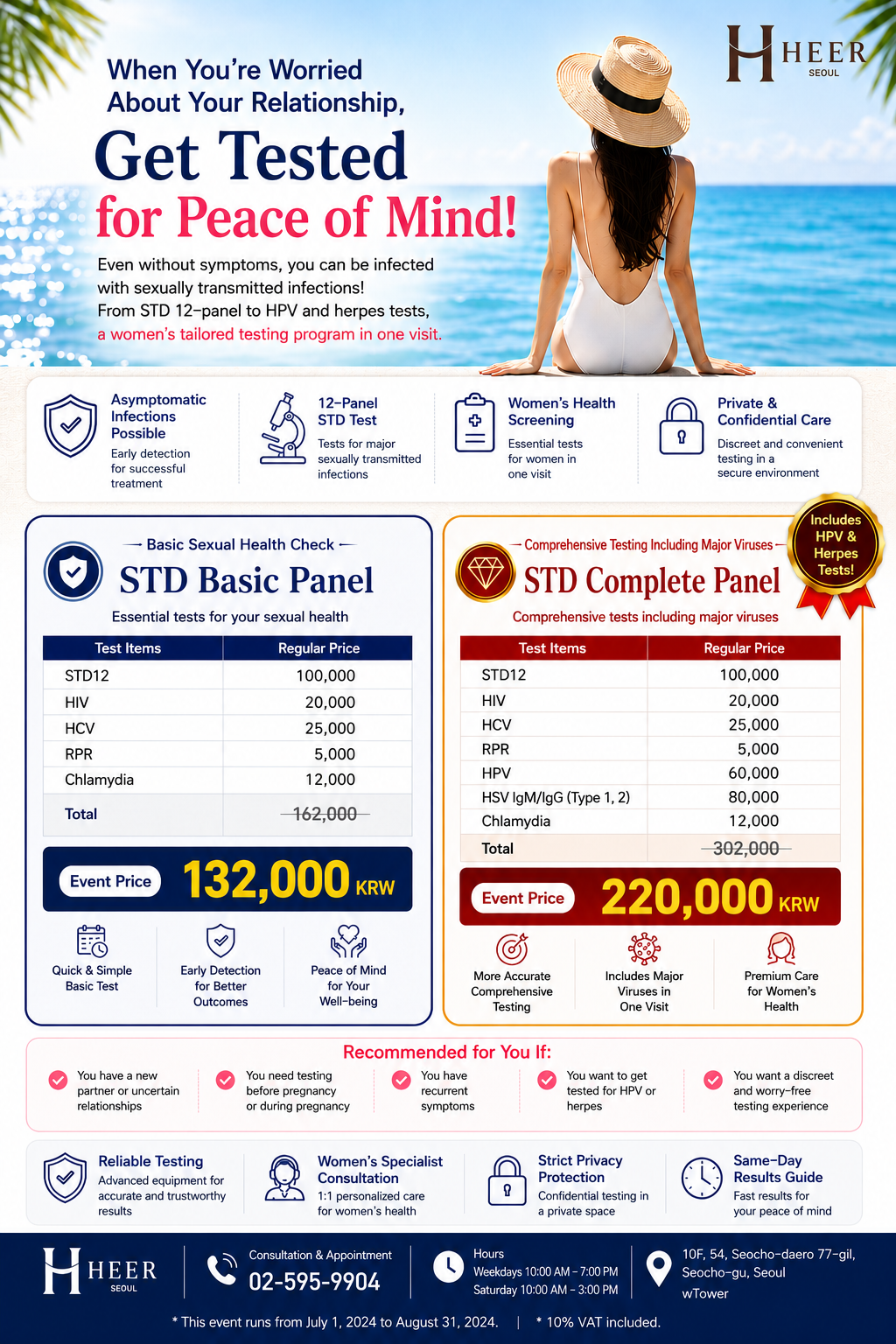
- STD tests: a swab or urine sample, if relevant.
- Urine or blood tests: for pregnancy, infection or hormones.
Most exams take only a few minutes. Mild discomfort is possible, but it shouldn't be painful — tell the doctor if it is and they'll adjust.
After the Exam
You'll get dressed and return to the doctor's office, where ultrasound findings are usually explained straight away. Lab results typically take a few days. You'll then pay at the front desk and, if needed, pick up medication at a nearby pharmacy.
Your Rights as a Patient
- You can ask for a female doctor or a chaperone.
- You can ask what any test is for and what it costs before agreeing.
- You can stop an exam at any time.
A good OB-GYN will make your first visit feel comfortable, respectful and clear — in a language you understand.
Frequently Asked Questions
Is a transvaginal ultrasound part of every first visit in Korea?
It is very common, because it gives a clear view of the uterus and ovaries, but it is not mandatory. You can ask questions or decline, and an abdominal scan is an option for some patients.
Can I bring someone with me?
Yes. Many clinics allow a partner or friend to wait with you or join the consultation, and you can ask for a female staff member to be present during the exam.
What should I prepare before the visit?
Note the first day of your last period, your symptoms, current medications and any previous test results, and bring your passport or ARC.
Related Guides
- How to Visit an OB-GYN in Korea as a Foreigner
- Pap Smear in Korea: A Guide for Foreign Women
- Vaginal Ultrasound in Korea: What to Expect, Cost & Preparation
- Female Doctor OB-GYN in Gangnam: A Guide for International Patients
- Complete Guide to Women's Healthcare in Korea for Foreigners
Book an English-Speaking OB-GYN Visit in Gangnam
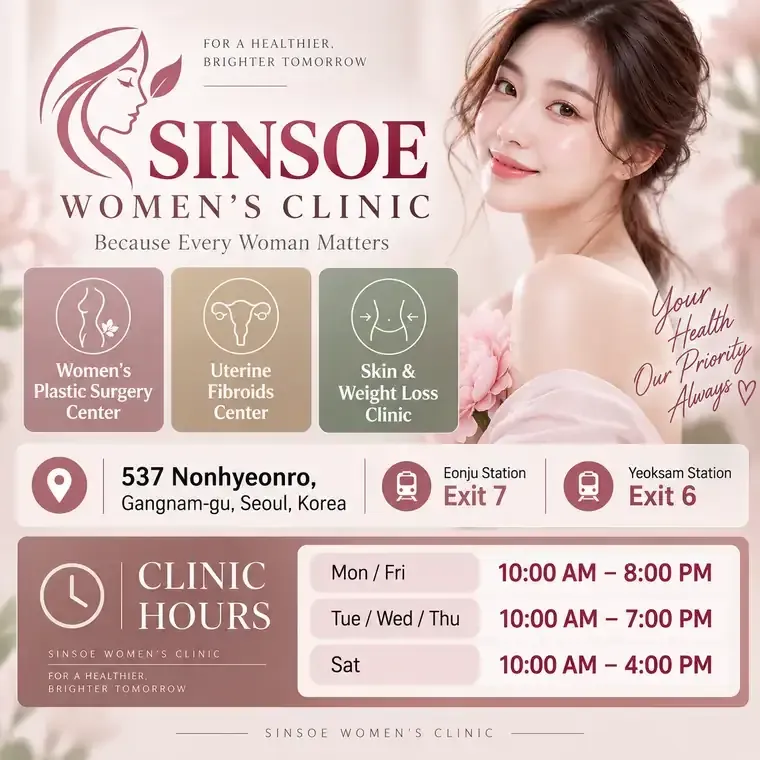
Sinsoe Women's Clinic is a female-led OB-GYN clinic at 537 Nonhyeon-ro, Gangnam-gu, Seoul, a short walk from Eonju Station (Line 9, Exit 7) and Yeoksam Station (Line 2, Exit 6). All physicians are female, board-certified OB-GYNs, and consultations are available in English. Message us on WhatsApp (+82-10-9517-5719) to book.
Hours: Mon & Fri 10:00–20:00 · Tue–Thu 10:00–19:00 · Sat 10:00–16:00 · Closed Sundays
This article is for general information only and is not a substitute for medical advice. Prices and procedures can change — please confirm details directly with the clinic.