Women's Health Checkup in Seoul: A Guide for Foreigners
Which screenings you need, how often, and how to arrange them in English
Quick answer: A women's health checkup in Seoul usually includes a consultation, pelvic or transvaginal ultrasound, a Pap smear and often an HPV test, with optional breast ultrasound, blood tests and STI screening. Foreigners can book an individual checkup at a private OB-GYN clinic, with or without Korean health insurance.
Korea is known for its efficient health screening culture. Many Korean women have regular checkups that include gynecologic exams, and foreigners living in or visiting Seoul can access the same high standard of preventive care. Here's how women's health checkups work in Seoul and what to include.
Why a Regular Women's Health Checkup Matters
Many gynecologic conditions — cervical cell changes, fibroids, ovarian cysts, some infections — cause few or no symptoms early on. Regular screening helps catch problems while they're easiest to treat.
What a Typical Women's Checkup Includes
- Consultation: menstrual, sexual, contraceptive and family history
- Pelvic exam
- Pap smear (cervical cytology) and/or HPV test
- Pelvic ultrasound to check the uterus and ovaries
- Breast exam or breast ultrasound (offered at some clinics or as an add-on)
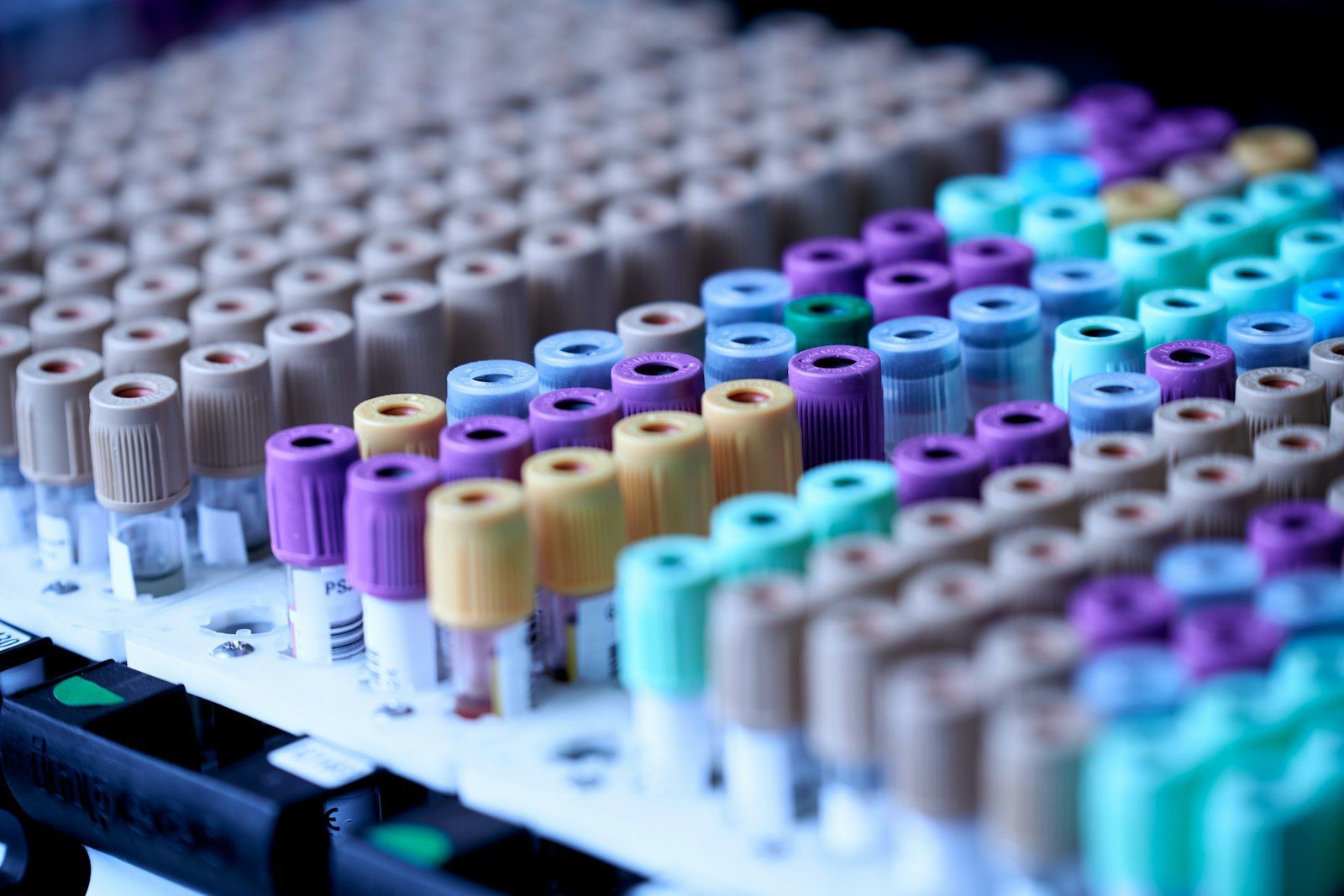
- Blood tests: anemia, thyroid, hormones or tumor markers as appropriate
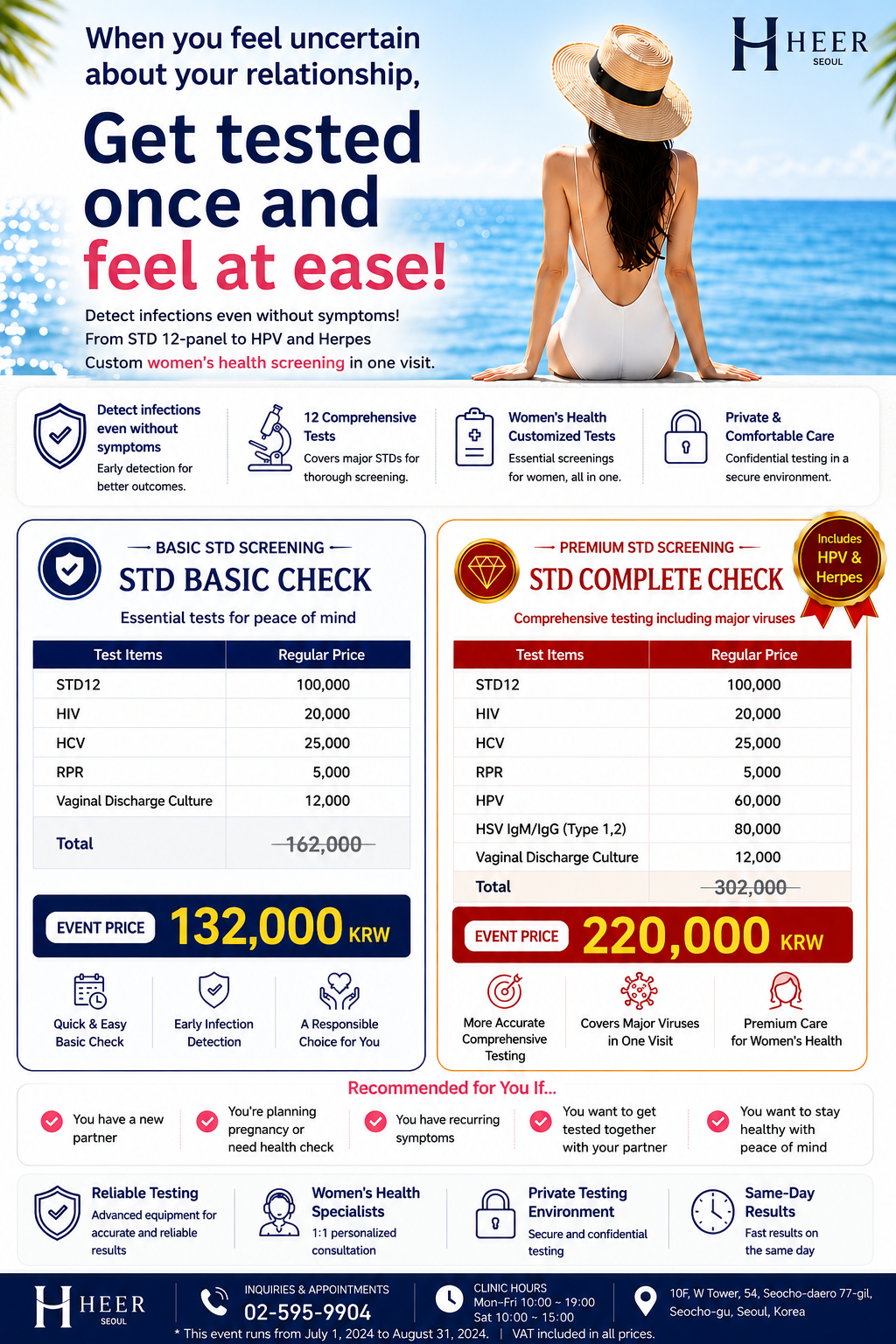
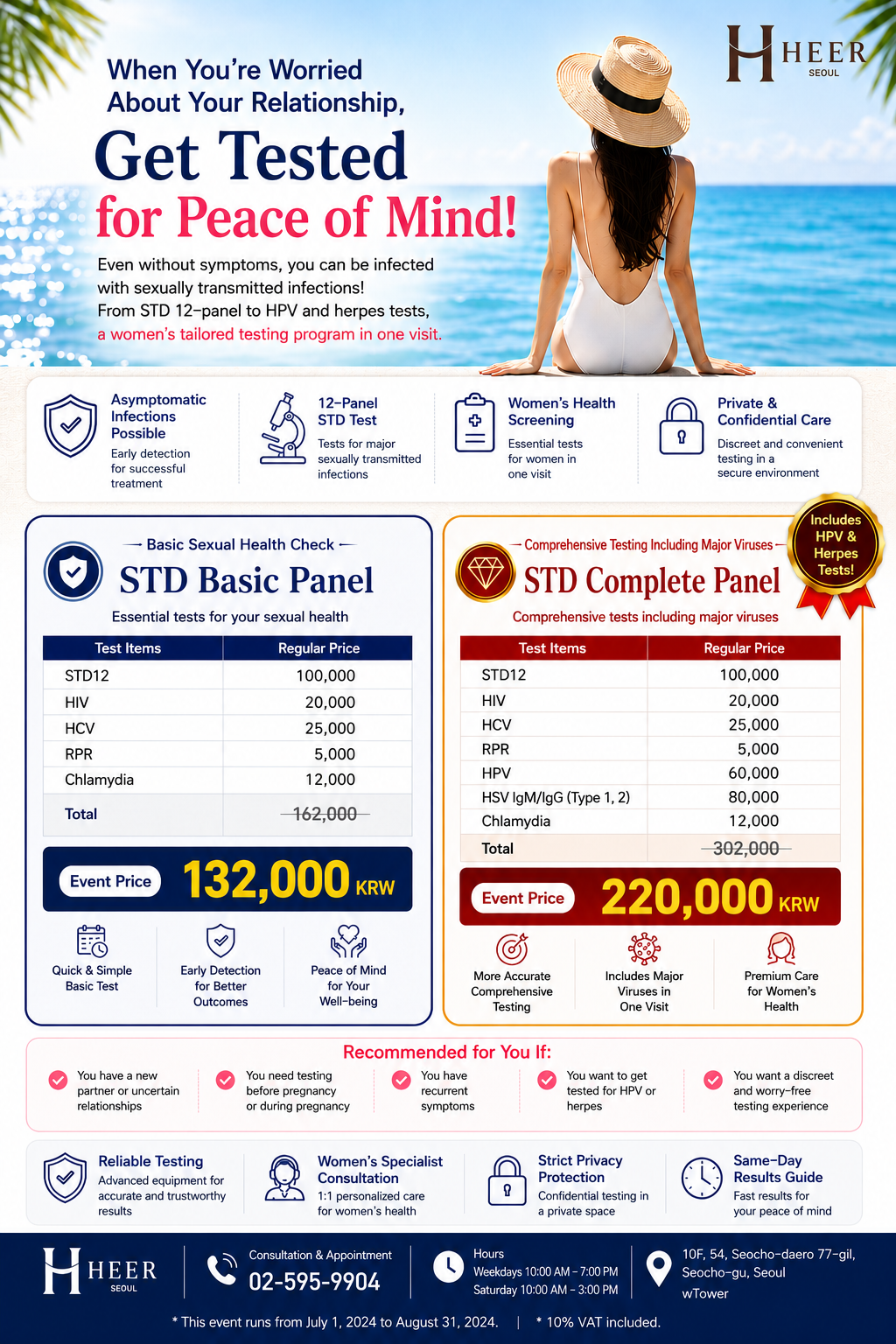
- STD screening, if relevant
Recommended Screenings by Life Stage
20s: Cervical screening as recommended by your doctor, HPV vaccination if not yet completed, STD testing when appropriate, and attention to period problems or PCOS symptoms.
30s: Regular Pap/HPV screening, pelvic ultrasound to check for fibroids or cysts, and preconception or fertility checks if you're planning a pregnancy.
40s and beyond: Continued cervical screening, pelvic ultrasound, breast screening, and discussion of perimenopause, bone health and hormone therapy options.
Your doctor will tailor these recommendations to your personal and family history.
Korea's National Screening Program
If you're enrolled in National Health Insurance, you may be eligible for Korea's national health screening, which includes cervical cancer screening for women from age 20 every two years. Eligibility notices are sent by NHIS. Ask your clinic whether your screening can be done under this program.
Checkup Packages vs. Individual Tests
Many Seoul clinics offer women's checkup packages that bundle several tests at a set price. Packages are convenient, but make sure each item is relevant to you. Alternatively, your doctor can recommend individual tests based on your symptoms and history.
How to Prepare
- Schedule outside your period if a Pap smear is included.
- Ask whether fasting is required for blood tests.
- Bring previous results from home, if available, to compare.
- Bring your passport or ARC and insurance information.
Getting Results in English
Ask your clinic how results will be shared and whether an English explanation or written summary is available. Keeping copies is useful if you move countries or change doctors.
Frequently Asked Questions
How often should I have a women's health checkup?
Most women benefit from a gynecology checkup once a year, with cervical screening at intervals your doctor recommends based on age and previous results.
Can I get a checkup in Seoul as a short-term visitor?
Yes. Private clinics see foreign patients without NHIS; you pay out of pocket and can choose only the tests you need.
Is a checkup package better than individual tests?
Packages are convenient, but individual tests let you avoid paying for items you do not need. Ask the doctor which tests suit your age and history.
Related Guides
- Women's Health Screening by Age: Your 20s, 30s, 40s & 50s
- Gynecology Checkup in Gangnam: Tests, Costs & What to Expect
- Can Foreigners Get a Women's Health Checkup in Korea?
- Pap Smear in Korea: A Guide for Foreign Women
- Complete Guide to Women's Healthcare in Korea for Foreigners
Book an English-Speaking OB-GYN Visit in Gangnam
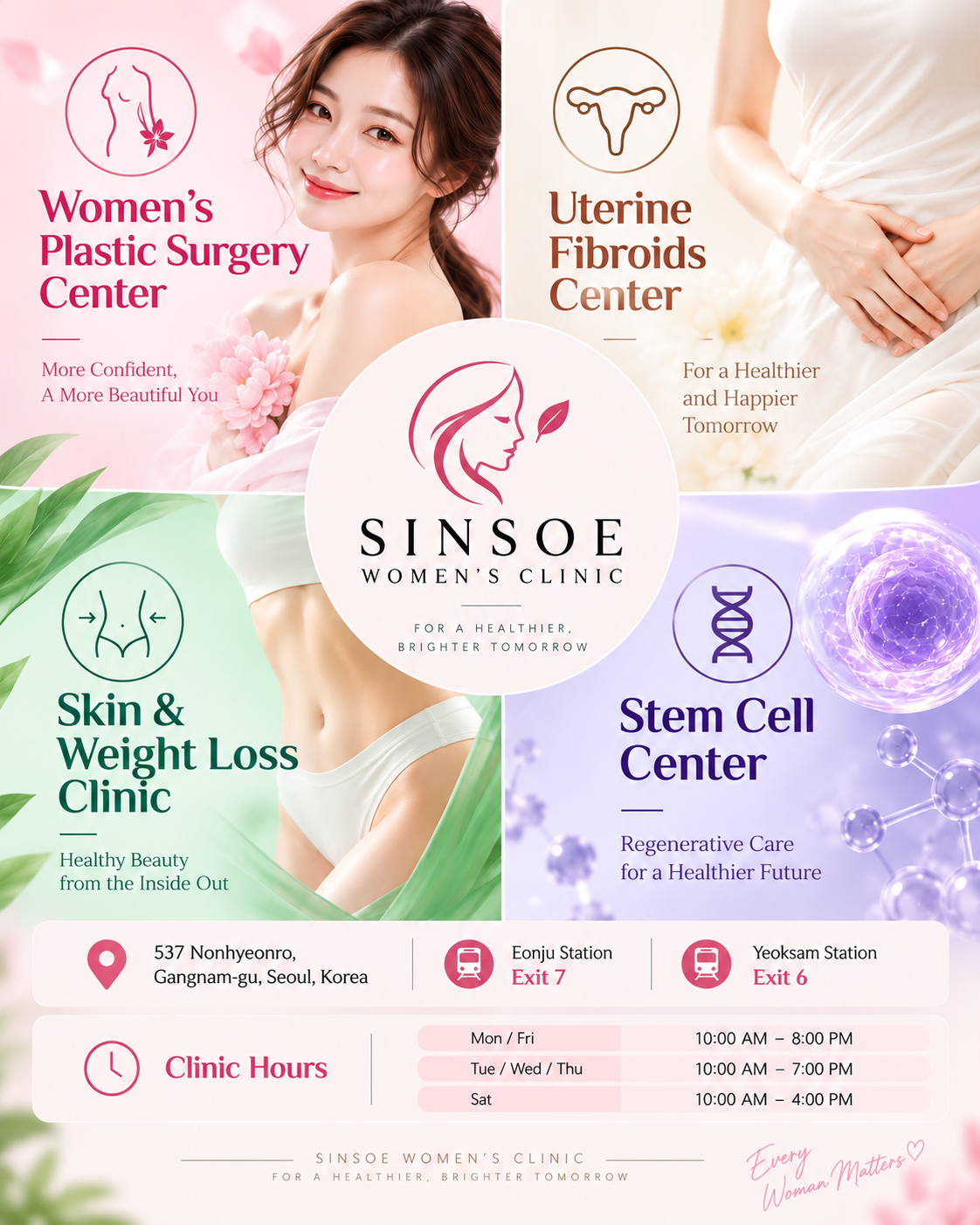
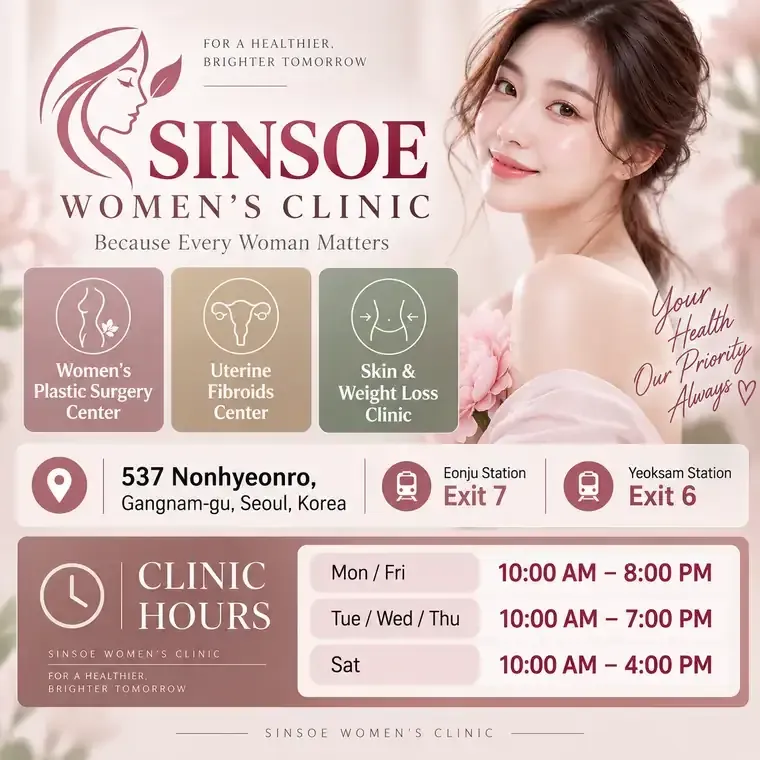
Sinsoe Women's Clinic is a female-led OB-GYN clinic at 537 Nonhyeon-ro, Gangnam-gu, Seoul, a short walk from Eonju Station (Line 9, Exit 7) and Yeoksam Station (Line 2, Exit 6). All physicians are female, board-certified OB-GYNs, and consultations are available in English. Message us on WhatsApp (+82-10-9517-5719) to book.
Hours: Mon & Fri 10:00–20:00 · Tue–Thu 10:00–19:00 · Sat 10:00–16:00 · Closed Sundays
This article is for general information only and is not a substitute for medical advice. Prices and procedures can change — please confirm details directly with the clinic.