Women's Health Screening by Age: Your 20s, 30s, 40s & 50s
Which checks matter at each life stage
Quick answer: In your 20s, focus on Pap smears, HPV vaccination and STI testing; in your 30s, add HPV co-testing and preconception checks; in your 40s, add breast screening and blood tests; from your 50s, include bone density and colorectal screening. In Korea, these can be arranged at an OB-GYN clinic.
Your health needs change as you move through life, and so do the screenings that matter most. Here's a practical, decade-by-decade guide to women's health checks — and how to arrange them in Korea.

Your 20s
- Cervical screening (Pap smear) as recommended; Korea's national program begins at age 20 for eligible insured women
- HPV vaccination if not completed
- STI testing with new partners
- Contraception review
- Attention to irregular or painful periods, which may signal PCOS or endometriosis
- Blood pressure checks
Your 30s
- Regular cervical screening, often with HPV testing
- Pelvic ultrasound if you have symptoms or a history of fibroids or cysts
- Preconception checks if planning pregnancy
- Fertility evaluation if you've been trying for six months to a year
- Thyroid and blood sugar checks if you have risk factors
Your 40s
- Continued cervical screening
- Breast screening — Korea's national program typically begins at 40 for eligible women
- Pelvic ultrasound for heavy or irregular bleeding
- Discussion of perimenopausal symptoms
- Cholesterol, blood sugar and blood pressure checks
Your 50s and Beyond
- Menopause care and discussion of HRT
- Bone density testing
- Continued breast and cervical screening as advised
- Colorectal cancer screening
- Prompt evaluation of any bleeding after menopause
At Every Age
- Know your family history
- Don't ignore new or changing symptoms
- Keep copies of your results, especially if you move between countries
Arranging Screening in Korea
If you're enrolled in National Health Insurance, you may receive notices for national screenings. Private clinics also offer women's health checkups that can be tailored to your age and history. An English-speaking OB-GYN can help you decide what you need.
Frequently Asked Questions
When should I start cervical cancer screening?
Most guidelines start screening in your 20s; Korea’s national program covers women from age 20 every two years.
Do I still need screening after menopause?
Yes. Cervical, breast, bone and heart-health checks remain important after menopause.
Can foreigners join Korea’s national screening program?
Foreigners enrolled in NHIS can usually receive national screening invitations; others can book screening privately.
Related Guides
- Women's Health Checkup in Seoul: A Guide for Foreigners
- Pap Smear in Korea: A Guide for Foreign Women
- Menopause Treatment in Korea: A Guide for Foreign Women
- Can Foreigners Get a Women's Health Checkup in Korea?
- Complete Guide to Women's Healthcare in Korea for Foreigners
Book an English-Speaking OB-GYN Visit in Gangnam
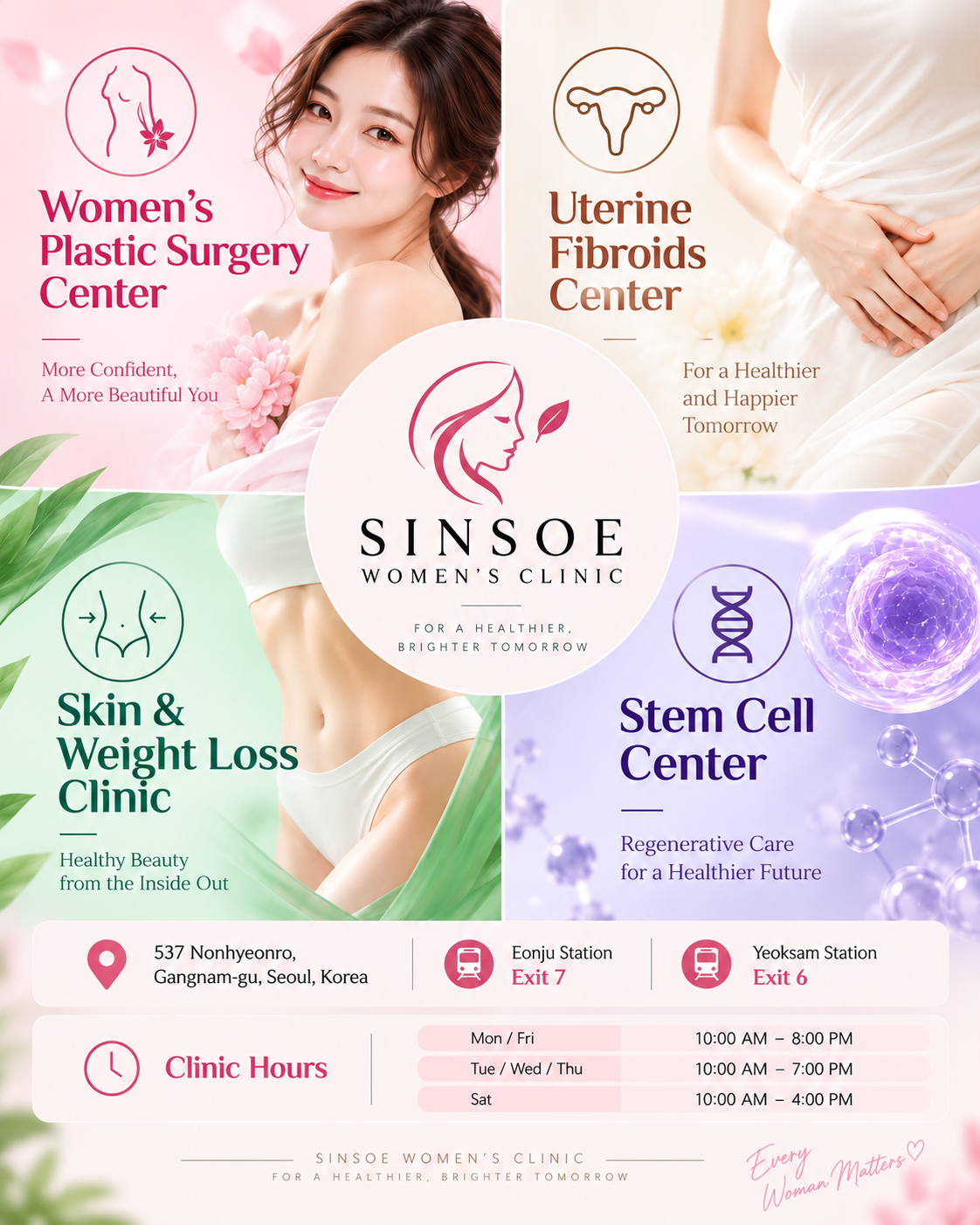
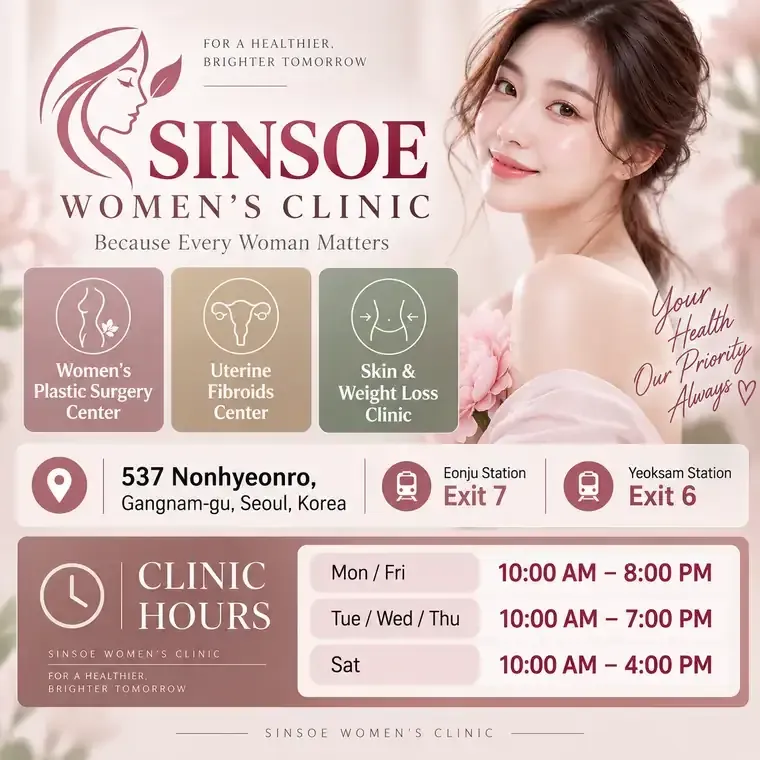
Sinsoe Women's Clinic is a female-led OB-GYN clinic at 537 Nonhyeon-ro, Gangnam-gu, Seoul, a short walk from Eonju Station (Line 9, Exit 7) and Yeoksam Station (Line 2, Exit 6). All physicians are female, board-certified OB-GYNs, and consultations are available in English. Message us on WhatsApp (+82-10-9517-5719) to book.
Hours: Mon & Fri 10:00–20:00 · Tue–Thu 10:00–19:00 · Sat 10:00–16:00 · Closed Sundays
This article is for general information only and is not a substitute for medical advice. Prices and procedures can change — please confirm details directly with the clinic.